

China CNC Milling » Blog » Intelligent CNC Systems: How AI Is Transforming Machine Tools and Smart Manufacturing
FAQ
What materials can you work with in CNC machining?
We work with a wide range of materials including aluminum, stainless steel, brass, copper, titanium, plastics (e.g., POM, ABS, PTFE), and specialty alloys. If you have specific material requirements, our team can advise the best option for your application.
What industries do you serve with your CNC machining services?
Our CNC machining services cater to a variety of industries including aerospace, automotive, medical, electronics, robotics, and industrial equipment manufacturing. We also support rapid prototyping and custom low-volume production.
What tolerances can you achieve with CNC machining?
We typically achieve tolerances of ±0.005 mm (±0.0002 inches) depending on the part geometry and material. For tighter tolerances, please provide detailed drawings or consult our engineering team.
What is your typical lead time for CNC machining projects?
Standard lead times range from 3 to 10 business days, depending on part complexity, quantity, and material availability. Expedited production is available upon request.
Can you provide custom CNC prototypes and low-volume production?
Can you provide custom CNC prototypes and low-volume production?
Hot Posts
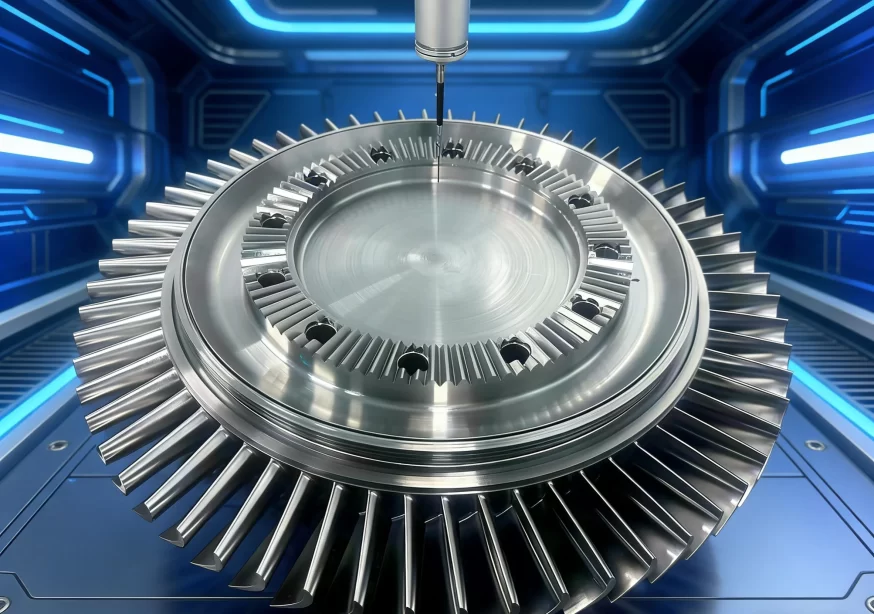


When machine tools gain autonomous thinking capabilities, they quietly reshape the underlying production logic of the manufacturing industry.
Imagine this scenario: a CNC machine tool runs continuously in a workshop for ten years.
It performs cutting, milling, and drilling tasks day in and day out.
Throughout this time, it maintains its machining precision at factory-set levels.
Yet if you ask what experience it has accumulated over the decade, the answer is nothing at all.
It executes machining operations in exactly the same way on its first day of commissioning as it does on its tenth year.
It cannot record machining conditions, identify machining defects or continuously improve its processing performance.
If such equipment were compared to employees in an enterprise, enterprises would have long since laid them off.
Still, this has been the common reality for CNC machine tools over the past few decades.
Now, workshops across the country are rolling out intelligent upgrades and transformations for machine tools.
Artificial intelligence technology is equipping CNC machine tools with brand-new computing cores.
A Low-key Revolution for CNC Systems in Workshops
For decades, the operating mode of most commercial CNC machine tools has remained unchanged.
After engineers write machining programs and import them into the equipment, the machine only executes instructions mechanically.
Although it delivers qualified precision and stable operation, it works rigidly.
It merely follows fixed procedures. It does not make flexible adjustments according to on-site processing conditions.
China’s machine tool industry is gradually promoting a low-key yet disruptive technological innovation.
Supported by iterative advances in artificial intelligence, domestically made CNC machine tools are undergoing comprehensive upgrades to their core control systems.
After transformation, these machine tools break away from the simple role of program executors.
They are endowed with practical capabilities.
These include working condition perception, machining experience accumulation, and autonomous optimization of process parameters.
When abnormal machining conditions occur, they can fine-tune parameters automatically to prevent product rejection.
AI-Powered CNC Systems Enter Industrial Applications
This is neither industry hype nor science fiction.
In 2025, Huazhong Numerical Control officially launched the Huazhong-10 intelligent CNC system.
It is the world’s first CNC system equipped with a dedicated AI chip.
It also includes an embedded industrial large model.
One of the world’s top ten intelligent manufacturing technological breakthroughs of that year selected it.
Authorities issued supporting policies concurrently.
Eight government departments in China jointly released special implementation guidelines.
These guidelines listed the research and development of new-generation AI-powered CNC systems as a key priority for intelligent manufacturing.
Rapid Market Growth Signals an Industry-Wide Transformation
Industry market data also verifies this industrial transformation trend.
The global market size of intelligent CNC machine tools exceeded USD 4.86 billion in 2025.
Multiple industrial institutions estimate that the market size will grow to USD 9.385 billion by 2032.
This growth suggests that intelligent CNC equipment will become the mainstream direction of the sector.
Focusing on control system iteration, what pain points of traditional machine tools does this equipment upgrade resolve, and what changes will it bring to domestic manufacturing industries?
We provide an in-depth analysis below based on actual industry conditions.
Prominent Drawbacks of Traditional CNC Systems
Anyone with in-depth experience in the machining industry will find that traditional CNC control systems, which have been used for decades, have reached development bottlenecks.
Long-standing pain points continuously drag down workshop productivity and hinder factories’ cost reduction and efficiency improvement efforts.
Limited Adaptability to Changing Machining Conditions
Traditional machine tools feature fixed closed-loop production workflows with little room for adjustment from programming and program importing to mass production.
In actual production, tool wear, fluctuations in raw material hardness, thermal deformation and machine body vibration are commonplace issues.
However, outdated systems cannot capture real-time changes in working conditions, forcing the machine to process rigidly according to preset programs.
This easily leads to out-of-tolerance precision, tool breakage and scrapped workpieces.
By analogy, it is like a driver sticking rigidly to a fixed route while ignoring real-time road conditions, making equipment failures and material waste hard to avoid.
Heavy Dependence on Experienced Technicians
Meanwhile, production is highly reliant on senior skilled workers.
Process debugging, machining path optimization, fault troubleshooting, and customized processing for special-shaped workpieces all depend on years of hands-on experience.
These are typically held by veteran technicians.
A proficient process engineer usually requires a decade of frontline accumulation.
The industry now faces a severe talent gap. Young people are reluctant to work long-term in workshops.
Senior technicians cannot effectively pass down the sophisticated know-how they have accumulated.
This forms a widespread dilemma in the machining sector.
Failure to Utilize Valuable Production Data
More importantly, massive operational data generated daily by machine tools—such as spindle speed, feed rate, temperature and vibration—are mostly left unused in traditional systems.
The system neither stores nor analyzes such data and clears it once processing finishes.
Even after ten years of operation, a machine tool maintains the exact same processing capability as on its commissioning day.
It is unable to form a positive cycle of experience accumulation.
It is also unable to achieve performance iteration.
Application of Intelligent CNC Systems
AI-enabled CNC systems are not merely superficial upgrades by adding extra functions to legacy systems.
Instead, they reconstruct underlying operating logic.
They drive industrial upgrading across four dimensions.
These dimensions include machine processing execution, human resource deployment, equipment maintenance, and cross-production-line collaboration.
1. Closed-Loop Machining: Upgrading from One-Way Program Execution to Real-Time Dynamic Regulation
Traditional machine tools operate in a one-way execution mode, and the workflow terminates once machining is completed.
Equipped with full-range sensors to collect comprehensive operational data and dedicated AI chips for real-time computation, intelligent CNC systems form a complete intelligent closed loop.
This loop consists of “perception – analysis – decision-making – regulation”.
In response to various operational fluctuations, the equipment can independently optimize processing parameters.
These fluctuations include cutting vibration, tool wear, and thermal deformation.
It does so without shutdown or manual intervention.
It automatically corrects machining deviations during continuous production while balancing production efficiency and finished product precision.
2. Process Democratization: Embedding Top-Tier Industrial Know-How into Every Machine Tool
Intelligent CNC systems integrate extensive machining process maps.
They also integrate tens of thousands of proven production cases.
Practical experience from senior technicians at leading enterprises further enriches the system’s knowledge base.
They embed premium industrial process expertise into the underlying framework of the system.
New operators with minimal experience and ordinary frontline workers no longer need years of practice to get started.
Relying on the system, they can program complex workpieces, debug process parameters and optimize cutting paths.
The system automatically generates process schemes and matching parameters.
It greatly lowers corporate staffing thresholds.
It also helps address the industry shortage of process professionals.
This is not about machines replacing humans.
Instead, it empowers frontline operators.
It also lowers barriers for the implementation of high-end manufacturing processes.
3. Proactive Maintenance: Shifting from Breakdown Repair to Predictive Preventive Maintenance
By dynamically comparing real-time operational data against standard equipment models, the system rapidly identifies abnormal equipment operation.
Leveraging multi-dimensional self-collected data, the AI model predicts component aging and potential faults in advance.
This data includes bearing temperature, machine vibration, and spindle status.
It outputs accurate maintenance cycles and optimization suggestions.
In the past, unexpected equipment shutdowns occurred due to breakdowns.
These shutdowns required disassembly for troubleshooting.
They disrupted production schedules and consumed spare parts.
With early fault warnings, enterprises can arrange maintenance during off-peak periods.
This drastically shortens unplanned downtime. It also reduces overall equipment maintenance costs.
4. Collaborative Evolution: Breaking Information Isolation of Individual Machines to Synchronize Upgrading of Plant-Wide Machining Capabilities
Traditional CNC machine tools mostly run independently with isolated data between individual units and the workshop.
After connecting to the industrial internet, intelligent CNC systems establish data transmission links.
These links connect single machine tools, production lines, cloud platforms, and factory management systems.
A single machine can upload optimized process parameters synchronously to a cloud-based process knowledge base.
It can also upload complete processing schemes for complex workpieces in the same way.
This enables one-click replication on all identical machine tools across the factory.
Individual units can quickly convert process improvements into overall plant productivity gains.
This enables coordinated iteration and upgrading of machining performance across all equipment.
Industry Conclusion
Driven by policy orientation, technological progress, and market demand, intelligent CNC systems are no longer pilot projects exclusive to leading enterprises.
They are becoming a mandatory standardized upgrade across the entire industry.
图 3
Three Driving Forces Make Intelligence an Industry Standard
Top-level policies have clarified industrial development directions.
Special documents call for accelerated AI empowerment of mother machines.
They also promote the research and commercialization of new-generation intelligent CNC systems.
Teams of academicians publicly judge that the next decade will be a golden development window for intelligent machine tools.
They state that artificial intelligence will completely reshape the competitive landscape of the mother machine sector.
At major industry exhibitions, global leaders including Siemens, FANUC, and Huazhong Numerical Control compete on the same stage.
Autonomous intelligent regulation and self-optimization of processes have become basic standard features of CNC systems.
Early Upgrading Creates Competitive Edges; Reliance on Outdated Equipment Leads to Elimination
For small and medium-sized machining enterprises and machine tool manufacturers, intelligent upgrading of CNC systems is no longer an optional measure.
Enterprises that take the lead in equipment iteration gain competitive advantages in three aspects.
These are machining precision, production output, and labor cost control.
Those persisting with outdated equipment and conventional processing modes will eventually fail to meet industrial production benchmarks.
They will lose customer orders and be phased out by the mainstream market.
Conclusion:
Iteration of Underlying Machine Tool Logic Usher in a New Development Cycle for China’s Manufacturing
The upgrade of CNC machine tools represents far more than a single technological update.
It evolves from rigid replication of fixed programs to autonomous condition perception.
This also includes self-driven process optimization and iterative improvement of machining capacity.
It reconstructs the fundamental production logic of the machining industry.
In the old model, humans dictated machine operation, with all processes and parameters manually determined.
Today, intelligent machine tools independently adjust processing solutions according to on-site production conditions.
This significantly boosts efficiency in human–machine collaborative manufacturing.
Looking ahead, equipment will achieve deep adaptive integration with processing conditions and workshop environments.
It will step into an advanced stage of high-level autonomous intelligent machining.
Reviewing the history of the CNC industry, foreign brands have long monopolized high-end CNC systems.
Amid this technological transformation of intelligent CNC, China’s manufacturing sector has broken away from the follower mindset.
It has taken an industry-leading position. It now relies on indigenous self-developed technologies.
Intelligent machine tools operate steadily in numerous workshops without exaggerated marketing campaigns.
Tangible production improvements in speed, quality and cost reduction validate the effectiveness of this industrial transformation.
A brand-new era for domestically produced intelligent CNC machine tools and indigenous intelligent manufacturing has fully arrived.