

China CNC Milling » Blog » Injection Molding Dimensional Stability: A Complete Guide to Controlling Shrinkage, Process Parameters, and Production Consistency
FAQ
What materials can you work with in CNC machining?
We work with a wide range of materials including aluminum, stainless steel, brass, copper, titanium, plastics (e.g., POM, ABS, PTFE), and specialty alloys. If you have specific material requirements, our team can advise the best option for your application.
What industries do you serve with your CNC machining services?
Our CNC machining services cater to a variety of industries including aerospace, automotive, medical, electronics, robotics, and industrial equipment manufacturing. We also support rapid prototyping and custom low-volume production.
What tolerances can you achieve with CNC machining?
We typically achieve tolerances of ±0.005 mm (±0.0002 inches) depending on the part geometry and material. For tighter tolerances, please provide detailed drawings or consult our engineering team.
What is your typical lead time for CNC machining projects?
Standard lead times range from 3 to 10 business days, depending on part complexity, quantity, and material availability. Expedited production is available upon request.
Can you provide custom CNC prototypes and low-volume production?
Can you provide custom CNC prototypes and low-volume production?
Hot Posts

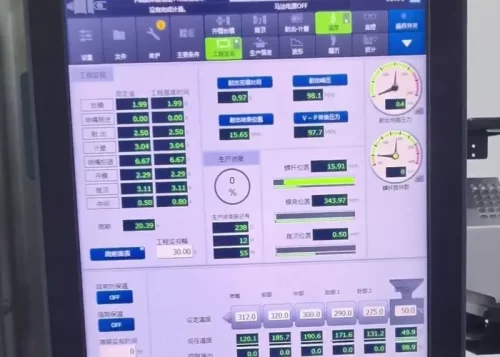
Dimensional accuracy remains one of the most critical quality indicators in injection molding production. Whether manufacturing automotive components, medical devices, consumer electronics housings, or industrial parts, dimensional consistency directly affects assembly performance, product reliability, and production costs.
Many injection molding facilities face recurring dimensional challenges, including excessive shrinkage, oversized parts, batch-to-batch variations, and post-molding warpage.
Production teams often respond by repeatedly adjusting machine settings, modifying mold temperatures, or increasing holding pressure.
While these interventions may temporarily correct individual defects, they frequently fail to address the underlying causes of dimensional instability.
In reality, dimensional variation is rarely the result of a single parameter. It is typically the combined outcome of material behavior, mold design, process control, and equipment stability.
Understanding how these factors influence shrinkage and part density is essential for achieving stable production.
This guide examines the fundamental causes of dimensional fluctuations in injection molding and provides practical methods for diagnosing and controlling dimensional defects in manufacturing environments.
Why Do Injection-Molded Dimensions Fluctuate?
At its core, nearly every dimensional deviation in injection molding can be traced back to one phenomenon: shrinkage variation.
During the molding cycle, plastic transitions from a high-temperature molten state to a solidified part. Throughout this process, molecular contraction occurs as the material cools and loses volume.
Any factor that alters cooling behavior, packing efficiency, cavity pressure, or material properties will influence the final shrinkage rate.
According to data published by the Society of Plastics Engineers (SPE) and major material suppliers such as BASF, SABIC, and DuPont, shrinkage rates can vary significantly depending on resin type and processing conditions.
Typical Shrinkage Ranges of Common Thermoplastics
| Material | Typical Mold Shrinkage (%) |
|---|---|
| ABS | 0.4 – 0.8 |
| PC | 0.5 – 0.7 |
| PMMA | 0.2 – 0.8 |
| PP | 1.0 – 2.5 |
| PA6 | 0.7 – 2.0 |
| POM | 1.8 – 2.5 |
| HDPE | 1.5 – 4.0 |
| TPE | 1.0 – 3.5 |
Source: BASF Technical Data Sheets, SABIC Material Processing Guides, DuPont Engineering Polymers Handbook.
When shrinkage remains consistent, dimensions remain stable. When shrinkage fluctuates, dimensional deviations appear immediately.
In production environments, dimensional problems generally fall into three categories:
Parts consistently smaller than specification due to excessive shrinkage or insufficient packing.
Parts consistently larger than specification due to overpacking or inadequate cooling.
Random dimensional fluctuations caused by unstable process conditions, material inconsistencies, or equipment variation.
The fundamental relationship can be summarized as follows:
Stable process conditions → Stable shrinkage → Stable dimensions
Three Process Parameters That Determine Most Dimensional Accuracy
Extensive studies of injection molding processes show that cavity pressure history, thermal management, and cooling behavior collectively account for the majority of dimensional variation observed in production.
Holding Pressure: The Primary Control Factor for Dimensional Accuracy
Many technicians focus heavily on injection speed when troubleshooting dimensions. However, once the cavity is filled, holding pressure becomes the dominant factor controlling final part dimensions.
Holding pressure compensates for volumetric shrinkage as the material cools. Additional material is packed into the cavity before the gate freezes, increasing density and reducing shrinkage.
When holding pressure is insufficient, internal voids and sink marks may develop. Reduced packing density often results in undersized parts and greater dimensional variation.
Conversely, excessive holding pressure can force additional material into the cavity, producing oversized dimensions, flash formation, and elevated internal stresses that later cause warpage or stress cracking.
Research published in the Journal of Materials Processing Technology has demonstrated that cavity pressure profiles are among the strongest predictors of dimensional consistency in molded parts.
Effects of Holding Pressure on Dimensions
| Holding Pressure Condition | Typical Result |
|---|---|
| Too Low | Undersized dimensions, sink marks, voids |
| Optimal | Stable dimensions, consistent density |
| Too High | Oversized dimensions, flash, residual stress |
Many manufacturers improve stability through a two-stage holding pressure strategy.
The first stage applies relatively high pressure for a short duration to compensate for rapid shrinkage near the gate and in thick sections. The second stage applies lower pressure over a longer period to maintain cavity density while minimizing stress accumulation.
This approach also helps compensate for minor hydraulic pressure losses that occur during extended production runs.
Mold Temperature Controls Shrinkage Uniformity
Mold temperature influences crystallization, cooling rates, residual stress formation, and ultimately dimensional stability.
For semi-crystalline materials such as polypropylene, nylon, and POM, higher mold temperatures generally promote increased crystallization, which leads to greater shrinkage.
For amorphous materials such as ABS and PC, mold temperature primarily affects stress distribution and dimensional consistency rather than crystallization.
Influence of Mold Temperature
| Condition | Dimensional Effect |
|---|---|
| High Mold Temperature | Increased shrinkage, improved surface finish |
| Low Mold Temperature | Reduced shrinkage, higher internal stress |
| Uneven Mold Temperature | Warpage and dimensional inconsistency |
Industry studies indicate that even small temperature differences across a mold can produce measurable dimensional variation.
A report from Moldflow and Autodesk simulation studies found that localized mold temperature imbalances frequently contribute to warpage and tolerance failures, particularly in thin-wall precision components.
Common causes of mold temperature instability include clogged cooling channels, inconsistent water flow rates, fluctuating coolant temperatures, and environmental temperature changes.
Maintaining balanced cooling circuits and recording mold temperatures during each production shift are proven methods for improving dimensional consistency.
Cooling Determines Final Part Stability
Cooling is often misunderstood as a simple cycle-time parameter. In reality, cooling determines whether the part has reached sufficient dimensional stability before ejection.
If cooling time is too short, shrinkage continues after demolding. Parts may initially pass inspection but later become undersized or warped.
Excessive cooling, however, can lock stresses into the molded component and unnecessarily increase cycle times.
Cooling-Related Dimensional Issues
| Cooling Condition | Common Result |
|---|---|
| Insufficient Cooling | Post-shrinkage, warpage |
| Excessive Cooling | Longer cycles, stress retention |
| Optimized Cooling | Stable dimensions and productivity |
For thin-wall products, cooling time often dominates dimensional stability. For thick-wall parts, monitoring actual part temperature before ejection provides more reliable control than relying solely on time-based settings.
Many advanced molding operations use temperature-based ejection criteria to ensure consistent solidification.
Two Hidden Causes of Dimensional Instability
Even when process parameters are optimized, dimensional fluctuations can persist if material quality or mold design introduces variability.
Material Moisture and Property Variations
Many engineering plastics absorb moisture from the environment. Materials such as ABS, PA, PC, and PMMA require controlled drying before processing.
Excessive moisture alters melt viscosity and affects cavity filling behavior. As a result, packing density changes from cycle to cycle, leading to inconsistent dimensions.
Recommended Moisture Levels Before Processing
| Material | Typical Maximum Moisture Content |
|---|---|
| ABS | 0.05% |
| PC | 0.02% |
| PA6 | 0.20% |
| PMMA | 0.05% |
Source: SABIC Processing Guidelines, BASF Ultramid Processing Manual.
Material selection also affects dimensional stability. Low-shrinkage materials such as PC and ABS generally exhibit better dimensional control than high-shrinkage materials such as POM, PA, and TPE.
The material establishes the achievable dimensional capability, while the process determines how closely production can approach that capability.
Mold Design Limitations
Certain dimensional problems originate from mold design rather than machine settings.
Gate dimensions, gate location, wall thickness distribution, venting efficiency, and cooling system design all influence shrinkage behavior.
For example, a gate that is too small may freeze prematurely, preventing adequate packing pressure from reaching distant sections of the cavity. The result is localized undersizing and increased dimensional variation.
Uneven wall thickness often creates differential cooling rates that generate warpage and non-uniform shrinkage.
Poor venting can cause inconsistent filling and trapped gas, leading to density variations throughout the molded part.
In such situations, process optimization may reduce defects but cannot completely eliminate limitations imposed by the mold design.
Solving the Three Most Common Dimensional Defects
Understanding the root cause of dimensional variation allows technicians to implement corrective actions more effectively.
Parts Consistently Undersized
Undersized dimensions are typically associated with excessive shrinkage or inadequate packing.
Common contributing factors include insufficient holding pressure, high mold temperatures, and inadequate cooling.
Increasing second-stage holding pressure, extending holding time, reducing mold temperature, and ensuring sufficient cooling in thick-wall regions often restore dimensions to specification.
Parts Consistently Oversized
Oversized dimensions usually result from excessive cavity packing or incomplete stress relaxation.
Excessive holding pressure, low mold temperatures, and premature ejection are frequent causes.
Reducing packing pressure, increasing mold temperature where appropriate, and extending cooling time generally improve dimensional accuracy.
Random Dimensional Fluctuations
When dimensions alternate unpredictably between oversized and undersized conditions, dynamic process variation is usually responsible.
The most effective troubleshooting sequence begins with mold temperature stability, followed by hydraulic pressure consistency, material moisture control, and cycle-time variation analysis.
In many facilities, mold temperature fluctuations account for the majority of intermittent dimensional problems.
Establishing a Standardized Process for Long-Term Dimensional Stability
Consistent dimensional performance is achieved through process standardization rather than repeated trial-and-error adjustments.
Successful molding operations typically implement comprehensive controls covering thermal management, pressure control, material preparation, and production cycle consistency.
Dimensional Stability Control Framework
| Control Area | Key Standardization Measures |
|---|---|
| Mold Temperature | Fixed-point monitoring, balanced cooling circuits, shift records |
| Holding Pressure | Two-stage pressure profiles, pressure calibration, hydraulic oil temperature control |
| Cooling | Wall-thickness-based cooling standards, validated process database |
| Materials | Controlled drying, consistent resin lots, moisture monitoring |
| Cycle Control | Stable injection, packing, cooling, and mold operation times |
When cycle times remain stable, mold temperatures stabilize. Stable temperatures produce consistent shrinkage, and consistent shrinkage leads directly to dimensional stability.
Conclusion
Dimensional variation in injection molding is fundamentally a shrinkage-control challenge.
While technicians often focus on machine settings, long-term stability requires a broader understanding of how holding pressure, mold temperature, cooling behavior, material properties, and mold design interact.
Among all process variables, holding pressure, mold temperature, and cooling conditions exert the greatest influence on dimensional accuracy.
However, material moisture control and mold design quality are equally important factors that cannot be overlooked.
Manufacturers that standardize these elements through documented process controls, temperature monitoring, material management, and consistent production cycles can significantly reduce scrap rates, improve yield, and maintain stable dimensions over long production runs.
References
BASF, Engineering Plastics Processing Guide.
SABIC, Injection Molding Processing Guidelines.
DuPont, Engineering Polymers Design Guide.
Society of Plastics Engineers (SPE), Injection Molding Handbook.
Rosato, D.V., Rosato, M.G., Injection Molding Handbook, Springer.
Autodesk Moldflow, Warpage and Shrinkage Analysis Documentation.
Journal of Materials Processing Technology, studies on cavity pressure and dimensional stability in injection molding.