

China CNC Milling » Blog » CNC Milling Tools and Cutting Parameters: Complete Guide to Selection and Optimization
FAQ
What materials can you work with in CNC machining?
We work with a wide range of materials including aluminum, stainless steel, brass, copper, titanium, plastics (e.g., POM, ABS, PTFE), and specialty alloys. If you have specific material requirements, our team can advise the best option for your application.
What industries do you serve with your CNC machining services?
Our CNC machining services cater to a variety of industries including aerospace, automotive, medical, electronics, robotics, and industrial equipment manufacturing. We also support rapid prototyping and custom low-volume production.
What tolerances can you achieve with CNC machining?
We typically achieve tolerances of ±0.005 mm (±0.0002 inches) depending on the part geometry and material. For tighter tolerances, please provide detailed drawings or consult our engineering team.
What is your typical lead time for CNC machining projects?
Standard lead times range from 3 to 10 business days, depending on part complexity, quantity, and material availability. Expedited production is available upon request.
Can you provide custom CNC prototypes and low-volume production?
Can you provide custom CNC prototypes and low-volume production?
Hot Posts
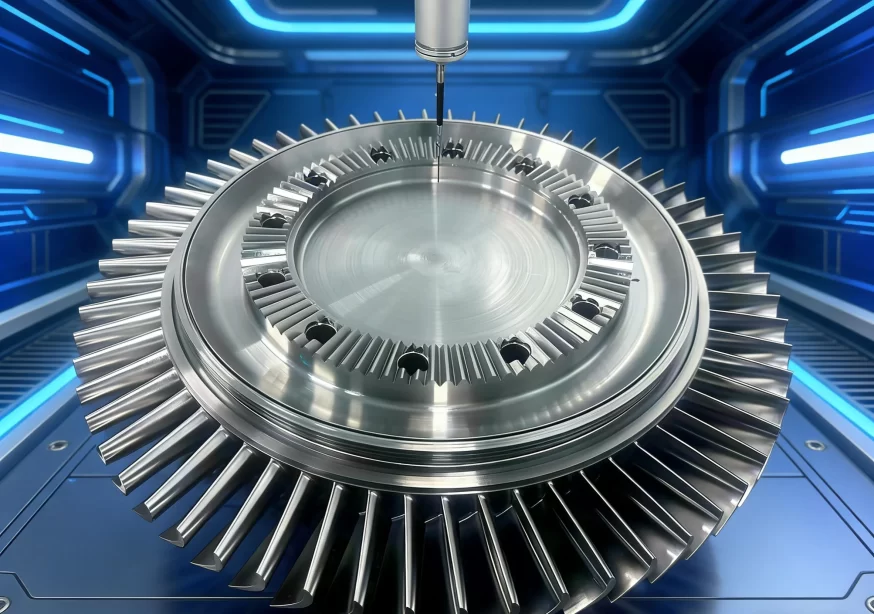
Cutting tools, which act directly on the workpiece, come in a wide variety.
Different tool geometries and materials offer distinct cutting performance characteristics.
These characteristics make them suitable for a diverse range of machining needs.
These needs include face milling, contour milling, and cavity milling.
Cutting parameters, on the other hand, act as the “rhythm regulator” of the machining process.
The proper setting of cutting speed, feed rate, and depth of cut not only ensures that the workpiece achieves the expected precision and surface quality.
It also maximizes the performance of the machine tool and prevents excessive tool wear or breakage.
In addition, it reduces machining time and costs.
Therefore, careful consideration of the selection of CNC milling tools and cutting parameters is of paramount importance.
This is essential for promoting the optimized application of CNC milling technology.
Requirements for Cutting Tools in CNC Milling
Select Cutting Tools with Good Rigidity
In CNC milling, tool rigidity is extremely critical.
Cutting tools with good rigidity can fully utilize the machine tool’s performance.
They enable high-allowance cutting, which improves production efficiency.
They also help prevent vibrations in the process system. This ensures machining accuracy and surface quality.
When tool rigidity is insufficient, manual machining allows for flexible adjustments to layered cutting in the face of uneven material allowances.
However, the program constrains CNC milling. Excessive material allowances can easily cause tool breakage.
Using small allowances, while it prevents breakage, can lead to excessive idle travel and low efficiency due to conservative cutting parameters.
However, when cutting tools have sufficient rigidity, there is less concern about uneven material allowances.
This allows CNC milling to proceed more smoothly and efficiently, significantly accelerating the machining process.
Selecting High-Durability Cutting Tools
When a cutting tool has low durability, its wear rate during machining accelerates significantly.
Changes in the tool’s condition directly affect the machining accuracy of the workpiece.
Tool wear increases cutting forces, which in turn can cause part deformation beyond tolerance limits.
Furthermore, during tool changes, errors in tool setting can result in visible tool change marks on the surface.
This adversely affects both surface quality and machining accuracy.
In addition, increased frequency of tool changes and tool setting reduces effective machining time.
It also accelerates tool wear, impacts machine tool utilization, and correspondingly increases production costs.
Selecting High-Quality Cutting Tools
CNC machine tools can perform automatic, continuous machining and operate at high speeds.
However, high-quality CNC cutting tools that precisely match these capabilities are necessary to realize the full potential for efficient machining.
Taking high-speed machining centers—which are now widely used in the manufacturing industry—as an example, the linear speed of the cutting tool can reach extremely high levels during machining.
Under these conditions, if the cutting tool lacks sufficient red hardness and wear resistance, it will wear out extremely quickly.
As a result, it may fail to reliably meet the machining accuracy requirements for parts.
Conversely, if lower cutting speed parameters are used, it becomes difficult to effectively leverage the unique advantages of high-speed cutting technology.
Selection of CNC Milling Tools
Selection of Milling Tools
Indexable disc milling cutters are typically selected for machining large flat surfaces.
This is primarily due to their large tool diameter.
This characteristic effectively reduces the frequency of repeated passes, improves milling efficiency, and prevents tool marks between passes.
It also optimizes surface finish. For machining small flat surfaces, bosses, stepped surfaces, and side contours, cylindrical end mills are more suitable.
Keyway cutters, which are capable of over-center cutting, are better suited for machining closed grooves such as keyways and waist grooves.
Two-flute keyway cutters have relatively spacious chip clearance. They are suitable for machining with large material removal rates.
They can also ensure that the dimensions of the machined slots meet precision requirements.
Ball-nose cutters are suitable for specific curved surface machining applications;
They effectively prevent interference and overcutting between the cutter tip and the workpiece surface, ensuring the precision and quality of curved surface machining.
Selection of Hole-Milling Tools
In hole-milling operations, the primary task is to precisely move the spindle or worktable for positioning to ensure accurate hole placement.
Twist drills have low rigidity because only the drill shank connects them.
During drilling, coolant has difficulty reaching the cutting edge.
High temperatures arise, and chip evacuation is poor. This can easily cause the hole to become misaligned.
Therefore, the depth-to-diameter ratio of the drill bit must be kept within 5.
Pre-drilling a center hole with a center drill before drilling the main hole can help meet the positioning accuracy requirements.
Before fine reaming, chamfering the hole opening facilitates reamer guidance.
A floating reamer should be selected to eliminate positional deviations during reaming.
When boring, multi-fluted boring tools can balance boring forces and suppress vibration;
It is recommended to choose a short, thick shank.
In case of interference, only remove material at the point of interference to enhance rigidity, ensuring the hole’s dimensions and surface quality.
The selection of hole-machining methods is equally critical and must follow a series of principles.
First, consolidate tool types to reduce the total number.
Once a tool is selected for machining, strive to complete all machining tasks with that tool in a single operation.
Distinguish between roughing and finishing tools;
Although this may increase the number of tools, it reduces wear on finishing tools and ensures part accuracy.
Machine holes on a surface only after milling the surface to prevent drilling slippage.
When machining curved surfaces and side contours, it is advisable to finish the curved surfaces before the contours.
Tools with excellent durability, hardness, and wear resistance should be the preferred choice.
Although this approach may appear to increase costs at first glance, the longer cutting time and better precision retention improve machining quality and efficiency.
It also reduces interruptions.
Comprehensive production cost calculations actually significantly reduce costs.
The proper selection of hole-machining tools and methods is a core element in achieving high-efficiency, high-precision hole machining.
It plays an irreplaceable role in optimizing the overall machining process and enhancing product quality.
It also provides manufacturing enterprises with strong technical support and cost-control guarantees in the face of intense market competition.
Selection of Other Cutting Tools
Other cutting tools used in CNC milling play a critical role in expanding the functional versatility of milling machines and enhancing their adaptability to different workpieces.
When selecting these tools, prioritize the following aspects: first, ensure cutting tool precision is of paramount importance. Second, prioritize tools with good durability.
During prolonged machining, both the tool’s surface and internal structure will sustain a certain degree of damage.
When the tool’s outer surface is damaged, its machining performance declines significantly, specifically reducing machining accuracy and slowing machining speeds.
Whereas damage to the internal structure can easily lead to tool breakage, which will have adverse effects on both the workpiece and the milling machine.
However, appropriate selection of cutting tools makes internal structural damage and breakage relatively unlikely.
Finally, cutting tools should be inspected regularly and replaced in a timely manner.
After replacement, be sure to perform the necessary adjustments to ensure that the cutting process proceeds smoothly and efficiently.
Determining Cutting Parameters for CNC Milling
Determining Cutting Speed
Cutting speed is inversely proportional to tool life (T), back depth of cut (ap), side depth of cut (ae), number of teeth (Z) on the milling cutter, and feed per tooth (fz).
It is directly proportional to the diameter (d) of the milling cutter.
When the depth of cut (ap), side cut (ae), number of teeth (Z), and feed per tooth (fz) increase, the number of teeth involved in the cutting process also increases.
This places a greater load on the cutting edges.
This results in more cutting heat being generated in the cutting zone, which raises the temperature and accelerates tool wear.
Therefore, when determining the cutting speed, it is necessary to consider the tool’s durability.
For large-diameter milling cutters, heat dissipation conditions are more favorable, so higher cutting speeds may be considered in such cases.
As shown in Table 1, reference values for cutting speeds during milling operations are listed for steel and cast iron materials under different hardness conditions.
| Workpiece Material | Hardness (HBS) | Cutting Speed (Vc) – Carbide Milling Cutter (m/min) | Cutting Speed (Vc) – High-Speed Steel (HSS) Milling Cutter (m/min) |
|---|---|---|---|
| Cast Iron | <190 | 66–150 | 21–36 |
| 190–260 | 45–90 | 9–18 | |
| 260–320 | 21–30 | 4.5–10 | |
| Steel | <225 | 66–150 | 18–42 |
| 225–325 | 54–120 | 12–36 | |
| 325–425 | 36–75 | 6–21 |
Determining the Cutting Depth
In the field of CNC milling, differences in machine tool types and machined materials can affect the cutting depth, so it is crucial to match the cutting depth to the specific machine tool and material.
When determining cutting depth, operators must follow the actual machining environment.
During rough machining, if the tool’s rigidity is sufficient, the cutting depth can be appropriately increased.
This enables more material to be removed in a single pass, improving efficiency.
However, if the tool lacks sufficient rigidity or the material is thick, increasing the cutting depth can lead to abnormal cutting or even failure to cut through the material.
This can hinder the machining process.
During cutting, the cutting edge should be oriented inward to prevent it from damaging the machine tool’s metal components.
This helps avoid contact with metal parts.
When tool rigidity is low and the material is thick, the tool is subjected to high impact loads.
In such cases, reduce the cutting depth to improve cut quality and lower the risk of tool damage.
When determining cutting depth, also take the machining allowance into account.
Precisely controlling the allowance and appropriately reducing the depth minimizes waste while improving machining quality and efficiency.
Under normal circumstances, a cutting depth of 0.05 mm to 1.0 mm is appropriate;
For semi-finishing, it is recommended to maintain a depth of 1 mm to 3 mm.
Operators should flexibly adjust the cutting depth within the corresponding range based on machining requirements to achieve optimal results.
This ensures the smooth progress of CNC milling and the attainment of machining accuracy.
It also helps meet the demands of various machining tasks and optimize the machining process.
Determining Feed Rate
Feed rate (F) is a key factor influencing CNC machining efficiency.
Its value must be determined by considering multiple factors comprehensively.
These include the characteristics of the cutting tool material, the machinability of the workpiece material, and the condition of the cutting allowance.
When machining part contours, cutting forces can suddenly change at specific locations, potentially damaging the tool.
When the tool approaches a corner or reaches a point where the cutting allowance changes abruptly, the feed rate is typically reduced appropriately.
This helps prevent over-cutting or under-cutting at the part’s corners.
The following principles apply to feed rate settings.
First, while ensuring workpiece machining quality, select the highest possible feed rate to improve efficiency.
For conventional cutting, this typically ranges from 100 to 200 mm/min.
Second, lower feed rates are recommended for saw-tooth cutter operations or deep-hole machining due to the specific nature of these processes.
These typically range from 20 mm/min to 50 mm/min.
Third, when a part requires high machining accuracy and strict surface quality, a lower feed rate of 20–50 mm/min should be selected.
Finally, when the tool is in an idle feed state, the feed rate must be set according to the maximum idle feed rate parameter preset in the CNC system.
This ensures the precision and coordination of tool movement throughout the entire machining process.
It meets the specific speed control requirements of different machining stages and ultimately guarantees high-quality part machining.
These principles, when applied together, help determine appropriate feed rates for various machining scenarios.
This ensures the smooth execution of CNC milling operations and the achievement of the desired machining quality.
Determining the Depth of Cut
Provided that the surface roughness of the machined part meets the relevant requirements, the selection of the depth of cut should comprehensively consider the part’s process rigidity, the machine tool, the fixture, and the cutting tool.
When the rigidity of the process system permits, it is recommended to use a larger depth of cut.
This helps reduce the number of passes and thereby improves machining efficiency.
When the required surface roughness of the workpiece is approximately Ra 3.2–12.5 μm, perform machining in two stages: rough milling and semi-finish milling.
After rough milling, maintain a remaining allowance of 0.5–1.0 mm.
When the required surface roughness is Ra 0.8–3.2 μm, the machining process should include rough milling, semi-finish milling, and finish milling.
For these three machining processes, the respective back cutting depths should be as follows:
During semi-finishing, the back cutting depth and side cutting depth for end milling should each be set to 1.5 mm to 2 mm;
During finishing, the back cutting depth should be 0.5 mm to 1 mm, and the side cutting depth for peripheral milling should be 0.3 mm to 0.5 mm.
Conclusion
The proper selection of CNC milling tools and cutting parameters is key to achieving high-quality, high-efficiency CNC milling.
Correctly selecting tools and cutting parameters not only effectively improves part machining accuracy and reduces surface roughness.
It also ensures that products meet strict quality standards.
In addition, it maximizes machine tool performance, reduces tool wear, saves costs, and enhances a company’s competitiveness.