
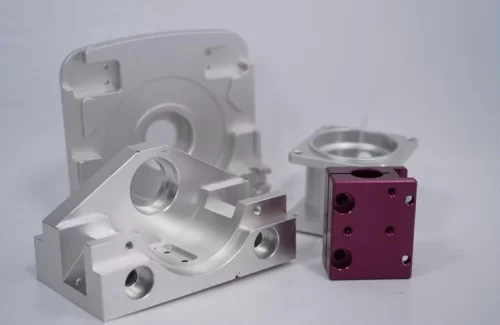

China CNC Milling » Blog » CNC Machining of High-Strength Aluminum Alloys: Process Optimization and Deformation Control for 7075-T6
FAQ
What materials can you work with in CNC machining?
We work with a wide range of materials including aluminum, stainless steel, brass, copper, titanium, plastics (e.g., POM, ABS, PTFE), and specialty alloys. If you have specific material requirements, our team can advise the best option for your application.
What industries do you serve with your CNC machining services?
Our CNC machining services cater to a variety of industries including aerospace, automotive, medical, electronics, robotics, and industrial equipment manufacturing. We also support rapid prototyping and custom low-volume production.
What tolerances can you achieve with CNC machining?
We typically achieve tolerances of ±0.005 mm (±0.0002 inches) depending on the part geometry and material. For tighter tolerances, please provide detailed drawings or consult our engineering team.
What is your typical lead time for CNC machining projects?
Standard lead times range from 3 to 10 business days, depending on part complexity, quantity, and material availability. Expedited production is available upon request.
Can you provide custom CNC prototypes and low-volume production?
Can you provide custom CNC prototypes and low-volume production?
Hot Posts
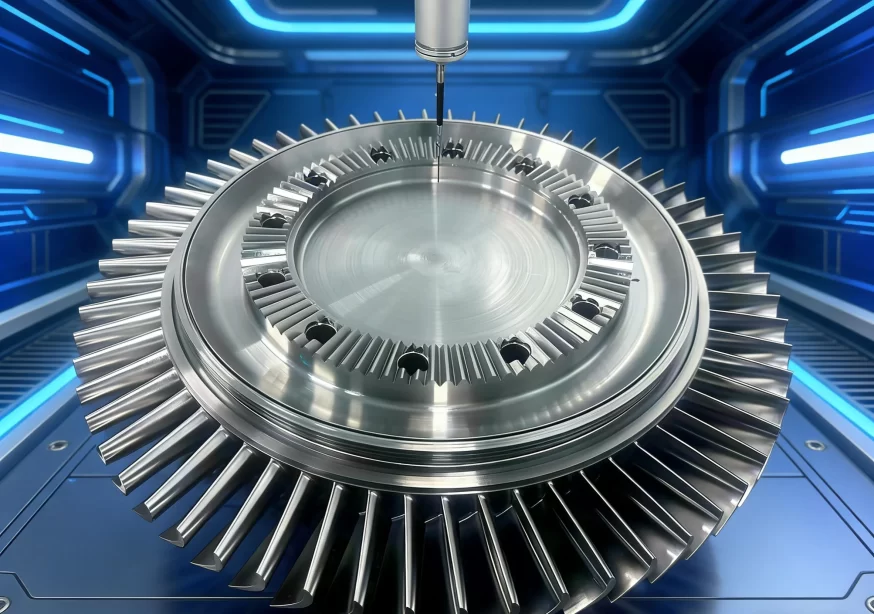
As modern manufacturing evolves toward higher precision and lighter weight, high-strength aluminum alloys in the 7075 and 2024 series have become key materials in sectors such as aerospace and automotive manufacturing, thanks to their high strength-to-weight ratio and excellent fatigue properties.
Currently, these aluminum alloys account for 30% to 50% of aircraft structures, and their use in automotive components can reduce the overall vehicle weight by 10% to 15%.
However, high-strength aluminum alloys exhibit high ductility and thermal conductivity, which can lead to intense cutting forces and localized heat buildup during CNC machining.
This results in issues such as workpiece deformation and surface hardening, thereby affecting component machining accuracy and production efficiency.
To address these issues, researchers have carried out extensive studies on machining processes for high-strength aluminum alloys.
These studies include optimizing cutting parameters for 7075 aluminum alloy and simulating how different tool paths influence workpiece deformation.
However, existing studies typically emphasize single-factor analysis, omit multi-factor coupling effects, and fail to align theoretical results with real production conditions.
As a result, they struggle to effectively address on-site deformation control challenges.
Therefore, conducting systematic research on the optimization of machining processes and deformation control for high-strength aluminum alloys is of great significance.
7075 high-strength aluminum alloy serves as the research subject in this study.
The work investigates how machining processes influence workpiece deformation mechanisms and develops a machining process optimization scheme to improve product quality while reducing production costs.
Characteristics
CNC Machining
The mechanical properties of 7075-T6 high-strength aluminum alloy are shown in Table 1.
With a tensile strength of 570 MPa and a hardness of 160–180 HB, it generates significant cutting forces during machining;
Its elongation is 11%, making it prone to built-up edge formation during machining;
Its thermal conductivity is 130 W·m⁻¹·K⁻¹, approximately three times that of 45 steel, causing cutting heat to accumulate easily and leading to thermal deformation of the workpiece.
| Material Grade | Tensile Strength (MPa) | Yield Strength (MPa) | Hardness (HB) | Elongation (%) | Thermal Conductivity (W·m⁻¹·K⁻¹) |
|---|---|---|---|---|---|
| 7075-T6 | 570 | 503 | 160–180 | 11 | 130 |
| 2024-T3 | 483 | 345 | 120–140 | 18 | 121 |
| 45 Steel | 600 | 355 | 170–210 | 16 | 47 |
Table 1. Mechanical Properties of High-Strength Aluminum Alloys
Given the material properties of 7075-T6 high-strength aluminum alloy, CNC machining of this material exhibits four typical characteristics:
First, high cutting forces require the use of wear-resistant cutting tools such as carbide and cubic boron nitride (CBN);
Second, high cutting temperatures necessitate optimized cooling methods;
Third, machining defects are prone to occur on the workpiece surface, requiring adjustments to toolpaths and cutting parameters;
Fourth, thin-walled parts have poor rigidity, placing high demands on fixture design.
Mechanisms of Machining Deformation
Machining deformation in high-strength aluminum alloy parts results from the combined effects of multiple factors, with the core causes falling into three categories.
First is deformation due to the release of residual stresses.
Residual stresses generated during hot working redistribute after material removal; in thin-walled parts, the deformation caused by this accounts for 60% to 70% of the total deformation.
Second is elastic deformation induced by cutting forces.
Cutting forces cause the workpiece to undergo elastic or plastic deformation, a phenomenon that is particularly pronounced in parts with low rigidity, such as slender shafts and thin-walled cavities.
Third, thermal deformation caused by cutting heat.
Cutting heat causes the workpiece to expand as it heats up; upon cooling, uneven temperature distribution creates thermal stress, leading to dimensional deformation.
Typically, temperatures during high-speed cutting range from 150 to 200 °C, and this type of thermal deformation accounts for 20% to 30% of the total deformation.
Strategies for Optimizing CNC Machining Processes
Optimization of Cutting Parameters
Cutting parameters are key factors affecting machining quality and workpiece deformation.
7075-T6 is selected as the research material, and carbide tools (YT15) are used for machining operations. An L9(3⁴) orthogonal experiment is then designed, using deformation, surface roughness, and tool life as evaluation indicators.
Table 2 presents the factor levels, while Table 3 reports the results of the orthogonal experiment.
| Level | Cutting Speed (m·min⁻¹) | Feed Rate (mm·r⁻¹) | Back Cutting Depth (mm) |
|---|---|---|---|
| 1 | 80 | 0.15 | 0.5 |
| 2 | 100 | 0.20 | 1.0 |
| 3 | 120 | 0.25 | 1.5 |
Table 2. Factor Levels of the L₉(3⁴) Orthogonal Experiment
| Experiment No. | Cutting Speed (m·min⁻¹) | Feed Rate (mm·r⁻¹) | Back Cutting Depth (mm) | Deformation (mm) | Surface Roughness (μm) | Tool Life (min) |
|---|---|---|---|---|---|---|
| 1 | 80 | 0.15 | 0.5 | 0.08 | 0.8 | 95 |
| 2 | 80 | 0.20 | 1.0 | 0.10 | 1.1 | 85 |
| 3 | 80 | 0.25 | 1.5 | 0.15 | 1.8 | 70 |
| 4 | 100 | 0.15 | 1.0 | 0.11 | 1.0 | 82 |
| 5 | 100 | 0.20 | 1.5 | 0.12 | 1.2 | 80 |
| 6 | 100 | 0.25 | 0.5 | 0.09 | 1.5 | 88 |
| 7 | 120 | 0.15 | 1.5 | 0.14 | 1.3 | 75 |
| 8 | 120 | 0.20 | 0.5 | 0.10 | 1.2 | 83 |
| 9 | 120 | 0.25 | 1.0 | 0.16 | 1.9 | 68 |
| k₁ | 0.110 | 0.110 | 0.090 | — | — | — |
| k₂ | 0.107 | 0.107 | 0.123 | — | — | — |
| k₃ | 0.133 | 0.133 | 0.137 | — | — | — |
| R | 0.026 | 0.026 | 0.047 | — | — | — |
Table 3. Results of the Orthogonal Experiment
As shown in Table 3, the optimal combination of cutting parameters is a cutting speed of 100 m·min⁻¹, a feed rate of 0.20 mm·r⁻¹, and a depth of cut of 0.5 mm.
This combination effectively balances deformation control, surface quality, and tool life, thereby meeting production requirements.
Toolpath Planning
Toolpaths influence the distribution of cutting forces and the accumulation of cutting heat, which in turn affect the overall deformation of the workpiece.
For thin-walled parts made of high-strength aluminum alloys, the current mainstream machining methods include linear milling, circular milling, and helical milling.
Analysis using UG modeling and AdvantEdge FEM simulation revealed that the helical milling method produces the lowest cutting forces and the most uniform workpiece deformation (maximum deformation of 0.09 mm).
The annular milling method ranks second in deformation control, with a maximum deformation of 0.13 mm.
In contrast, the row milling method produces the highest workpiece deformation, reaching up to 0.18 mm, due to frequent changes in cutting direction.
During helical milling, the tool maintains a constant contact area with the workpiece, which smooths the application of cutting forces and facilitates heat dissipation.
As a result, deformation control becomes optimal, making this method the preferred toolpath for thin-walled parts.
Optimization of Fixture Design
Conventional rigid fixtures are prone to causing localized stress concentrations in thin-walled parts during clamping, which can lead to workpiece deformation.
To address this issue, this paper proposes a flexible fixture design featuring multi-point support and pneumatically adjustable clamping.
By precisely controlling the clamping force, this approach prevents workpiece deformation caused by excessive clamping force.
Thin-walled test specimens are selected to validate the effectiveness of this approach, each having a thickness of 3 mm, a length of 200 mm, and a width of 150 mm.
The study conducts parallel comparative experiments using both traditional rigid fixtures and flexible pneumatic fixtures.
Three sets of test specimens undergo machining using the optimal parameter combination (cutting speed 100 m·min⁻¹, feed rate 0.20 mm·r⁻¹, depth of cut 0.5 mm). The process then measures the resulting part flatness and performs statistical analysis on the results.
The flexible fixture reduces the average part flatness from 0.25 mm under the traditional rigid fixture to 0.08 mm.
This result demonstrates a significant improvement in deformation control (see Table 4).
| Fixture Type | Component 1 Flatness (mm) | Component 2 Flatness (mm) | Component 3 Flatness (mm) | Average Flatness (mm) |
|---|---|---|---|---|
| Traditional Rigid Fixture | 0.23 | 0.27 | 0.25 | 0.25 |
| Flexible Pneumatic Fixture | 0.07 | 0.09 | 0.08 | 0.08 |
Table 4. Results of Fixture Design Optimization (Unit: mm)
Selection of Cutting Fluids
Cutting fluids serve to cool and lubricate.
To identify a cutting fluid suitable for CNC machining of high-strength aluminum alloys, this study selected three typical cutting fluids: a 5% emulsion, a 3% synthetic cutting fluid, and an oil-based cutting fluid.
Single-factor comparative experiments evaluate cutting temperature, surface roughness, and tool wear under optimized cutting parameters and fixture conditions.
The results are shown in Table 5.
As shown in Table 5, the oil-based cutting fluid exhibits the best lubrication performance, the lowest surface roughness, and the least tool wear;
However, its cooling effect is poor, and it results in the highest cutting temperature.
The synthetic cutting fluid has an average cooling effect but poor lubrication performance.
The emulsion demonstrates good overall cooling and lubrication performance, with a lower cutting temperature, and both surface roughness and tool wear meet the requirements.
Therefore, CNC machining of high-strength aluminum alloys uses a 5% volume fraction emulsion as the preferred cutting fluid due to its balanced cooling and lubrication performance.
| Cutting Fluid Type | Cutting Temperature (°C) | Surface Roughness (μm) | Tool Wear (mm) |
|---|---|---|---|
| Emulsion | 120 | 1.2 | 0.03 |
| Synthetic Cutting Fluid | 135 | 1.5 | 0.04 |
| Oil-Based Cutting Fluid | 150 | 1.0 | 0.02 |
Table 5. Results of Cutting Fluid Selection
Experimental Validation
Experimental Design
This experiment uses a 7075-T6 thin-walled component (2.5 mm thick, 300 mm long, 200 mm wide, with flatness not exceeding 0.1 mm and surface roughness not exceeding 1.6 μm) as the test subject.
A DMG MORICMX 600V machining center was selected to perform the machining operations.
A ZEISS CONTURA G2 coordinate measuring machine inspects workpiece flatness, while a Mitutoyo SJ-210 roughness tester measures surface roughness.
The study designs the experiment as a comparative setup consisting of a control group and an experimental group.
Each group contains five machined test pieces, and the mean values of all indicators are calculated for comparative analysis.
Specifically, the control group employed traditional machining processes with the following parameters: cutting speed of 80 m·min⁻¹, feed rate of 0.25 mm·r⁻¹, and depth of cut of 1.5 mm.
The toolpath utilized the pocketing method, with a rigid fixture, and a synthetic coolant with a volume fraction of 3%;
The experimental group employed the optimized machining process, with specific parameters of a cutting speed of 100 m·min⁻¹, a feed rate of 0.20 mm·r⁻¹, and a depth of cut of 0.5 mm.
The toolpath used was the helical milling method, with a flexible fixture, and the coolant was an emulsion with a volume fraction of 5%.
Results and Discussion
The experimental results are shown in Table 6.
In terms of machining accuracy, the average flatness of the control group parts was 0.23 mm ± 0.02 mm, exceeding the design requirement of no more than 0.10 mm.
In contrast, the experimental group achieved an average flatness of 0.07 ± 0.01 mm.
This represents an approximately 69.6% reduction compared with the control group, fully satisfying the required accuracy specifications.
Regarding surface quality, the average surface roughness of the control group was 1.8 μm ± 0.2 μm;
While the experimental group was 1.1 μm ± 0.1 μm, representing a reduction of approximately 38.9% compared to the control group.
The improved process significantly enhances the surface finish of the parts, which reduces the need for secondary processing steps such as polishing.
In terms of production efficiency, the experimental group required 28 ± 1 minutes of processing time, representing a 20% reduction compared with the control group’s 35 ± 2 minutes.
This reduction improves overall production capacity.
Further analysis of the optimized process synergy shows that the helical milling path’s smooth cutting action effectively stabilizes cutting force fluctuations.
The flexible pneumatic fixture’s uniform support significantly reduces stress concentration during clamping.
The 5% emulsion provides efficient cooling performance.
The combined action of these three factors resulted in a significant reduction in part flatness and effective deformation control.
Experimental results confirm that the multi-factor optimization scheme—covering cutting parameters, toolpaths, fixtures, and coolant—effectively improves performance.
This approach provides reliable process support for the production of thin-walled high-strength aluminum alloy parts.
| Group | Flatness (mm) | Surface Roughness (μm) | Machining Time (min) |
|---|---|---|---|
| Control Group | 0.23 ± 0.02 | 1.8 ± 0.2 | 35 ± 2 |
| Experimental Group | 0.07 ± 0.01 | 1.1 ± 0.1 | 28 ± 1 |
Table 6. Comparative Experimental Results
Conclusion
Deformation during CNC machining of high-strength aluminum alloys results from the combined effects of multiple factors, including the release of residual stresses, cutting forces, the accumulation of cutting heat, and clamping forces.
This paper proposes process optimization strategies in four areas: cutting parameters, toolpaths, fixture design, and coolant selection.
7075-T6 thin-walled parts serve as the basis for comparative experiments that verify the effectiveness of these optimizations.
The results indicate that for 7075-T6 high-strength aluminum alloy, the optimal cutting parameters are a cutting speed of 100 m·min⁻¹, a feed rate of 0.20 mm·r⁻¹, and a depth of cut of 0.5 mm.
This parameter combination effectively balances deformation control and surface finish quality;
The helical milling method resulted in the smallest maximum workpiece deformation (only 0.09 mm), making it the preferred toolpath for machining thin-walled parts;
The flexible pneumatic fixture reduced part flatness from 0.25 mm with conventional fixtures to 0.08 mm, demonstrating significant deformation control;
An emulsion with a volume fraction of 5% provides excellent cooling and lubrication, effectively reducing cutting temperatures and slowing tool wear.
Future research should expand in four key directions. One direction involves developing an AI-driven process–deformation prediction model to enable precise deformation forecasting.
Exploring machining processes for ultra-high-strength aluminum alloys to broaden material application scenarios;
Introducing advanced machining technologies to enable precision manufacturing of thin-walled parts;
And developing online deformation monitoring and real-time compensation technologies to promote intelligent closed-loop control of the machining process.