

China CNC Milling » Blog » CNC Machining for Automotive Molds: Technologies, Applications, and Precision Manufacturing Benefits
FAQ
What materials can you work with in CNC machining?
We work with a wide range of materials including aluminum, stainless steel, brass, copper, titanium, plastics (e.g., POM, ABS, PTFE), and specialty alloys. If you have specific material requirements, our team can advise the best option for your application.
What industries do you serve with your CNC machining services?
Our CNC machining services cater to a variety of industries including aerospace, automotive, medical, electronics, robotics, and industrial equipment manufacturing. We also support rapid prototyping and custom low-volume production.
What tolerances can you achieve with CNC machining?
We typically achieve tolerances of ±0.005 mm (±0.0002 inches) depending on the part geometry and material. For tighter tolerances, please provide detailed drawings or consult our engineering team.
What is your typical lead time for CNC machining projects?
Standard lead times range from 3 to 10 business days, depending on part complexity, quantity, and material availability. Expedited production is available upon request.
Can you provide custom CNC prototypes and low-volume production?
Can you provide custom CNC prototypes and low-volume production?
Hot Posts

The development of the automotive manufacturing industry depends largely on advancements in mold technology.
This is particularly true for the forming quality of critical components such as body panels and interior parts.
Engineers typically characterize automotive molds by their complex structures, significant variations in mold surfaces, and high precision requirements.
When addressing these challenges with traditional machining methods, factors such as complex processes, human error, and insufficient machining accuracy result in prolonged mold development cycles and poor consistency.
The introduction of CNC machining technology has provided a systematic technical foundation for the precise machining of automotive molds.
It enables the direct conversion of design data into high-precision physical molds, thereby driving a fundamental transformation in mold production methods.
Machining Characteristics of Automotive Mechanical Molds
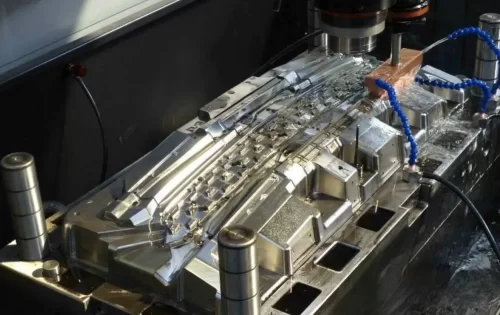
The machining and manufacturing of automotive mechanical molds—particularly large stamping dies and precision injection molds—exhibit distinct characteristics.
First, the mold surfaces are mostly complex free-form surfaces, requiring machining equipment with high-precision multi-axis interpolation capabilities.
Second, high precision is essential, with critical dimensional tolerances controlled within 0.01 mm and surface roughness (Ra) maintained at 0.8 μm or better.
Furthermore, mold materials are predominantly difficult-to-machine materials such as high-alloy tool steel and cemented carbide, which present high cutting resistance.
This poses a severe challenge to both machining processes and tool performance.
Additionally, automotive molds are generally large in size and heavy in weight;
Therefore, machining must account for clamping stability and control of machining deformation to ensure the overall fitting accuracy of large molds.
Core Applications of CNC Machining Technology
Application of High-Speed Milling Technology
High-speed milling (HSM) is a representative process in the application of CNC machining for mold manufacturing.
It employs a cutting strategy characterized by high spindle speeds (up to 15,000–40,000 rpm), shallow cuts, and high feed rates.
This significantly reduces cutting forces and minimizes the transfer of machining heat to the workpiece.
In automotive mold machining, high-speed milling is used for semi-finishing and finishing of mold cavities.
Particularly when machining high-hardness materials with a hardness of 60 HRC after quenching, it enables milling to replace grinding, significantly shortening the machining process.
It also achieves excellent surface quality, reduces the workload of subsequent manual grinding and polishing, effectively ensures the consistency and accuracy of complex surfaces, and improves the service life of the mold.
Precision Electrical Discharge Machining (EDM)
Manufacturers use CNC precision electrical discharge machining (EDM) for intricate structures that conventional cutting tools cannot achieve, such as deep grooves, narrow slots, and sharp internal corners in molds.
The CNC system precisely controls the discharge gap and servo feed, utilizing pulsed discharges between the tool electrode and the workpiece to remove material.
In automotive mold manufacturing, we use EDM technology to create complex cooling channels in engine block die-casting molds and intricate patterns in interior trim molds.
The automatic electrode change and multi-axis interpolation capabilities of CNC systems have further enhanced the automation of EDM machining and improved its ability to process complex cavities.
CNC Wire Electrical Discharge Machining
CNC wire electrical discharge machining (WEDM) provides a critical machining method for producing precision through-holes and complex-contour parts in automotive dies.
This is particularly useful when performing fine machining on materials with high hardness after heat treatment.
It utilizes a high-speed moving metal wire electrode (typically molybdenum or copper wire) to cut the workpiece through the electro-erosion effect of pulsed discharges.
This process enables us to form complex-shaped holes in a single step and we widely use it in machining die edges, precision punches, and stripper plates for stamping dies.
This process can maintain extremely small fillet radii (down to R0.05 mm) while achieving high dimensional consistency.
The most significant advantage of this technology is its high trajectory control precision and its ability to consistently produce tapered cuts.
Modern WEDM machines can achieve a machining accuracy of ±0.005 mm, which is critical for controlling the minute and uniform clearance between the punch and die in automotive body panel molds.
This clearance is typically 5% to 8% of the sheet thickness.
Its precise variable taper cutting capability ensures uniformity in the vertical profile when machining wedge mechanisms or inserts with complex draft angles.
This effectively prevents burrs on stamped parts and significantly extends the service life of the die cutting edges.
Multi-Axis Machining Centers
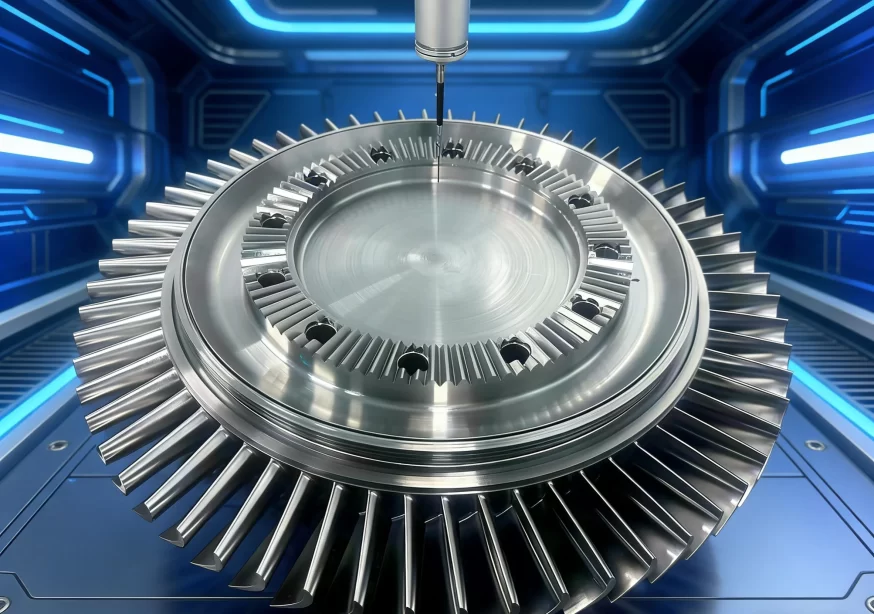
Five-axis machining centers are essential equipment for machining the complex surfaces of automotive molds.
Compared to three-axis machines, five-axis machining (3 linear axes + 2 rotary axes) allows the cutting tool to maintain the optimal cutting position relative to the workpiece throughout the machining process or to avoid interference zones.
When machining deep cavities and chamfers on large automotive body panel molds, five-axis machining allows the use of shorter, more rigid cutting tools.
This enables the machining of multi-faceted features in a single setup, ensuring machining accuracy while avoiding errors caused by repeated repositioning.
This is crucial for ensuring consistency in the left-right symmetrical components of large molds.
Integration of Multifunctional Machining Technologies
To shorten mold manufacturing cycles and improve mold precision, CNC multifunctional machining technologies have emerged.
Multifunctional machining centers integrate several machining functions—such as milling, turning, grinding, and EDM—into a single machine.
For example, when machining complex shaft components for automotive transmission system molds, a turning–milling center can complete all turning, milling, drilling, and boring operations in a single setup.
This “process-intensive” approach significantly reduces the time required for transferring workpieces between different machines and for repeated setups.
It eliminates secondary positioning errors and ensures the positional accuracy of all mold components.
It represents a key direction for the efficient and precision manufacturing of molds.
Impact of CNC Machining Processes on Mold Precision
Toolpath Planning and Optimization
The precision of CNC machining depends not only on hardware but also on software-based toolpath planning.
For the complex surfaces of automotive molds, we must employ different toolpath strategies during the roughing, semi-finishing, and finishing stages.
For example, we often use contouring or contour-following methods in roughing to quickly remove material, while we commonly use 3D offset or parallel finishing paths in finishing to ensure a smooth surface.
Improper path connections and the selection of tool entry and exit points can easily cause tool marks, over-cutting, or under-cutting on the mold surface.
These issues affect the surface quality of the final stamped or injection-molded parts.
A well-designed toolpath should ensure stable cutting loads and minimize tool vibration.
Precise Control of Cutting Parameters
The selection of cutting parameters (spindle speed, feed rate, cutting depth, and cutting width) is critical to CNC machining processes.
CNC systems can perform precise closed-loop control of these parameters.
When machining high-hardness materials for automotive molds, excessively high spindle speeds or slow feed rates can lead to rapid tool wear.
Conversely, excessive cutting depth can cause machine vibration and workpiece deformation.
Advanced CNC systems also feature adaptive control capabilities.
By monitoring cutting torque or vibration signals during the machining process, the system can automatically adjust the feed rate in real time.
This ensures that the machining process remains in an optimal state at all times.
This maximizes the dimensional accuracy and surface finish of the mold while maintaining efficiency.
Control of Thermal Deformation During Machining
Metal cutting generates a significant amount of heat, which can cause deformation in machined parts and consequently affect precision.
There are several methods for controlling thermal deformation in CNC machining.
On the one hand, high-speed milling generates less heat and dissipates it quickly, with most of the heat being carried away by the chips.
On the other hand, CNC machines use powerful cooling systems, such as high-pressure center-flow water cooling.
These systems precisely direct coolant to the cutting zone to suppress temperature rise.
Additionally, some high-end CNC machines feature constant-temperature cooling circuits for heat-generating components like the spindle and leadscrew.
These systems incorporate built-in temperature sensors.
They use the CNC system to pre-compensate for thermal displacement, ensuring stability during prolonged machining of large molds.
On-Machine Measurement and Error Compensation
In traditional machining, we perform final inspections using offline coordinate measuring machines (CMMs).
By the time we detect errors, we have already removed the workpiece from the machine, making rework difficult.
CNC machining technology incorporates on-machine measurement.
Using a high-precision touch-trigger probe mounted on the spindle, the dimensions or surface profiles of the mold are automatically measured between machining operations.
The CNC system compares the measured results with the design values and calculates the deviation.
If the error exceeds the tolerance, the system automatically compensates for the tool’s radius or position before proceeding to the next finishing operation.
If tool damage occurs, we can detect it promptly and trigger an alarm.
This process of real-time feedback and correction enables unmanned precision machining of automotive molds.
Process Verification via CNC Simulation
Before performing actual machining on expensive die steel, it is essential to ensure that the CNC program is 100% accurate.
CNC simulation technology uses computer graphics to replicate the entire G-code execution process.
It simulates machine tool movements, tool changes, workpiece cutting, and changes in the blank during the simulation.
Through simulation, it is possible to directly identify any potential collisions or interference between the tool and the workpiece, fixtures, or machine components.
Additionally, it allows for the early detection of overcutting or residual material issues along the machining path.
This process validation method prevents mold scrap caused by programming errors and reduces trial-cutting costs.
Particularly for automotive molds with complex geometries, it is a critical step in optimizing the process and ensuring first-pass success.
Conclusion
Manufacturers integrate CNC machining technology into every stage of automotive die and mold manufacturing.
These stages include design verification, precision cavity formation, the fabrication of critical components, and real-time error correction.
The depth and breadth of its application directly impact the manufacturing precision, service life, and development time of the molds.
As the automotive industry continues to pursue lightweighting, customization, and high quality, CNC machining technology will evolve toward higher speeds, greater precision, and increased versatility.
It will provide a continuous source of momentum for the modern automotive mold manufacturing industry.