



The machining quality of CNC turning is closely related to the wear status of cutting tools; once tool wear exceeds acceptable limits, it can lead to dimensional deviations in workpieces and a decline in surface quality.
Traditional strategies of replacing tools at fixed intervals are prone to causing premature replacement or overuse of tools.
Therefore, researching online tool wear monitoring technologies to achieve real-time status detection and intelligent early warning is of great significance for improving machining quality and controlling production costs.
Advances in sensing and signal processing technologies have opened new avenues for tool wear monitoring;
However, further research is needed on multi-source information fusion and feature extraction methods to develop high-precision predictive models.
Analysis of CNC Turning Tool Wear Mechanisms and Selection of Monitoring Signals
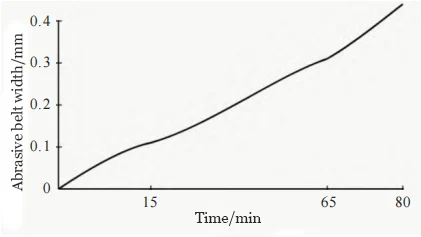
CNC turning tool wear primarily manifests in three forms: rake face wear, crescent-shaped wear on the front face, and boundary wear.
The curve showing the evolution of the rake face wear zone width over cutting time is shown in Figure 1.
Cutting force signals cause the principal cutting force to increase by 35% to 50%;
The proportion of high-frequency energy in vibration signals increases as wear worsens;
And acoustic emission signals (100–500 kHz) are highly sensitive to early tool failure.
A comparison of the characteristics of the three types of monitoring signals—cutting force, vibration, and acoustic emission—is shown in Table 1.
The monitoring system consists of a triaxial force transducer, an accelerometer, and an acoustic emission sensor.
The system employs an 8-channel, 16-bit data acquisition card with a sampling rate of 200 kS/s and a feature extraction latency of ≤ 150 ms.
| Signal Type | Frequency Range (kHz) | Wear-Sensitive Stage | Amplitude Variation | Advantages | Limitations |
|---|---|---|---|---|---|
| Cutting Force | 0–0.500 | Normal Wear | 35%–50% | Good linearity | Slow response to sudden changes |
| Vibration | 0.005–10.000 | Severe Wear | Increase in high-frequency energy proportion | Sensitive to abrupt changes | Highly susceptible to environmental interference |
| Acoustic Emission | 100.000–500.000 | Initial Wear | Sensitive to microcracks | Enables early-stage detection | Weak full-life-cycle coverage |
Table 1. Comparison of the Characteristics of Three Types of Monitoring Signals
Key Points for the Application of Online Wear Monitoring Technology
Construction of Time-Domain Statistical Feature Parameters
Filtering the monitoring signal produces time-domain statistical features that construct a set of wear status parameters.
Analysis of Key Time-Domain Statistical Features
The mean parameter reflects the DC component of the signal; the mean cutting force exhibits a linear upward trend as the wear width on the tool’s rake face increases.
The variance parameter describes the signal’s dispersion; during periods of severe wear, the variance of the vibration signal increases significantly.
The peak factor is the ratio of the signal peak to the root mean square (RMS) value;
It is sensitive to impact-type wear, typically ranging from 3 to 4 under normal conditions but exceeding 6 during chipping or coating delamination;
The skewness coefficient measures the symmetry of the signal distribution, with wear-induced fluctuations in cutting force causing the absolute value of skewness to increase;
The kurtosis coefficient K describes the sharpness of the signal distribution, calculated as follows:

In the equation: E denotes the expectation operator; x represents the signal sample value;
μ is the signal mean (the average of all sample values); and σ is the standard deviation.
During normal cutting, the kurtosis coefficient is close to 3, whereas prior to tool failure, it exceeds 8.
Feature Space Construction for Wear Monitoring
Dimensionless parameters such as the waveform factor and pulse factor can eliminate the influence of amplitude scale and enhance the comparability of features;
The time-domain parameter matrix constitutes the initial feature space, laying the data foundation for subsequent pattern recognition work.
The time-domain feature parameters and their sensitivity to wear are shown in Table 2.
| Feature Parameter | Calculation Method | Typical Value Under Normal Wear | Failure Threshold | Sensitivity to Wear |
|---|---|---|---|---|
| Mean Value | Signal average value | Increases linearly | — | High |
| Variance | Degree of signal dispersion | Stable | Sudden increase | Medium |
| Crest Factor | Signal peak value / RMS value | 3–4 | > 6 | High |
| Skewness Coefficient | Degree of asymmetry | Absolute value increases | — | Medium |
| Kurtosis Coefficient | Equation (1) | ≈ 3 | > 8 | High |
Table 2. Time-Domain Feature Parameters and Their Sensitivity to Wear
Feature Extraction in the Frequency and Wavelet Domains
The Fast Fourier Transform (FFT) can map time-domain signals to the frequency domain, and the distribution of spectral amplitudes reflects the patterns of frequency component changes caused by wear conditions.
The main frequency range of the cutting force signal is 0–500 Hz.
As wear on the rake face intensifies, the energy proportion of high-frequency components increases from an initial 12% to 28%.
The vibration signal spectrum exhibits multiple peaks;
At the natural frequencies of the tool-workpiece system, the amplitude of resonance peaks shifts due to changes in wear stiffness.
The wavelet packet decomposition method can decompose the signal into multiple frequency-band sub-signals.
Three levels of decomposition yield eight frequency-band nodes.
The energy proportions of these nodes collectively form an 8-dimensional feature vector.
The Daubechies wavelet basis is suitable for analyzing the non-stationary characteristics of cutting signals.
Calculating the wavelet packet energy entropy allows for a quantitative assessment of the signal’s complexity.
An increase in the entropy value indicates a decrease in the system’s orderliness.
Feature Dimension Reduction via Principal Component Analysis
If the feature vectors extracted from the time-frequency domain have too many dimensions, this increases the computational load and introduces information redundancy.
An orthogonal transformation converts correlated features into linearly independent principal components. This process maximizes data variance along the projection directions.
Eigenvalue decomposition of the covariance matrix yields the loadings of the principal components.
Cumulative contribution thresholds of 85% to 95% determine the number of principal components to retain.
Normalization methods can eliminate differences in the units of various feature parameters.
Z-score standardization maps each feature to a distribution space with a mean of 0 and a standard deviation of 1.
Scatter plot analysis reveals that the eigenvalues of the first five principal components are significantly larger than those of subsequent components, successfully compressing the original 32-dimensional data to 5 dimensions while retaining over 90% of the information.
After dimensionality reduction, the inter-class distances between samples in different wear states increased, and intra-class clustering improved significantly.
This process not only reduced the number of input variables for model training but also provided high-quality data inputs for constructing support vector machine regression models.
Development and Experimental Validation
Development of a Support Vector Machine Regression Model
The Support Vector Machine regression algorithm utilizes kernel functions to transform data, enabling it to handle nonlinear fitting problems in high-dimensional spaces, which aligns well with the complex characteristics of tool wear prediction.
The radial basis kernel transforms low-dimensional features into a high-dimensional feature space, establishing a mapping model between feature parameters and wear rates.
An ε-insensitive loss function defines a prediction tolerance interval.
This interval excludes deviations from being counted as training errors, which in turn improves the model’s robustness to noise.
The regularization coefficient balances model complexity and fitting accuracy;
If set too high, it may lead to overfitting, while if set too low, it may result in underfitting, making it difficult to capture wear evolution trends.
Support vectors serve as unique decision functions for key sample points, significantly reducing storage requirements and computational costs.
The regression model takes the 5-dimensional downsampled features as input and outputs the predicted value of the wear width on the cutting edge, balancing prediction accuracy and computational efficiency.
Grid search combined with 5-fold cross-validation optimized the model configuration.
The best performance was obtained when the kernel parameter was set to 0.125 and the penalty coefficient was set to 32.
Cross-validation procedures reduced the error to 0.018 mm, while setting a tolerance band width of 0.01 mm balanced prediction accuracy with computational efficiency.
Verification of Turning Experiments and Error Analysis
Carbide cutting tools machined 45 steel bar stock in this study.
The spindle speed was set to 800 r/min, with a feed rate of 0.15 mm/r, a depth of cut of 1.5 mm, and a cutting speed of 125 m/min.
Periodic offline inspections of the cutting tool were conducted using a tool microscope, which provided measurements with an accuracy of 0.005 mm.
The monitoring system continuously collected data and performed real-time analysis, comparing the predicted results with the measured values for verification.
During the stable wear phase, the prediction deviation was ±0.012 mm with a relative error of less than 8%;
Owing to wear rate fluctuations, the maximum deviation reached 0.025 mm in the initial wear phase.
During the rapid wear phase, the model effectively captured the accelerating wear trend and issued a failure warning 2 minutes in advance.
The study incorporated fifty experimental groups as the basis for evaluation.
Across repeated trials, the system yielded a wear-state recognition accuracy of 92.5%, along with a 4.2% false positive rate and a 3.3% false negative rate.
These outcomes demonstrate that the monitoring system effectively and reliably assesses tool condition.
The statistical performance of the monitoring system across different wear stages is shown in Table 3.
| Wear Stage | Cutting Time (min) | Prediction Error (mm) | Relative Error (%) | Maximum Deviation (mm) | Warning Lead Time (min) | Number of Samples (Groups) |
|---|---|---|---|---|---|---|
| Initial Wear | 0 – < 15 | ±0.018 | 12.5 | 0.025 | — | 10 |
| Normal Wear | 15 – < 65 | ±0.012 | 7.8 | 0.015 | — | 30 |
| Severe Wear | 65 – < 80 | ±0.020 | 9.2 | 0.032 | 2 | 10 |
| Overall Performance | — | ±0.014 | 8.5 | 0.032 | — | 50 |
Table 3. Statistics of the Monitoring System’s Predictive Performance at Different Wear Stages
Conclusion
This paper establishes a real-time multi-sensor monitoring platform capable of simultaneously acquiring cutting force, vibration, and acoustic emission signals.
The system extracted time-frequency domain features from the acquired data and then reduced the feature dimensions using principal component analysis.
Researchers developed a support vector machine regression model to predict tool wear status.
Turning test results show that during the normal wear period, the system’s prediction error is less than 8%, with a condition recognition accuracy of 92.5%, and it can issue a tool failure warning 2 minutes in advance.
This technology provides an effective approach for intelligent tool management in CNC machining processes.
Here is a split version in active voice that preserves the original meaning:
Future research can further explore the technology’s adaptability under complex operating conditions.
Researchers can also extend its application to scenarios that require collaborative monitoring of multiple tools.