

China CNC Milling » Blog » A Detailed Guide to Criteria for Evaluating Flash on Injection-Molded Parts
FAQ
What materials can you work with in CNC machining?
We work with a wide range of materials including aluminum, stainless steel, brass, copper, titanium, plastics (e.g., POM, ABS, PTFE), and specialty alloys. If you have specific material requirements, our team can advise the best option for your application.
What industries do you serve with your CNC machining services?
Our CNC machining services cater to a variety of industries including aerospace, automotive, medical, electronics, robotics, and industrial equipment manufacturing. We also support rapid prototyping and custom low-volume production.
What tolerances can you achieve with CNC machining?
We typically achieve tolerances of ±0.005 mm (±0.0002 inches) depending on the part geometry and material. For tighter tolerances, please provide detailed drawings or consult our engineering team.
What is your typical lead time for CNC machining projects?
Standard lead times range from 3 to 10 business days, depending on part complexity, quantity, and material availability. Expedited production is available upon request.
Can you provide custom CNC prototypes and low-volume production?
Can you provide custom CNC prototypes and low-volume production?
Hot Posts

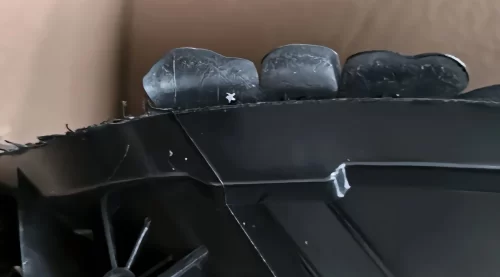
In an injection molding workshop, one of the most vexing quality issues is “flash.”
Though it may seem like a minor imperfection along the edges, it often becomes the direct cause of customer returns, payment deductions, or even lost orders.
I once personally experienced the predicament of having an entire batch of home appliance housings rejected by a customer due to vague flash standards.
At that moment, I realized that without clear, quantifiable flash standards, production management would forever be mired in a quagmire of “guessing and approximating.”
Drawing on hands-on experience from the front lines, this article systematically outlines the logic behind flash assessment, grading standards, inspection methods, and key implementation points for injection-molded parts.
It aims to provide colleagues in the injection molding industry with a practical “quality baseline” operational guide.
Nature and Hazards of Flash: More Than Just “Burrs”
Flash, commonly referred to in the industry as “burrs” or “excess material,” refers to thin sheets of excess plastic formed when molten plastic intrudes into mating gaps—such as mold parting lines, insert gaps, and ejector pin holes—under high pressure and then cools.
It is far from a problem that can be solved simply by “trimming the burrs.”
The harms are multifaceted:
1. Impact on Assembly and Functionality:
Flash located at critical mating points, such as studs and locating holes, may prevent components from assembling properly or cause fractures due to stress concentration during long-term use.
2. Damage to Aesthetic Quality:
On the surface, even minute flash can compromise a product’s surface finish, resulting in noticeable defects after painting or plating.
3. Increased Follow-up Costs:
Flash repair relies on manual labor, which is inefficient and costly.
If flash-affected parts reach the customer, it can trigger complaints, returns, or even claims, severely damaging the company’s reputation.
4. Exposes Underlying Issues:
Flash acts as a “mirror” reflecting mold precision, equipment condition, and the quality of process parameter settings.
Persistent flash often points to deeper technical or management flaws.
Three Major “Hotspots” for Flash Formation
To control flash, it is essential to first identify the locations where it most frequently occurs, so that targeted preventive measures and inspections can be implemented.
1. Mold Parting Line:
This is the primary “source” of flash.
Insufficient clamping force, platen deformation, wear on the parting line, or foreign matter adhering to it can all lead to poor mold closure, allowing molten material to overflow.
2. Moving Component Interfaces:
These include slides, inclined ejectors, and similar parts. Long-term movement causes wear, increasing clearance between components and resulting in flash.
This issue is particularly common in automotive interior parts and products with snap-fit structures.
3. Around the Ejection System:
Gaps between ejector pins, ejector sleeves, and the mold’s mating holes—caused by machining accuracy or wear—allow molten material to flow in, forming ring-shaped or spot-shaped flash.
Quantitative Criteria: Classification by Product Application Is Key
“How thick must a flash be to be considered non-conforming?”
There is no absolute answer; it depends on the product’s end use and customer requirements.
When establishing internal standards, we recommend implementing a tiered management system based on the following approach:
Reference Standards for Flash on Injection-Molded Parts (Internal Control)
| Product Grade | Typical Examples | Max Flash Thickness | Max Flash Length | Key Restrictions and Treatment Requirements |
|---|---|---|---|---|
| Precision Grade | Mobile phone housings, optical lenses, medical device parts, precision gears | ≤ 0.05 mm | ≤ 1.0 mm | Strictly prohibited on appearance surfaces (Class A surfaces). Flash on non-appearance surfaces must be smooth and free of sharp burrs. Manual repair is generally not allowed. |
| Standard Grade | Home appliance housings, toys, ordinary daily-use products | ≤ 0.10 mm | ≤ 3.0 mm | Flash on appearance surfaces must comply with customer drawings or agreements. Flash is strictly prohibited at stressed areas and assembly fit surfaces. Professional repair and polishing are allowed. |
| Structural / Hidden Grade | Internal brackets, reinforcing ribs, non-appearance structural parts | ≤ 0.15–0.20 mm | ≤ 5.0 mm | Must not affect assembly or functionality. All flash edges must be deburred to prevent scratching or interference with subsequent processes. |
Key Points for Development:
This standard must align with the customer’s technical agreement and take into account the precision of our own molds and equipment.
The standard should be documented in writing and distributed to the technical, production, and quality control departments.
From “Visual Inspection” to “Instrumental Measurement”: Scientific Testing Methods
The days of relying on “scraping with a fingernail” and “visual inspection” are over.
Accurate judgment requires the use of appropriate tools.
1. Thickness Inspection – Feelers Gauge:
This is the most direct and cost-effective tool for determining flash thickness.
Attempt to insert a standard feeler gauge into the base of the flash; if a gauge of a specific thickness (e.g., 0.05 mm) cannot be inserted, the thickness is deemed acceptable.
Quality inspectors must undergo training in the use of feeler gauges to ensure consistent application.
2. Length and Morphology Observation – Projector/Tool Microscope:
For minute or transparent flash, visual inspection is difficult.
Using a projector with 20–50x magnification allows for clear measurement of flash length and observation of its root morphology, aiding in analyzing the cause (whether it is continuous overflow or momentary spurting).
3. Surface Inspection – Magnifying Glass with Light Source:
For highly reflective, mirror-like, or light-colored products, even a 0.03 mm flash will cast a shadow under strong illumination.
Conducting a systematic inspection using a magnifying glass equipped with an LED ring light effectively prevents missed defects.
Implementing Standards: Execution Is Key
Once standards are established, how can we ensure that frontline employees follow them to the letter?
This requires systematic management measures.
1. Visual Aids:
Create “flash limits templates” or “flash judgment cards” that visually compare standard thicknesses and lengths of different grades using diagrams and actual photos.
Place these at every inspection station for easy reference.
2. Continuous Training and Assessment:
Before new employees begin work, they must undergo hands-on training using feeler gauges and limit gauges.
Regular “flash detection skill competitions” can be held, using typical defective parts as test cases to reinforce awareness of standards.
Employees must understand that the difference between “0.05 mm and 0.1 mm” is not merely a number, but a dividing line between quality grades.
3. Data Feedback and Improvement:
The quality inspection department records the type, location, and frequency of flash defects and provides regular feedback to the mold and process departments.
For example, if flash consistently occurs at a specific slider position, this indicates that worn mold components need to be inspected; if flash appears irregularly along the parting line, the clamping force or process stability must be checked.
The Value of Establishing Standards: From Cost Center to Assurance of Quality
The implementation of clear flash standards has brought about tangible changes:
1. Improved Quality:
Customer complaint rates have dropped significantly, and the number of returns and rework has decreased substantially, thereby strengthening brand reputation.
2. Cost Savings:
Reduced unpredictable labor costs for rework, material scrap costs, and the risk of penalties due to delivery delays.
3. Increased Efficiency:
Production and inspection now have clear guidelines, leading to faster decision-making and smoother communication.
Employees have shifted from feeling “uncertain” to feeling “assured after inspection.”
4. Technical Advancement:
Standardized processes have driven the digitization of mold maintenance and process parameter optimization, elevating overall technical management standards.
Conclusion
Ultimately, a set of effective standards for flash on injection-molded parts is far more than just a document hanging on the wall.
It is a concrete manifestation of a company’s quality culture, a tool for transforming individual experience into collective wisdom, and, above all, a commitment to quality in the face of the market and customers.
It replaces vague “feelings” with clear “data” and shifts the focus from reactive “firefighting” to proactive “prevention.”
When we replace manual feel with feeler gauges and “rough estimates” with standards, we are safeguarding not only the edges of our products but also the lifeline of our enterprise.