


With the introduction and implementation of the global “dual carbon” goals, the photovoltaic (PV) industry has entered a “golden period of development.”
PV technology, which converts solar energy into electricity, is a key form of renewable energy.
Solar photovoltaic power skips fossil fuels for energy conversion.
This feature slows the pace of global warming effectively. It delivers eco-friendliness, high energy efficiency and long service life. Flexible operation also stands out among its merits, alongside lower pollutant emissions.
Many links form the complete photovoltaic industrial chain. Key steps start with crystalline silicon raw material production.
Workers pull monocrystalline ingots and process silicon wafers afterward. Subsequent workflows cover solar cell manufacturing and PV module packaging.
The final stage builds photovoltaic power generation systems. The rapid development of the photovoltaic solar cell industry has created enormous demand for its primary raw material—silicon wafers.
As the core component of photovoltaic solar cells, silicon wafers account for more than 80% of a solar cell’s cost.
The electrical properties of the wafer material directly affect the photovoltaic conversion efficiency of power generation and, in turn, influence the cost of photovoltaic power generation.
Driven by the dual goals of cost reduction and efficiency improvement, the development of larger-sized and thinner wafers has become the primary focus of silicon wafer R&D.
However, larger and thinner wafers lead to a significant increase in breakage and scrap rates.
Currently, achieving both large size and thinness simultaneously represents a bottleneck in the wafer slicing process.
The proper use of cutting fluid can effectively mitigate the challenges faced during crystalline silicon production.
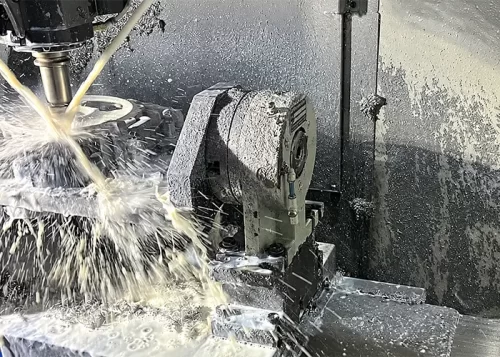
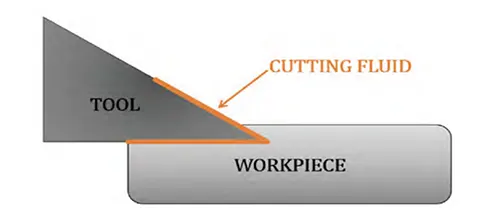
A cutting fluid is a liquid used during crystalline silicon processing to provide lubrication and cooling at the interface between the wafer and the cutting tool, as shown in Figure 1.
An appropriate cutting fluid not only effectively reduces cutting temperatures and minimizes tool wear and thermal deformation but also helps flush away chips, preventing their accumulation in the cutting zone.
This effectively reduces surface damage stress on the wafers, minimizes the damage layer, and improves the precision and yield of crystalline silicon processing.
With the rapid development of the photovoltaic industry, market demand for crystalline silicon cutting fluids has also increased.
According to industry analysis, global annual production of crystalline silicon cutting fluids is projected to reach approximately 200,000 metric tons by 2025, and this figure may rise to 500,000 metric tons by 2030.
In terms of patents, research and development of related technologies has also accelerated in recent years.
Overall, with the continued growth of the photovoltaic industry, the market outlook for crystalline silicon cutting fluids is very optimistic.
This review targets crystalline silicon cutting fluids as its research subject. It outlines fundamental definitions, classifications, structural makeup, and performance traits.
The discussion also covers different additives formulated inside these fluids. Collected content supplies useful references for follow-up related investigations.
Functions and Classification of Cutting Fluids
Functions of Cutting Fluids
During the production of solar cells, the cutting of silicon wafers generates a significant amount of cutting heat, which affects the surface quality and service life of crystalline silicon and hinders further processing.
Failure to promptly remove chips can adversely affect surface quality.
Cutting fluids need strong thermal conduction capacity. Such capacity keeps machining temperatures within the optimal interval.
Workpieces and cutting tools gain reliable cooling from these fluids. They also deliver lubrication, rust inhibition, and chip cleaning functions.
1. Cooling Mechanism
During the cutting process, it is crucial to rapidly and effectively reduce the temperature generated.
Cutting fluids feature outstanding thermal conductivity. Direct contact with the cutting zone carries away locally generated heat.
Heat transfers into the fluid medium rapidly. This cooling effect keeps the cutter and workpiece at relatively low temperatures.
2. Lubrication Mechanism
Lubrication performance refers to a cutting fluid’s ability to reduce wear on the workpiece during the cutting process.
During the cutting process, significant friction and heat are generated between the lathe, the workpiece, and the cutting tool.
A cutting fluid with excellent lubrication properties penetrates the cutting zone, where certain additives form a thin, dense oil film on the surfaces of the machine tool and the cutting tool through physical adsorption or chemical reactions.
This smooth oil film effectively reduces the impact of tool wear, prevents workpiece deformation caused by overheating, and helps improve workpiece precision.
3. Mechanism of Rust Prevention
The components in cutting fluids are prone to oxidation, decomposition, and deterioration.
The degraded substances react with the highly reactive surfaces newly exposed after cutting, causing the workpiece to rust.
Most cutting fluids require dilution with water; however, as water is a good electrolyte, it can easily cause electrochemical corrosion on machined surfaces.
At the same time, when workpieces are exposed to air, they are susceptible to atmospheric corrosion caused by water vapor and oxygen. These corrosive effects lead to a decline in the workpiece’s performance.
The function of rust inhibitors is to form a protective film on the workpiece surface, shielding it from rust.
4. Cleaning Mechanism
The cutting process generates chips, oil residue, and other contaminants.
If these are not removed promptly, they can affect the surface accuracy of the workpiece, accelerate tool wear, and scratch the workpiece.
To preserve the service life of production equipment and maintain tool efficiency, the cutting fluid must possess excellent cleaning capabilities.
Adding an appropriate amount of surface-active additives to the cutting fluid promotes the separation of chips, oil residue, and other contaminants from the workpiece during high-speed cutting.
At the same time, these additives form a stable lubricating oil film on the workpiece surface, effectively preventing the adhesion of dust, debris, and other contaminants.
Classification of Cutting Fluids
Based on their basic composition, cutting fluids on the market are divided into two major categories: water-free, oil-based cutting fluids and water-based cutting fluids, which consist primarily of water.
Water-based cutting fluids can be classified by their dilution properties into emulsifiable cutting fluids, semi-synthetic cutting fluids, and synthetic cutting fluids.
Oil-based cutting fluids can be classified according to their composition into pure mineral oil-based cutting fluids and synthetic oil-based cutting fluids.
1. Water-Based Cutting Fluids
Water-based cutting fluids are water-soluble solutions primarily composed of deionized water, supplemented with corrosion inhibitors, thickeners, and pH adjusters.
Depending on their mineral oil content, they can be classified as emulsifiable, semi-synthetic, and fully synthetic metalworking fluids.
Water-based cutting fluids account for more than 90% of total cutting fluid consumption. The main types and classifications of water-based cutting fluids are shown in Table 1.
| Category | Main Components | Advantages | Disadvantages |
|---|---|---|---|
| Emulsion Cutting Fluid | High mineral oil content; emulsifiers; rust inhibitors | Good cooling and lubrication performance; relatively low cost | Poor emulsion stability; susceptible to bacterial contamination |
| Semi-Synthetic Cutting Fluid | Low mineral oil content; high surfactant content | Good lubrication, cooling, and oxidation resistance; excellent corrosion protection | Short service life; volatile additives may affect the working environment |
| Fully Synthetic Cutting Fluid | Water; surfactants; water-soluble corrosion inhibitors | Excellent cooling, lubrication, and chemical stability | Higher cost |
Tab.1 Three types of water-based cutting fluid
2. Oil-Based Cutting Fluids
Oil-based cutting fluids are formulated by mixing base oils with tribological additives and do not require dilution with water.
The base oils used in oil-based cutting fluids are classified as mineral oils and synthetic oils. The mineral oil in oil-based cutting fluids is refined and purified from petroleum;
Its main components are hydrocarbons, and it is typically colorless, odorless, and transparent.
Compared to mineral oil, synthetic oil offers superior performance, such as a wider operating temperature range and better lubricating properties.
The main types and classifications of oil-based cutting fluids are shown in Table 2.
| Category | Main Components | Advantages | Disadvantages |
|---|---|---|---|
| Mineral Oil-Based Cutting Fluid | Mineral oil, extreme-pressure additives, etc. | Excellent lubrication and rust prevention properties | Poor cooling performance; difficult waste fluid disposal |
| Synthetic Oil-Based Cutting Fluid | Synthetic oil, extreme-pressure additives, etc. | Excellent lubrication performance | Difficult to clean; increases production costs |
Tab.2 Two oil-based cutting fluids
3. Differences Between Oil-Based and Water-Based Cutting Fluids
Compared to water-based cutting fluids, oil-based cutting fluids offer better lubrication and rust prevention properties, which can significantly improve machining efficiency.
However, they tend to form an oil film on the surface, thereby hindering effective cooling of the workpiece, and are prone to generating oil mist.
Water-based cutting fluids provide good cooling performance but are prone to bacterial growth and spoilage, have poor rust prevention properties, and have a short service life.
Due to their differing characteristics, water-based and oil-based cutting fluids are suitable for different machining conditions.
4. Selection of Cutting Fluids for Crystalline Silicon
With the global consensus on environmental protection, research and application of water-based cutting fluids have gained significant momentum.
Accounting for over 90% of cutting fluid consumption, they have become the mainstream direction in cutting fluid development.
In the photovoltaic industry, water-based cutting fluids are typically used in crystalline silicon production to ensure processing quality and meet environmental requirements.
Water-based cutting fluids outperform oil-based alternatives in two key aspects. They deliver stronger cooling capacity and better chip removal performance.
These fluids draw away heat that accumulates during silicon machining. Effective heat dissipation stops excessive temperature from harming crystalline silicon.
It also avoids thermal deformation of the silicon workpiece. Additionally, water-based cutting fluids are more environmentally friendly, reducing pollution and potential health hazards to workers.
In contrast, oil-based cutting fluids are more complicated to handle and clean up, and may have adverse effects on equipment and the environment;
Therefore, they are not commonly used in the crystalline silicon cutting process.
Water-Based Cutting Fluid Additives
Water-based cutting fluids are made by mixing a base oil (mineral oil or synthetic oil) with water in a specific ratio.
The base oil in the cutting fluid provides excellent lubrication, while water, with its high specific heat capacity and thermal conductivity, aids in the rapid cooling of workpieces.
However, cutting fluids composed solely of water and oil suffer from poor stability, poor dispersion in water, and a tendency to foster bacterial growth.
Therefore, in addition to the oil-water mixture, various additives must be incorporated into the cutting fluid.
These include surfactants to maintain the stability of the oil-water emulsion, as well as supplementary additives that provide rust prevention, bactericidal properties, defoaming, and antioxidant protection.
This ensures the cutting fluid possesses comprehensive capabilities such as efficient cooling, reliable lubrication, corrosion protection, and extended service life.
The following provides a detailed description of several commonly used cutting fluid additives.
Surfactants
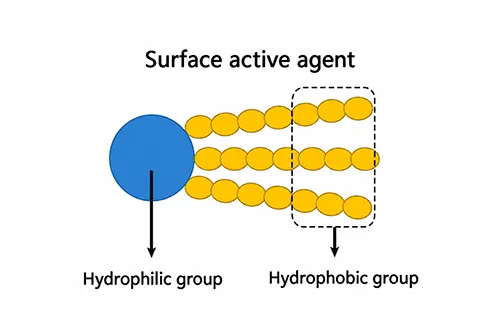
Surfactants can emulsify base oils and water to form a stable emulsion, significantly reducing the interfacial tension between the solvent phases.
They are organic compounds composed of two parts: a polar group (hydrophilic group) and a nonpolar group (hydrophobic group), as shown in Figure 2.
Surfactants are classified into two major categories based on the charge carried by their hydrophilic groups.
Charged hydrophilic groups define one group of surfactants. Common subtypes include cationic, anionic and amphoteric products.
Amphoteric molecules hold both positive and negative polar groups. Balanced charges yield an overall neutral state for these molecules.
The other category consists of nonionic surfactants, whose hydrophilic groups carry no charge. Common anionic surfactants include carboxylates, sulfates, sulfonates, and phosphates;
These surfactants have strong emulsifying properties but tend to foam easily. Common cationic surfactants include nitrogen-containing organic compounds and quaternary ammonium salts, which possess strong bactericidal properties;
Representative amphoteric surfactants include amino acid-based surfactants (such as dodecyl dimethyl amine oxide), which are extremely low in irritation and highly safe.
Nonionic surfactants (such as polyoxyethylene-based and polyol-based surfactants) are highly stable;
However, as temperature rises, their solubility decreases—and they may even become insoluble in water—which can easily cause the solution to become cloudy.
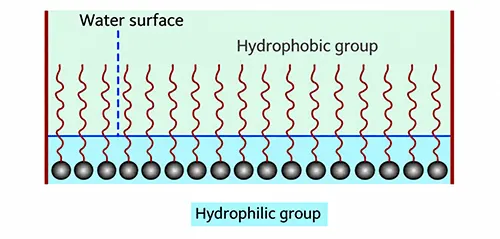
They reduce the surface tension of liquids through the interaction between hydrophilic and hydrophobic groups.
Specifically, the hydrophilic groups of the surfactant interact with water, while the lipophilic groups tend to bind with oils and fats, arranging themselves in an oriented manner at the two interfaces.
Active ingredients build a stable protective layer at liquid-solid boundaries. The film lowers surface tension across oil-water interfaces.
Mixing under this condition generates water-in-oil emulsions. Such structural changes accelerate phase separation between oil and water.
Friction reduction from the emulsion boosts overall lubrication performance.
Rust Inhibitors
In industrial production, corrosion of workpieces and machine tools can negatively impact a company’s economic performance.
Frequent replacement of cutting fluids alone cannot address the root cause of rust on industrial parts and can also cause environmental pollution.
Workpieces are susceptible to corrosion due to exposure to surrounding media such as moisture and oxygen.
Water-based cutting fluids contain a high water content, making corrosion more likely to occur.
Rust inhibitors form a protective layer by adsorbing onto or chemically reacting with the workpiece surface, thereby isolating the corrosive media from the workpiece surface and achieving rust prevention.
The effectiveness of rust inhibitors is closely related to factors such as the amount added.
For example, adding too little rust inhibitor will result in insufficient corrosion protection, while adding too much will lead to a waste of raw materials.
Cutting fluids with superior rust-preventive properties not only effectively protect machining equipment and workpieces but also enhance workpiece quality, extend their service life, reduce environmental pollution, and meet the requirements of sustainable development.
Many rust inhibitors commonly used in cutting fluids include sulfonates, carboxylic acids, carboxylates, organic amines, organic acids, and inorganic salts.
Among these, sulfonates and carboxylates not only effectively prevent oxidation but also provide a certain degree of lubrication; organic amines can serve as pH stabilizers in cutting fluids, maintaining their acid-base balance.
Inorganic salts have very poor oil solubility, are environmentally polluting, and are toxic, limiting their use in cutting fluids.
Organic acids, being environmentally friendly and low-cost, have become a popular choice in the field of cutting fluid additives.
Biocides
Additives and water in cutting fluids provide a fertile environment for the growth of bacteria and microorganisms.
Massive bacterial proliferation can lead to the deterioration of cutting fluids; furthermore, acidic substances produced during metabolic processes can accelerate corrosion.
At the same time, bacterial activity speeds up the degradation of cutting fluids, shortening their service life.
Given these issues, the use of biocides is particularly important.
Biocides used in cutting fluids should meet the following criteria: effectiveness at low concentrations, stability, non-corrosiveness to metals, environmental safety, and low cost.
The most commonly used industrial biocides include formaldehyde-releasing agents, isothiazolinones, boric acid, and phenolic compounds.
As the name implies, formaldehyde-releasing agents release highly volatile formaldehyde.
Formaldehyde denatures proteins and interacts with bacteria through alkylation reactions, thereby inhibiting the growth of bacteria and fungi.
Isothiazolinone biocides primarily inactivate bacteria by damaging their DNA molecules and exhibit strong bactericidal activity against sulfate-reducing bacteria.
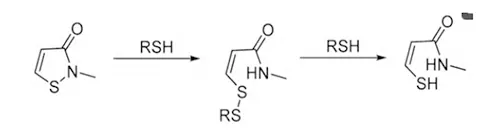
Collier and his research team explored the reactivity of isothiazolinone derivatives. These substances interact easily with thiol-bearing compounds.
Chemical reactions produce new derivatives linked by disulfide bonds (Figure 4). The resulting products trigger cascading biochemical changes inside cells.
Critical physiological functions break down after these disruptions. Bacterial reproduction grinds to a halt within minutes. Sustained damage kills the bacteria after several hours.
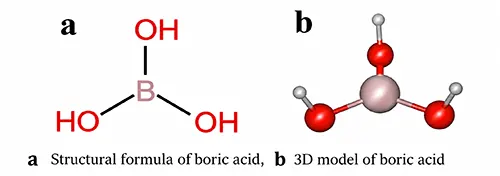
The molecular formula of boric acid is H₃BO₃, and its structural unit is a planar triangle, as shown in Figure 5.
Boron has an atomic number of 5; the number of its valence electrons is less than the number of its valence orbitals, so it is electron-deficient.
Therefore, it readily binds to external electrons and alters the permeability of the cell membrane by binding to the negatively charged cell surface, leading to cell death and thereby achieving a bactericidal effect.
Formaldehyde-releasing agents kill microorganisms quickly but have poor stability and are highly irritating to the skin.
Isothiazolinones exhibit excellent stability in cutting fluids and can rapidly kill microorganisms.
However, isothiazolinones are skin sensitizers and can cause contact dermatitis.
Boric acid-based biocides exhibit a cumulative toxicity effect, so their safety is relatively manageable (in short-term, low-concentration scenarios).
However, their drawbacks are also significant: if boric acid enters the human body through skin contact, accidental ingestion, or prolonged inhalation, it accumulates gradually due to slow metabolic excretion and may cause multisystem damage over the long term.
The selection of biocides requires not only consideration of their ability to inhibit bacterial growth but also a comprehensive assessment of their impact on the overall performance of the cutting fluid.
Furthermore, cost considerations cannot be overlooked; it is essential to balance economic efficiency while ensuring both effective biocidal performance and optimal cutting fluid performance.
Defoaming Agent
During the cutting process, foam often forms as the cutting fluid circulates at high speeds and under high pressure.
When surfactants are present, the surface-active properties of these substances prevent the thin films surrounding the bubbles from rupturing easily, causing the foam to accumulate over an extended period.
This type of foam alters the contact between the cutting tool and the cutting fluid, changing it from a solid-liquid contact to a solid-gas-liquid contact.
The presence of the gas phase increases friction between the cutting tool and the workpiece and prevents the timely dissipation of heat generated in the cutting zone.
This accelerates tool wear during the cutting process, reduces tool durability, directly affects product quality, lowers production capacity, and may even hinder the normal progress of the production process.
Defoamers are compounds capable of effectively disrupting foam structures;
They are categorized into foam-breaking agents, which primarily break down existing foam, and foam-inhibiting agents, which primarily prevent foam formation.
Defoamers in cutting fluids are primarily classified into silicone-based, non-silicone-based (including polyether-based, fatty acid ester-based, and mineral oil-based), and composite types:
The main advantages of silicone-based defoamers are high defoaming efficiency, low dosage (typically 0.1%–0.5%), good temperature resistance (30–120°C), and the ability to provide both defoaming and anti-foaming effects.
The disadvantage is that excessive addition may lead to excessively low surface tension in the cutting fluid, affecting machining accuracy or causing silicone stains;
Among non-silicone defoamers, polyether-based defoamers act gently and are readily biodegradable;
However, they defoam slowly and tend to lose effectiveness at high temperatures.
Fatty acid esters pose no risk of silicone contamination but have poor foam suppression durability.
Mineral oil-based defoamers are low-cost and readily available, but they have low defoaming efficiency and can cause water-based cutting fluids to separate into layers;
Composite defoamers combine the advantages of two or more components, balancing defoaming efficiency, compatibility, and stability, though they are relatively expensive.
Due to differences in the substances being defoamed and operating conditions, a defoamer effective in one system may act as a foaming agent in another.
Therefore, there is no “one-size-fits-all” defoamer; the appropriate defoamer must be selected based on the specific application and operating conditions.
Workers add defoamers at low dosages to foaming zones.
These additives collapse existing bubbles quickly. They suppress repeated foam generation for lasting control.
Inert chemical properties keep them from reacting with the base fluid.
Limited solubility in foaming liquids supports stable defoaming effects.
Qualified formulations leave product performance unchanged. Good stability and convenient storage further suit industrial applications.
Antioxidants
Antioxidants inhibit oxidation reactions in cutting fluids under high-temperature and high-pressure conditions.
They effectively extend service life, reduce harmful substances produced by oxidation, improve machining quality, and ensure operational safety.
Table 3 summarizes common antioxidants and their corresponding advantages and disadvantages.
| Antioxidant Type | Representative Substances | Advantages | Disadvantages |
|---|---|---|---|
| Aromatic Amine Antioxidants | Phenyl-α-naphthylamine, diphenylamine | Suitable for various temperatures and environments; provides good antioxidant performance and long-term storage stability | Certain toxicity to humans |
| Hindered Phenolic Antioxidants | 2,6-Di-tert-butylphenol | High antioxidant efficiency, relatively safe, and environmentally friendly | Reduced effectiveness at high temperatures |
| Sulfur-Containing Antioxidants | Dilauryl thiodipropionate, zinc sulfide | Good wear resistance and dual antioxidant effects | May decompose at high temperatures and produce harmful substances |
| Phosphite Antioxidants | Triphenyl phosphite, tris(nonylphenyl) phosphite | Good compatibility with various materials | May increase cutting fluid viscosity; prolonged use can cause equipment fouling |
Tab.3 Common antioxidants and their advantages and disadvantages
The selection of cutting fluid additives plays a decisive role in its performance and directly affects machining quality, efficiency, and equipment lifespan.
For example, rust inhibitors protect metal components from corrosion; suitable surface additives maintain the stability of water-based cutting fluids;
And biocides eliminate bacteria, extending the fluid’s service life.
However, improper selection can lead to the failure of the cutting fluid’s lubrication and rust prevention capabilities, resulting in premature tool wear, reduced workpiece precision, a shorter cutting fluid service life, and increased costs.
Therefore, the scientific selection of additives is key to optimizing cutting fluid performance and ensuring stable, efficient machining.
Improving the Performance of Crystalline Silicon Cutting Fluids
Enhancing the performance of cutting fluids is key to improving the processing efficiency and surface quality of crystalline silicon.
Recent studies have shown that ionic liquids possess high thermal stability and excellent lubricating properties;
They not only reduce cutting temperatures but also effectively minimize tool wear and extend tool life.
Ionic liquids carry high viscosity and low surface tension. Contact with workpieces triggers fast spreading over material surfaces.
Spread molecules build thin protective layers. Such traits make these liquids promising lubricant additives.
Water-soluble amino acid ionic liquids deliver distinct benefits. They strengthen anti-wear and friction-reducing performance for cutting fluids.
Treated fluids gain decent corrosion resistance and low toxic risk. Mixing ionic liquids into cutting slurries brings dual gains.
Machining speeds rise for crystalline silicon workpieces. Modified formulas also cut harmful emissions for greener production.
Nanoparticles serve another class of functional additives. They boost thermal conductivity and lubricity of cutting fluids sharply.
Wear resistance improves alongside these property upgrades. N-SiC particles stand out in polycrystalline silicon wafer machining.
Their presence narrows edge chipping widths and lowers surface roughness. Finished silicon wafers achieve higher processing quality. Researchers have also developed minimal quantity lubrication (MQL) technology.
This technology generates a mist from the cutting fluid using an extremely small amount of fluid—one ten-thousandth of that required by conventional methods.
By applying cutting fluid particles to the fluid stream at high speed, they can better penetrate the cutting zone.
The MQL method not only controls fluid consumption but also ensures better product surface quality. No single factor dominates the overall performance of cutting fluids.
Many interacting variables shape its final working state. Intrinsic physicochemical traits carry notable influence. Key indicators cover pH value, density, and viscosity.
Selected additives also change performance through their types and dosages.
The combined effect of these factors determines the cutting fluid’s performance in practical applications;
Therefore, when designing high-performance cutting fluids, it is necessary to comprehensively consider the synergistic effects and interactions of various additives to achieve optimal machining results.
Conclusion
This paper introduces the classification of cutting fluids based on their functions and provides an overview of their composition and methods for improving their performance.
The article explains that cutting fluids are primarily divided into two major categories: water-based and oil-based.
It also points out that in the photovoltaic industry, during the production of crystalline silicon, water-based cutting fluids offer better cooling, cleaning, and environmental performance compared to oil-based cutting fluids.
They can prevent thermal damage to crystalline silicon caused by overheating;
Therefore, water-based cutting fluids are typically used in crystalline silicon processing rather than oil-based ones.
Cutting fluids provide significant cooling, lubrication, rust prevention, and cleaning capabilities, effectively improving machining efficiency and product quality.
Building on this, the paper further reviews the functions and mechanisms of common
cutting fluid additives, including surfactants, biocides, and antioxidants.
Improvements in cutting fluid performance are primarily reflected in enhanced cooling, lubrication, rust prevention, and environmental sustainability.
The introduction of nanoparticles can significantly improve the overall performance of cutting fluids;
Ionic liquids can enhance the anti-wear and friction-reducing properties of cutting fluids, endowing them with good corrosion resistance and low toxicity.
These studies and applications not only drive technological progress in the photovoltaic and semiconductor industries but also provide new insights for clean production and environmental protection.
They align with the requirements of sustainable development and hold broad potential for market application.