
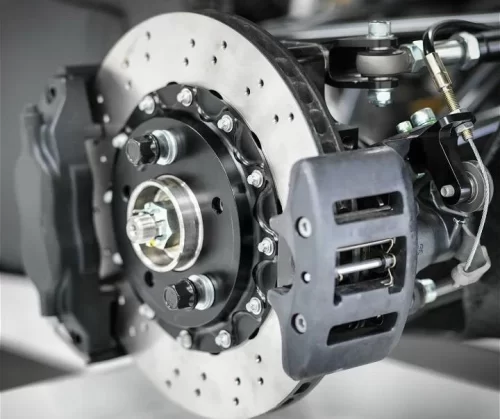

China CNC Milling » Blog » Optimization of Automotive Brake Discs for Enhanced Performance and Cost Efficiency
FAQ
What materials can you work with in CNC machining?
We work with a wide range of materials including aluminum, stainless steel, brass, copper, titanium, plastics (e.g., POM, ABS, PTFE), and specialty alloys. If you have specific material requirements, our team can advise the best option for your application.
What industries do you serve with your CNC machining services?
Our CNC machining services cater to a variety of industries including aerospace, automotive, medical, electronics, robotics, and industrial equipment manufacturing. We also support rapid prototyping and custom low-volume production.
What tolerances can you achieve with CNC machining?
We typically achieve tolerances of ±0.005 mm (±0.0002 inches) depending on the part geometry and material. For tighter tolerances, please provide detailed drawings or consult our engineering team.
What is your typical lead time for CNC machining projects?
Standard lead times range from 3 to 10 business days, depending on part complexity, quantity, and material availability. Expedited production is available upon request.
Can you provide custom CNC prototypes and low-volume production?
Can you provide custom CNC prototypes and low-volume production?
Hot Posts

During operation, brake discs are subject to frequent friction with brake pads.
If surface roughness exceeds specified limits, it can lead to unstable friction coefficients and increased braking noise, while also accelerating pad wear and causing thermal fade.
A high-quality micro-surface profile improves the uniformity of friction contact and heat dissipation efficiency, thereby extending the service life of both the brake rotor and brake pads.
As the automotive industry continues to raise performance requirements for braking systems, conducting an in-depth analysis of the mechanisms influencing the surface roughness of machined brake rotors and optimizing machining processes accordingly can provide technical support for the development of lighter, high-performance automotive braking systems.
Key Factors Affecting the Surface Roughness of Automotive Brake Discs
Tool Factors
The performance of the tool material, the geometry of the cutting edge, and the wear condition directly determine the stability of the cutting process and the surface quality.
If the tool material lacks sufficient hardness and wear resistance, the cutting edge is highly prone to chipping or rapid wear during machining.
This makes it difficult to maintain the tool’s sharpness, which in turn leaves irregular scratches on the brake disc surface and causes a significant increase in surface roughness.
Improper design of the cutting edge geometry also affects surface quality.
When the cutting edge radius is too large, the cutting zone experiences excessive squeezing and friction, which can easily cause plastic deformation of the surface; conversely, an overly sharp cutting edge is more prone to micro-chipping, forming burrs that compromise the integrity of the machined surface.
An excessively small main rake angle increases radial cutting forces, inducing cutting vibrations; conversely, an excessively small secondary rake angle increases the residual area, resulting in a coarse surface texture.
Improper control of the aforementioned factors will lead to increased surface roughness, thereby affecting the overall machining quality of the brake disc.
Factors Affecting Machining Parameters
Machining parameters directly influence surface roughness by altering cutting forces, temperatures, and material removal paths.
Feed rate determines the spacing between tool marks and the residual height; it is one of the most sensitive parameters.
When the feed rate exceeds 0.2 mm/r, distinct step marks appear on the surface during external turning, and surface roughness deteriorates rapidly;
Cutting speed affects built-up edge formation and tool wear; low speeds tend to form built-up edges, leading to grooving, while high speeds cause heat accumulation, resulting in edge degradation, scoring, and thermal deformation marks; depth of cut governs the level of cutting force; if too large, it causes elastic deformation and micro-vibrations, damaging the micro-contour, while if too small, insufficient cutting occurs, leaving traces of the previous pass on the surface.
Improper matching of these three factors will increase surface roughness; therefore, machining parameters must be optimized in combination based on the principle that “feed rate controls geometric texture, speed controls thermal conditions, and depth of cut controls trajectory stability.”
Machining Processes and Equipment Factors
Surface roughness is determined by machining processes and equipment performance, which influence the stability of the relative tool-workpiece trajectory, the thermal environment in the cutting zone, and the residual surface morphology.
Inefficient allocation of machining allowances or discontinuities in the transition between roughing and finishing operations can prevent the complete elimination of prior-process textures, resulting in superimposed surface patterns.
Insufficient cooling and lubrication or deviations in spray angles can cause localized overheating, leading to defects such as welding, dragging, and burning.
Additionally, spindle clearance, guideway wear, lead screw creep, and fluctuations in the feed system can all cause micro-vibrations in tool motion, resulting in periodic or random surface patterns.
When machine tool rigidity is insufficient, machining large-diameter brake discs may cause tool path deviation due to structural deflection; poor thermal stability of the equipment can lead to spindle elongation or workpiece thermal expansion displacement, directly altering the actual cutting position.
Workpiece Material and Microstructural Factors
Material hardness, microstructural uniformity, grain size, and internal defects determine the continuity of the cutting process and the quality of the micro-surface finish.
High material hardness accelerates edge wear and causes fine scratches on the surface, while low hardness leads to sticking, resulting in chip dragging and burrs; microstructural inhomogeneity (such as uneven distribution of graphite flakes in gray cast iron) increases cutting discontinuity, causing micro-pits of varying depths on the surface;
When grain size is large and varies significantly, differences in cutting resistance can cause grain spalling, resulting in pit-like defects; conversely, fine and uniform grains allow for a more stable plastic deformation layer, leading to a more uniform surface texture; internal defects such as inclusions, pores, and porosity can be torn or peeled off during the cutting process, forming localized depressions that significantly increase surface roughness.
Factors Related to Vibration and Thermal Deformation
Vibration and thermal deformation cause fluctuations in surface roughness by compromising the stability of the tool’s motion and geometric position.
When the natural frequency of the cutting system approaches the excitation frequency, flutter occurs, causing periodic deviations in the tool path and resulting in vibration marks; minute vibrations can also create random ripples.
Excessive tool overhang, insufficient clamping rigidity, spindle bearing clearance, and looseness in the feed system all reduce dynamic stiffness, amplifying small vibrations onto the surface profile.
Additionally, cutting heat softens and dulls the tool edge, causing scoring and thermal wear marks; uneven local thermal expansion of the workpiece alters the cutting point position, resulting in localized shifts in surface texture; and thermal drift in the machine tool structure causes deviations in the actual cutting path.
Strategies for Optimizing Automotive Brake Disc Machining Processes
Optimizing the Selection of Cutting Tool Materials and Edge Geometries
For cast iron brake discs, ultra-fine-grain cemented carbide tools should be prioritized.
With a hardness of HRA 93 or higher, these tools offer improved wear resistance compared to standard cemented carbide, effectively reducing edge wear during the cutting process.
When machining aluminum alloy or composite brake discs, polycrystalline diamond (PCD) tools can be selected.
Their high thermal conductivity and low coefficient of friction reduce the risk of chip adhesion and yield a smoother machined surface.
The design of the cutting edge geometry must balance sharpness with resistance to chipping.
A combined chamfer and radius structure is recommended, with the chamfer width controlled between 0.1 and 0.2 mm and the chamfer angle set at 8° to 12°.
This enhances edge rigidity and prevents chipping during cutting;
The tip radius should be adjusted according to the machining process: a large radius of 0.8–1.2 mm is selected for rough machining to reduce cutting forces and vibration, while a small radius of 0.2–0.5 mm is used for finish machining to minimize residual surface height.
Optimizing tool geometric parameters, The main rake angle should be set to 75°–90° to minimize the impact of radial cutting forces on the workpiece, while the secondary rake angle should be set to 10°–15° to improve tool heat dissipation while ensuring surface quality.
Optimization Strategy for Stable Control of Surface Roughness Parameters
When machining cast iron brake discs, the cutting speed is maintained between 180 and 250 m/min.
Within this range, tool wear is low and chip buildup is minimized, allowing for stable control of surface roughness;
Feed rates are set in stages according to surface finish requirements: 0.15–0.2 mm/r during rough machining to ensure efficiency, and reduced to 0.05–0.1 mm/r during finish machining to minimize residual surface height, thereby controlling surface roughness below 0.8 μm;
The depth of cut is set to 2–3 mm during rough machining to remove the majority of the stock, and to 0.1–0.3 mm during finish machining to prevent insufficient cutting caused by excessively small cutting volumes.
A dynamic parameter adjustment strategy is employed for different machining operations; when turning external circles, cutting speed is prioritized to ensure surface finish, while milling cooling grooves, the feed rate is appropriately reduced to minimize vibration effects.
Additionally, adaptive parameter control technology is implemented, using sensors to monitor cutting force and temperature changes in real time.
When cutting force exceeds a threshold, the feed rate is automatically reduced; when temperature becomes too high, the cutting speed is adjusted to prevent abnormal surface roughness caused by parameter fluctuations.
Optimization of Machining Process Path and Cutting Patterns
In terms of machining processes, a sequence of rough turning—semi-finishing—precision grinding—superfinishing is adopted.
During the rough turning stage, 70% to 80% of the stock is rapidly removed using a large depth of cut and moderate feed rate.
The semi-finishing stage corrects residual errors from rough turning, controlling surface roughness to 3.2–6.3 μm to lay the foundation for fine grinding.
During the fine grinding stage, a high-precision grinding wheel is used to reduce roughness to 0.8–1.6 μm through small feed rates and high rotational speeds.
In the superfinishing stage, abrasive flow polishing technology is employed to smooth out microscopic surface peaks, ultimately stabilizing roughness at 0.2–0.4 μm to meet the quality requirements for high-end brake discs.
Layered cutting divides the total depth of cut into 2–3 layers, ensuring uniform cutting thickness for each layer; symmetrical cutting addresses the dual-sided machining of brake discs by simultaneously machining both end faces, offsetting radial cutting forces, reducing workpiece deformation, and incorporating a combination of dry cutting and minimal lubrication;
When machining cast iron brake discs, dry cutting can be used to reduce chip adhesion; when machining aluminum alloy brake discs, minimal lubrication can be employed to lower the coefficient of friction, balancing environmental considerations with surface finish quality, thereby achieving synergistic optimization of toolpaths and cutting modes.
Structural Vibration Damping and Clamping Rigidity Enhancement Solutions
To dampen structural vibrations in the equipment, air spring dampers are installed between the machine tool bed and the foundation.
By adjusting the air pressure, these dampers absorb external vibrations, keeping the machine tool’s amplitude within 0.005 mm.
The spindle system employs hydrostatic bearings to improve spindle rotational accuracy.
Additionally, damping material is wrapped around the exterior of the spindle housing to reduce vibration transmission during high-speed spindle rotation.
Furthermore, using a reinforced tool holder with a shorter overhang increases tool holder rigidity and reduces tool chatter during cutting.
The clamping system has been improved with a multi-point positioning and hydraulic clamping solution: the positioning reference uses the inner bore and end face of the brake disc, with radial positioning achieved via three evenly distributed locating pins, and six support points on the end face to ensure flatness;
The hydraulic clamping device uses a ring-shaped cylinder to apply a clamping force of 1.5 to 2 MPa through eight evenly distributed clamping points.
Elastic shims are installed between the clamping surface and the workpiece to compensate for microscopic surface irregularities, ensuring uniform distribution of the clamping force.
For large brake discs, a dual-spindle synchronous clamping method can be employed, with the left and right spindles symmetrically clamping both ends of the workpiece to counteract the bending moment generated by cutting forces.
This enhances clamping rigidity, reduces vibration and displacement during machining, and thereby ensures stable surface roughness.
Surface Hardening and Post-Treatment Technologies
In terms of physical hardening technologies, laser surface hardening is the preferred method.
This process involves localized hardening of the friction surface of the brake disc.
The laser power is controlled between 1.5 and 2.5 kW, with a scanning speed of 5 to 10 mm/s, creating a hardened layer 1 to 2 mm deep and increasing the hardness (HV) to over 600 to enhance wear resistance.
For aluminum alloy brake discs, micro-arc oxidation (MAO) technology is employed to generate a ceramic oxide film 5–10 μm thick on the surface.
This oxide film bonds tightly to the substrate, increasing corrosion resistance by 3–5 times without affecting surface roughness.
For chemical strengthening, a low-temperature nitriding process is employed.
The brake discs are held in an ammonia atmosphere at 500–550 °C for 4–6 hours, allowing nitrogen atoms to diffuse into the surface and form a nitrided layer 0.1–0.3 mm thick.
This layer achieves a hardness of 800–1,000 HV, effectively resisting friction wear and thermal fatigue.
Furthermore, the low-temperature treatment process does not damage the machined surface’s micro-topography.
For post-treatment, a combined ultrasonic cleaning and hot-air drying process is employed: first, 80–100 kHz ultrasonic waves are used to remove residual cutting fluid and grinding debris from the surface, followed by rapid drying with hot air at 80–100 °C to prepare for surface airtightness testing.
Compressed air at 0.3–0.5 MPa is used to blow through the brake disc’s ventilation holes, bolt holes, and other areas to ensure no impurities are blocking them, thereby guaranteeing the brake disc’s heat dissipation performance and assembly accuracy.
Results of Process Optimization for Automotive Brake Disc Machining
Trends in Surface Roughness and Micro-Profile Improvement
Following process optimization, the surface roughness of machined automotive brake discs has shown a downward trend with improved stability.
After tool optimization, parameter adjustments, and superfinishing, roughness is consistently controlled within 0.2–0.8 μm, with some high-end brake discs achieving a mirror-like finish of 0.1–0.2 μm.
In terms of micro-topography, observations using a confocal laser microscope reveal that the texture orientation of the optimized surface is more uniform, with no obvious random scratches.
This is attributed to the optimization of cutting modes and the implementation of vibration-reduction measures, which effectively suppress vibration-induced waviness.
The surface hardening process did not compromise the precision of the micro-contour.
After laser quenching and cryogenic nitriding, surface roughness exhibited only minor fluctuations of ±0.05 μm. This ensures that while hardness is enhanced, the advantage of low roughness is maintained, providing an excellent surface condition foundation for stable brake disc friction performance.
Improved Tool Life, Wear Stability, and Machining Consistency
Process optimization can significantly extend tool life and improve wear stability, thereby ensuring machining consistency.
By adopting ultra-fine-grain carbide tools and optimizing the cutting edge geometry, tool life has been extended to 150–200 parts, representing a 2–3-fold increase in service life.
After optimization, tool wear enters a stable phase; after machining 100 parts, wear is still controlled within 0.1 mm, with the wear rate reduced by 60%, thereby avoiding surface quality variations caused by fluctuations in tool wear.
In terms of machining consistency, through adaptive parameter control and improved clamping rigidity, the roughness
within a batch was reduced to less than 0.3 μm, and dimensional deviations were controlled within 0.03 mm.
The pass rate was significantly improved, reducing surface quality variations between different batches of brake discs.
The roughness fluctuation range was narrowed from ±0.8 μm to ±0.2 μm, providing stable quality assurance for mass production.
Improved Braking Performance, Thermal Fade Resistance, and NVH Performance of Brake Discs
Following process optimization, the braking performance, thermal fade resistance, and NVH performance of the brake discs have all been improved.
The optimized, low-roughness surface micro-profile increases the contact area between the brake pads and the brake disc, enhancing the stability of the coefficient of friction.
During dry braking, the fluctuation in the coefficient of friction has narrowed from 0.3 to 0.5 to 0.38 to 0.42, and braking distance has been reduced by 8% to 12%. and the braking distance from 100 km/h to 0 km/h has been reduced from 42 m to below 37 m; the post-optimization fade rate is controlled within 8%, and brake performance recovery speed has increased by 50%;
The improved consistency of surface texture and the application of vibration suppression technology have reduced brake noise levels by 6–10 dB.
During braking at speeds of 60–80 km/h, noise levels dropped from 78 dB to below 68 dB, and the proportion of high-frequency noise decreased, resulting in a significant improvement in subjective auditory comfort;
The improved surface smoothness reduces friction impact between the brake pads and rotors, thereby lowering the amplitude of vibrations transmitted to the vehicle body.
Balancing Machining Cost-Effectiveness, Efficiency, and Quality Costs
Process optimization achieves a dynamic balance among machining cost-effectiveness, efficiency, and quality costs.
In terms of efficiency, extended tool life and optimized parameters have reduced the machining time per part to less than 20 minutes, increased daily production output from 300 to 380 units, and improved equipment utilization.
Although initial investments in tool and equipment upgrades increased by 10%, tool life was extended by 2 to 3 times, reducing the cost per tool from 5 yuan to 2 yuan.
Simultaneously, the improved yield rate reduced scrap losses and lowered quality costs.
Following optimization, the service life of brake discs was extended from 30,000 km to 50,000 km, reducing users’ long-term maintenance costs and enhancing the product’s market competitiveness.
The process optimization reduced the consumption of cutting fluid and the volume of scrap generated, thereby lowering environmental treatment costs and meeting green manufacturing requirements, achieving a dual improvement in both production efficiency and economic performance.
Conclusion
The surface roughness of automotive brake discs is influenced by multiple factors, including cutting tools, machining parameters, equipment, materials, as well as vibration and thermal deformation, and directly affects braking performance and service life. Strategies such as optimizing tool materials and cutting edge geometries, coordinated control of machining parameters, improvements to machining paths, vibration-damping clamping, and surface hardening can reduce surface roughness and improve micro-surface profiles.
Following optimization, the braking performance, thermal fade resistance, and NVH performance of brake discs are enhanced.
At the same time, tool life is extended and machining consistency is improved, achieving a balance between efficiency and cost-effectiveness while reducing overall costs.
This provides a solid foundation for the development of automotive braking systems toward high performance, high reliability, and green economy.