

China CNC Milling » Blog » Why does metal suddenly “break”?
FAQ
What materials can you work with in CNC machining?
We work with a wide range of materials including aluminum, stainless steel, brass, copper, titanium, plastics (e.g., POM, ABS, PTFE), and specialty alloys. If you have specific material requirements, our team can advise the best option for your application.
What industries do you serve with your CNC machining services?
Our CNC machining services cater to a variety of industries including aerospace, automotive, medical, electronics, robotics, and industrial equipment manufacturing. We also support rapid prototyping and custom low-volume production.
What tolerances can you achieve with CNC machining?
We typically achieve tolerances of ±0.005 mm (±0.0002 inches) depending on the part geometry and material. For tighter tolerances, please provide detailed drawings or consult our engineering team.
What is your typical lead time for CNC machining projects?
Standard lead times range from 3 to 10 business days, depending on part complexity, quantity, and material availability. Expedited production is available upon request.
Can you provide custom CNC prototypes and low-volume production?
Can you provide custom CNC prototypes and low-volume production?
Hot Posts

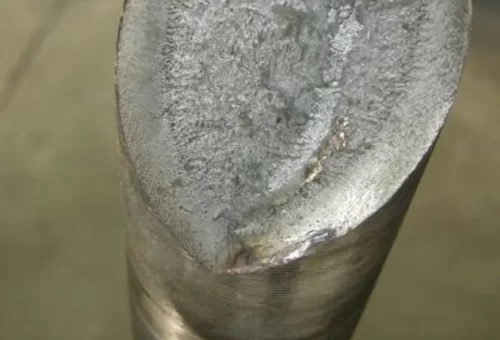
Metals are ubiquitous in our daily lives and in engineering and construction today: from bridges and high-speed rail, to airplanes and automobiles, metals are key materials. But did you know? These seemingly strong metals can sometimes be “brittle as glass” and suddenly break without warning, resulting in serious consequences. This is the problem of “brittle metal”.
What is metal brittleness?
Metals are the most common engineering materials in our lives and in industry. From airplanes, high-speed railroads and bridges to automobile parts and building structures, almost all of them are made of metal. Metals are widely used because they usually have the following advantages:
High strength: they can withstand large loads;
Good plasticity: they can be stretched and compressed without breaking;
Good thermal and electrical conductivity: suitable for electrical and thermal systems;
High machinability: can be cast, forged and welded in a variety of processing methods.
But here’s the thing: metals are not “reliable” in all situations.
Sometimes a metal will suddenly fracture under little stress, with little or no deformation or warning of the fracture process.
This sudden failure is called brittle fracture, and the root cause of this is metal embrittlement.
Metal brittleness, is the phenomenon where a metallic material suddenly breaks under stress with little or no plastic deformation. This type of fracture often occurs without warning and is extremely dangerous as it suddenly “snaps” like glass.
What are the forms of metal embrittlement?
The embrittlement of metals is not a single form, but a phenomenon caused by a variety of reasons, mainly manifested in the following three categories:
1. Low temperature embrittlement
Many metals are very tough at high temperatures, but as soon as the temperature is lowered, the properties drop dramatically. Example:
Steel at room temperature can absorb a lot of energy, but once the temperature is below the “tough and brittle transition temperature”, the impact energy is significantly reduced, very easy to fracture.
In low-temperature environments such as the Arctic, the deep sea and liquefied gas storage, metal structures must be carefully selected.
Principle: At low temperatures, the thermal movement of atoms within the metal is weakened, slip deformation is difficult, unable to dissipate stress, cracks will expand rapidly once they appear.
2. Stress concentration brittleness
A small nick or crack may cause the whole structure to break.
Threads at the root of screws, welds and edges of holes, all of these areas are prone to stress buildup.
Even if the overall load carrying capacity is sufficient, fracture can occur when localized stresses exceed the strength limit.
Principle: stress concentration makes localized areas yield or fracture prematurely, especially in brittle materials, cracks will not be “blunted”, but rather rapid expansion.
3. Dynamic brittleness
Under impact, high speed loading (e.g., car accidents, explosions), the fracture behavior of metals is different from that under static loading.
The high strain rate does not allow the material to deform plastically in time.
Metals behave like “ceramics” and fracture quickly and without warning.
What are the root causes of metal embrittlement?
Metal embrittlement occurs both intrinsically in the material itself and as a result of the external environment and manufacturing process.
1. Internal structural factors
(1) Crystal structure
Metals are composed of regularly arranged atoms, and different crystal structures have different slip capacities:
Body-centered cubic (BCC) structure: e.g. iron, chromium, few slip systems, not easy to deform at low temperature → brittle.
Face-centered cubic (FCC) structure: such as aluminum, copper, more slip system, even at low temperatures also maintain good toughness.
(2) Grain size
Fine grain: cracks in the grain boundaries between the “detour”, the path is complex, to help block the expansion, better toughness.
Coarse grain: less grain boundaries, cracks expand faster → easier to fracture.
Uneven grain size (mixed grain organization) may also trigger stress concentrations.
(3) Secondary phases and inclusions
The second phase: precipitation phase, reinforced phase (such as carbide) if the distribution is uneven, poor combination, will become a “crack source”.
Inclusions: non-metallic inclusions (such as oxides, sulfides) is a common starting point for brittle fracture.
2. External environmental factors
(1) Temperature
Low temperatures reduce plasticity and increase the risk of fracture.
High temperatures do not often cause brittleness, but may cause creep or thermal cracking.
(2) Corrosion
Corrosion disrupts the continuity of a metal, e.g. chloride ions cause stress corrosion cracking (SCC) in stainless steel.
Cracks originate from the corrosion point and gradually expand into brittle fracture.
3. Processing factors
(1) Cold work hardening
Processing introduces a large number of dislocations and residual stress, although the strength is increased, but the plasticity and toughness decreased.
Residual stress is the “invisible enemy”, under the action of external load to promote crack expansion.
(2) Improper heat treatment
Quenching is too fast, the formation of hard and brittle martensite organization.
Tempering is not sufficient to release internal stresses, structural imbalance.
How to improve the problem of brittleness of metals?
Although the causes of brittleness of metals are complex, but not uncontrollable. The risk of brittle fracture in metals can be minimized by looking at the design of the material, the processing and the environment in which it is used.
The following is a three-pronged explanation of what can be done, why it can be done, and how it can be done to improve metal embrittlement.
1. Optimize the internal structure of the metal, from the source to solve the brittleness tendency
First of all, the brittleness of metal depends largely on its internal organizational structure. Through alloying, grain refinement and purification of metal composition, we can significantly improve the toughness and brittleness resistance of metals.
Alloying is a very effective means of improvement. By adding specific elements to a metal, it is possible to modulate its crystal structure or create beneficial strengthening phases that can improve low-temperature properties and fracture behavior.
For example, the addition of nickel or manganese to low alloy steels reduces their toughness and brittle transition temperatures, giving them good toughness at low temperatures.
For aluminum alloy materials, trace additions of zirconium, scandium and other elements can form fine dispersed particles, thus playing a dual role of grain refinement and strength and toughness coordination.
Grain Refinement and Heat Treatment Strategies
In addition to the chemical composition, the size of the grain also has an important effect on the brittleness of the metal. Fine and uniform grains can effectively prevent the rapid expansion of cracks, which is conducive to improving fracture toughness.
Therefore, refining the grain structure by controlling the deformation temperature, cooling rate, and heat treatment regime during metallurgy and thermal processing is an important way to improve the comprehensive performance of materials.
For example, the use of normalizing or annealing process can recrystallize and refine coarse grains to avoid the risk of brittle cracking caused by coarse organization.
At the same time, attention should be paid to purifying the metal matrix and reducing the presence of inclusions and impurities. Non-metallic inclusions such as sulfides, oxides, etc. can form a potential source of crack initiation, and are more likely to induce brittle fracture especially under dynamic loading or corrosive environments.
Through vacuum melting, furnace refining, electroslag remelting and other advanced metallurgical processes, you can effectively remove the gas, inclusions and low melting point impurities, so as to obtain a purer, more stable metal materials, improve their safety.
2. Control the use of the environment, to prevent external conditions induced brittle failure
Even if the material itself has good performance, brittle fracture may occur in unfavorable use environment. Therefore, the management of environmental conditions is an indispensable part of the prevention and control of metal embrittlement.
Temperature is a key factor in metal embrittlement. Many metals become more susceptible to fracture at low temperatures when the thermal motion of their atoms is reduced and dislocation slip is impeded.
Therefore, for metal components that need to work in cold regions or in cryogenic installations, preference should be given to materials with low tough-brittle transition temperatures, such as cryogenic specialty steels.
In addition, the structure can also be installed on the outside of the thermal insulation layer, electric heating devices, etc., to control the temperature range of its service, to avoid the brittle crack caused by sudden cold.
Corrosive environments are another type of highly hazardous causative agent. In the presence of corrosive media environment, the metal may occur stress corrosion cracking, which is a tensile stress and chemical corrosion under the joint action of brittle damage.
For example, stainless steel is susceptible to this type of cracking in environments containing chloride ions if not handled properly.
Therefore, we should take multiple protective measures, such as applying anti-corrosion coatings on the metal surface, implementing electroplating or anodic protection, to reduce the direct contact between the metal and the corrosive medium.
At the same time, effective control of the use of the environment, such as reducing humidity, avoiding chloride ion aggregation, etc., can also significantly reduce the risk of embrittlement.
3. Improve the manufacturing process, to avoid the introduction of artificial factors of brittleness
In the process of metal processing and manufacturing, some process links if not properly controlled, may also be artificially induced material embrittlement. For example, excessive cold working can easily cause work hardening within the metal structure, although this will enhance its strength, but at the same time will seriously reduce its plasticity and toughness.
In addition, cold working also introduces a large amount of residual stresses, which can cause cracks in subsequent use and become the “invisible killer” of structural failure.
For this reason, we should reasonably control the amount of cold working deformation, to avoid one-time large deformation, combined with multi-channel processing + intermediate annealing, effectively releasing residual stresses, restore the plasticity of the material.
For example, in the production of cold-drawn steel wire, through staged processing and annealing arrangements, not only to maintain high strength, but also to protect its toughness and safety in the process of use.
In addition, the optimization of heat treatment process is also very critical. Improper quenching and tempering conditions can cause the metal to develop unfavorable organizations (such as coarse grains, brittle martensite and reticulated carbides, etc.) and reduce its impact toughness.
A typical example is the “temper brittleness” phenomenon, that is, the material in a certain tempering temperature range, but the performance decline.
Therefore, heat treatment should be based on material properties and use requirements, the scientific development of the heating temperature, holding time and cooling rate, to ensure that the ideal state of the organization.
For example, for high-strength steel, usually using “quenching + low-temperature tempering” double treatment, in order to achieve a strong and tough balance.
Conclusion
Metal embrittlement is not an isolated material defect, but is the result of a combination of three factors: internal organization, external environment and processing.
Therefore, a comprehensive and systematic strategy must also be adopted to improve metal embrittlement. Improve the material body by optimizing the alloy design, refining the grain, removing inclusions and so on;
Through temperature control, corrosion and other means to improve the use of the environment; and then through the reasonable control of cold working and heat treatment process to reduce the potential sources of stress, we can greatly improve the safety and reliability of metal in the actual project.
With the development of materials science, the emergence of new high-toughness alloys, advanced composite materials and intelligent heat treatment technology, but also for the prevention and control of metal brittleness provides more possibilities.
In the future, we will be more confident and capable of mastering the mechanical behavior of metals, so that robustness and reliability can truly enter into the details of every project.