




- The First CNC Machine
- The Developing History of CNC Machines
- An important inflection point in the course of development
- The evolution of the development of key and core technologies of CNC machine tools
- Advances in Machining Efficiency and Accuracy
- Current Trends and Future Outlook:
- Building on Rapid Prototyping
- Advantages of CNC Machines
- Embrace Today’s CNC Technology
Sonic Young
CNC literally means computer numerical control. In a broad sense, any computer numerically controlled machine can be called a CNC machine. Such as CNC punching machines, CNC laser cutting machines,s and so on. This article is about the history of CNC milling machines, or machining centers.
In the processing industry, there is no specific type of machine tool. When only CNC is mentioned, it refers to CNC milling machines (machining centers).
Before the emergence of the CNC machine, as early as the 15th century has appeared early machine tools, 1774 British John Wilkinson invented a kind of gun barrel boring machine that is considered to be the world’s first real sense of the machine tool, which solved the watt steam engine cylinder processing problems.
In the 18th century, various types of machine tools appeared one after another, and rapid development, such as threaded lathes, gantry machine tools, horizontal milling machines, hobbing machines, etc., for the Industrial Revolution and the establishment of modern industry, laid the foundation for manufacturing tools.

The First CNC Machine
The origin of the matter is how to machine the airfoil curve. Different airfoil curves will exhibit different lift, drag, stall angles, etc. at various airspeeds. Machining blades or airplane wings with specific airfoil curves and shapes was a big challenge. Making such complicated parts with a manual milling machine is laborious and imprecise.

The story begins with John T. Parsons, an engineer and inventor, who is credited with pioneering the concept of numerical control. In 1949, Parsons, along with his employee Frank Stulen, developed a system that utilized punched cards to control the movements of machine tools.
This system laid the foundation for what would later become known as computer numerical control (CNC).
Punched cards
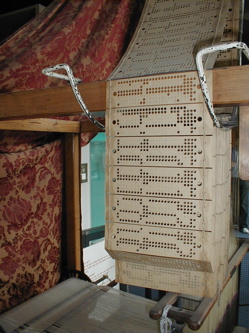
On the other hand, the punched card was first invented in 1725 by Basile Bouchon, a French weaver, who invented a method of controlling a loom through a series of punched holes using data encoded on a paper tape. Although groundbreaking, the method was fragile and still required an operator. In 1805, Joseph Marie Jacquard adopted the concept but enhanced and simplified it by punching more robust cards in a sequence to automate the process.
MIT, the Massachusetts Institute of Technology, played a significant role in the story. Parsons, who was an alumnus of MIT, collaborated with the university’s Servomechanisms Laboratory to further develop and refine his numerical control system.
Together, they conducted research and experiments to improve the capabilities and functionality of NC machines.
With the support and expertise from MIT, Parsons continued to refine his numerical control system, making significant advancements in the field. The partnership between Parsons and MIT led to the establishment of the first commercial NC machine tool company, the Parsons Corporation.
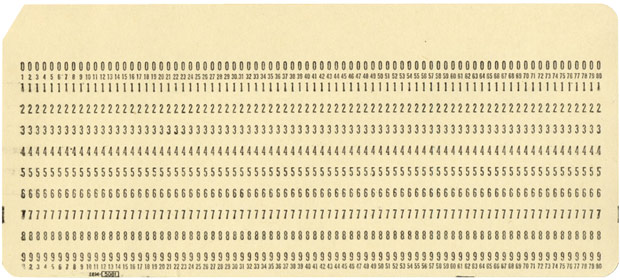
The NC (numerical control) machine at that time is not a CNC (computer numerical control) machine yet. The computing systems in the 1940s and 1950s used punched cards as a primary input method.
Operators would create programs and data on punched cards, which were then fed into the computer for processing. That is why the “auto” machine at that time is called “NC” not “CNC”.
In the late 1950s and early 1960s, keyboards and screens, also known as consoles or terminals, began to replace punched cards for certain tasks.
The term “CNC” itself became more commonly used in the 1970s when computer technology and miniaturization advanced to a level that allowed for the integration of computers directly into machine tools.
This integration marked a significant milestone in the history of CNC machines, leading to their widespread adoption and revolutionizing the manufacturing industry.
The Developing History of CNC Machines
Early Developments (1940s-1950s):
The concept of Numerical Control (NC) took shape in 1949 when John T. Parsons, an early computing pioneer, developed it during an Air Force research project at MIT. The project aimed to create motorized axes for manufacturing helicopter blades and aircraft skins.
Parsons Corporation in Traverse City, Michigan, preceded the MIT collaboration by using an IBM 602A multiplier to calculate airfoil coordinates. The data was then fed into a Swiss jig borer using punched cards. This marked the early stages of CNC machine programming.
In 1952, Richard Kegg, in collaboration with MIT, introduced the Cincinnati Hydro-Tel, a vertical-spindle contour milling machine.
It was commercially launched with a patent for a “Motor Controlled Apparatus with Positioning Machine Tool.” The initial prototype used eight-column paper tape, a tape reader, and a vacuum-tube electronic control system, setting the stage for future advancements.
During the 1940s and 1950s, early CNC machines utilized punched tape, a technology commonly used in telecommunications and data storage.
This was later replaced by analog computing technologies. In the 1960s and 1970s, digital technologies emerged, leading to automated and more efficient production processes.
Parsons received recognition for his early contributions. In 1968, he was honored with the first Joseph Marie Jacquard Memorial Award from the Numerical Control Society.
The Society of Manufacturing Engineers also presented him with an honorary plaque in 1975, naming him “The Father of the Second Industrial Revolution.”
Pioneering CNC Technology (1950s-1960s):
In the 1950s, the Massachusetts Institute of Technology (MIT) pioneered further advancements in numerical control technology. John T. Parsons, together with MIT engineer Frank L. Stulen, developed the concept of “numerically controlled milling” and built the first milling machine controlled by data stored on a punched card.
CNC Emerges (1960s-1970s):
Today, thanks to electronic control, such scenarios are highly improbable, and the outcomes of CNC machining are more predictable. CNC machines have the versatility to work with various materials, including metals, wood, plastics, fiberglass, and foam.
Furthermore, innovative machining techniques have been developed based on the principles of CNC machining. These methods include Electron Beam Machining, Electrical Discharge Machining, and Photochemical Machining.
The choice of technique often depends on the material used in the mass-production process. Additionally, laser, oxy-fuel, water-jet, and plasma-cutting machines have become common in the industry.
Industry Adoption (1980s-1990s):
In the 1980s and 1990s, CNC technology gained widespread acceptance in the manufacturing industry. The development of microprocessors, improved software, and increased affordability of computers made CNC machines more accessible to smaller businesses.
CNC machines began replacing traditional manual and mechanically automated machines, offering enhanced accuracy, repeatability, and flexibility.
Advancements in Automation (2000s-2010s):
The 21st century brought further advancements in CNC technology. Machining centers, lathes, and other CNC machines became increasingly integrated with robotic systems for enhanced automation.
This integration allowed for lights-out manufacturing, where machines could run unattended for extended periods, increasing productivity and reducing labor costs.
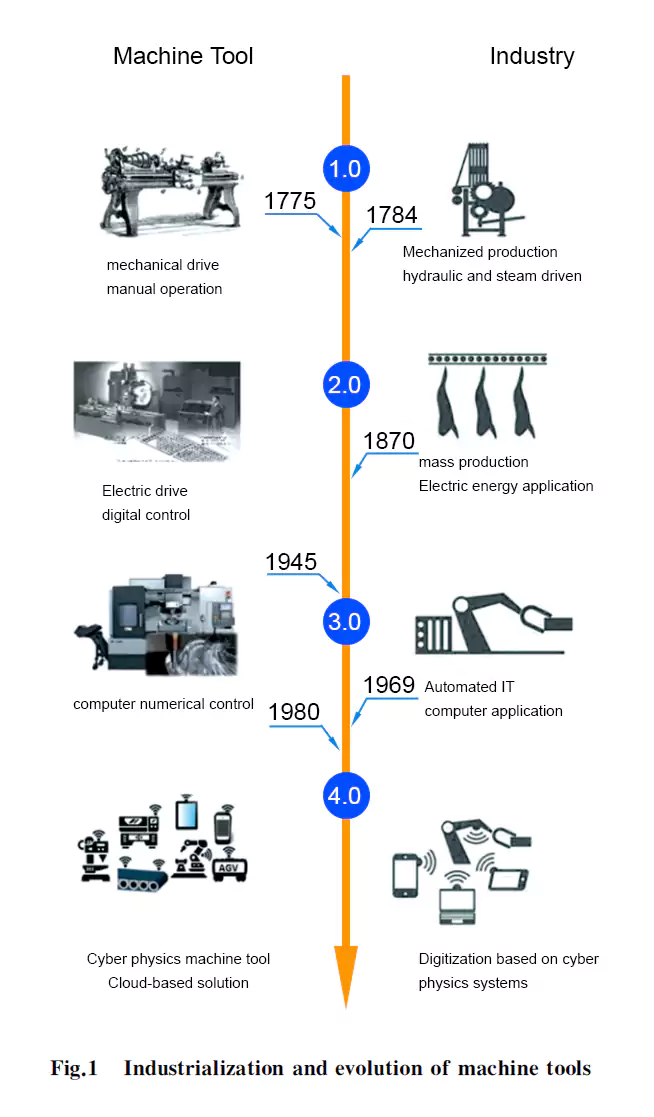
An important inflection point in the course of development
Let us look back at this remarkable process. The birth of CNC machine tools and CNC technology introduced several major features: the concept of digital control, the combination of software and hardware, and the multidisciplinary integration of mechanical, electrical, and control information.
Consequently, the major advances in CNC machine tools and technology since then have been directly linked to developments in electronic and information technology (see Figure 2)[1].
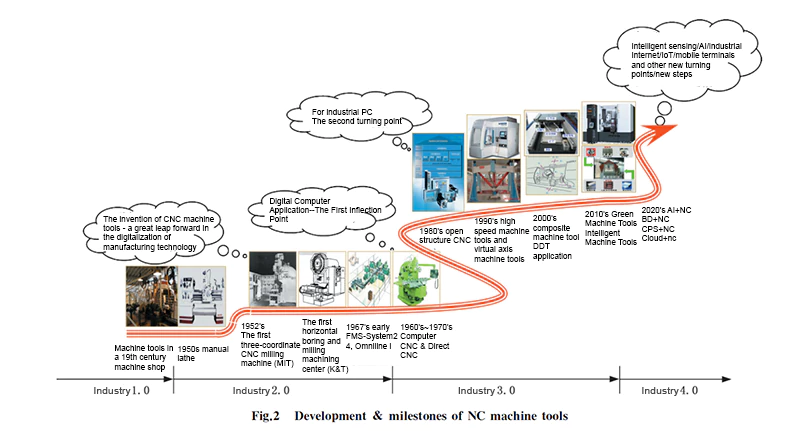
The earliest numerical control devices used electronic vacuum tubes to form computing units.
In the late 1940s, the invention of the transistor (crystal tube) marked a key advancement.
By the late 1950s, integrated circuits were introduced.
In the early 1960s, the emergence of electronic digital computers using integrated circuits and large-scale integration brought breakthroughs in computing power, miniaturization, and reliability.
This progress led to the first major inflection point in numerical control machine tool development: the transition from digital control (NC) based on discrete components to computer numerical control (CNC).
As a result, CNC machine tools began to be widely applied in industrial production.
In the 1980s, IBM launched a personal microcomputer (personal computer, PC) with a 16-bit microprocessor, which brought the second inflection point to the CNC machine tool technology — from the past to the development of special-purpose manufacturers of CNC devices (including hardware and software) to the use of general-purpose PC-based computers.
Toward the use of universal PC-based computer numerical control, at the same time the open structure of the CNC system was born, promoting CNC technology to a higher level of digitalization, network development, high-speed machine tools, virtual axis machine tools, composite processing machine tools, and other new technologies, rapid iteration, and application.
Since the 21st century, intelligent CNC technology has begun to emerge.
With the advancement of a new generation of information technology and artificial intelligence, CNC technology is increasingly integrating with innovative technologies such as intelligent sensing, the Internet of Things, big data, digital twins, cyber-physical systems, and cloud computing.
This deep integration with emerging technologies is expected to usher in a new inflection point—or even a leap—in CNC development, moving toward the cyber-physical fusion of next-generation intelligent CNC systems.
In short, CNC is advancing toward the cyber-physical fusion of a new generation of intelligent control.[1].
The evolution of the development of key and core technologies of CNC machine tools
1. Structure of CNC machine tools
Machine tool structure mainly includes two major parts: the fixed parts of the machine tool (such as the base, bed, column, headstock, etc.), and the moving part that carries the workpiece and tool, which are now commonly known as the basic parts and functional parts of the machine tool.
Taking common turning and milling as an example, the evolution of a typical CNC machine tool structure is shown in Figure 3.[2]
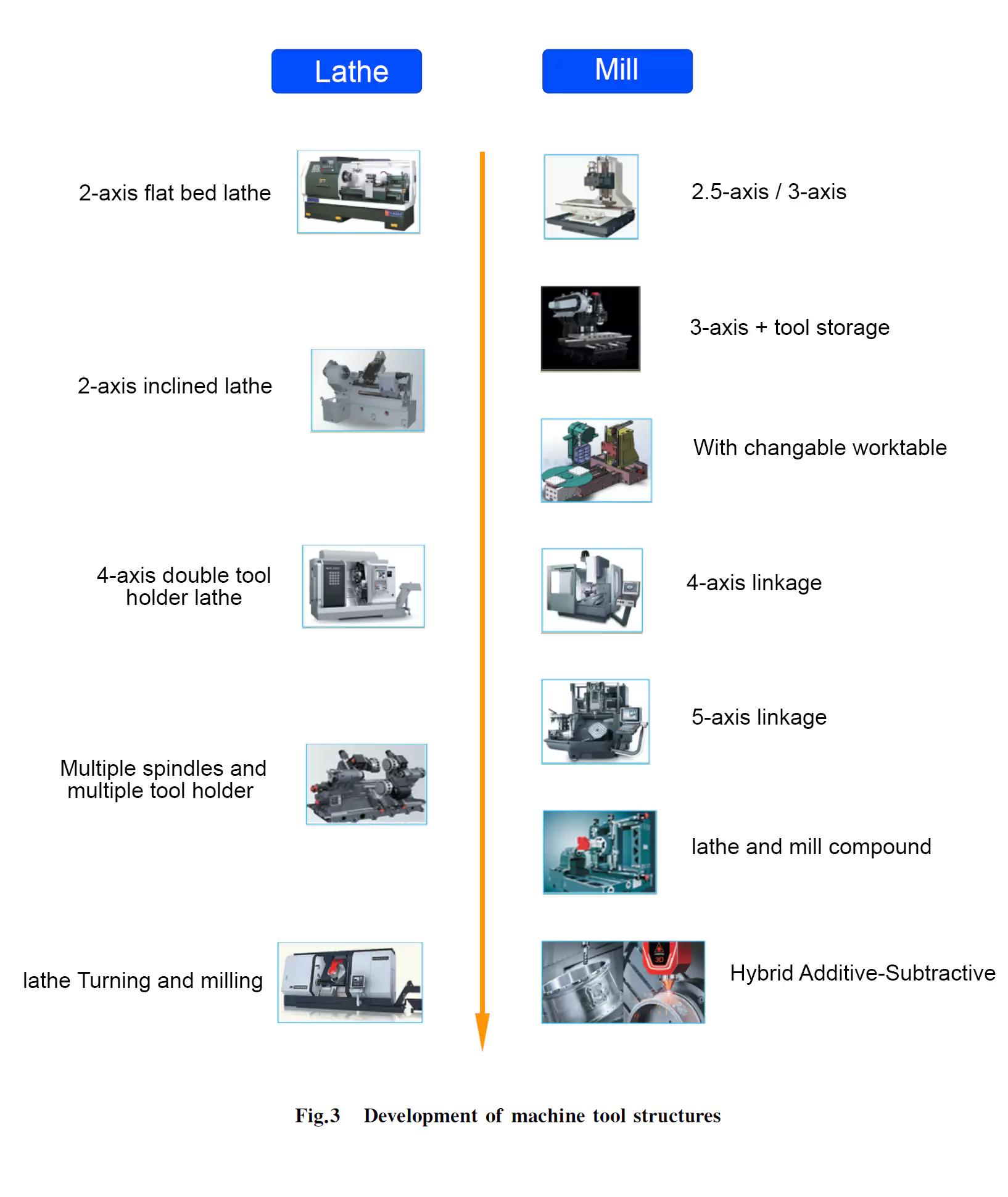
The structure of CNC turning machines evolved from early classic designs such as the 2-axis feed flat bed and 2-axis feed slant bed.
It then developed into 4-axis feed machines with double tool holders, as well as multi-spindle and multi-tool holder turning machining centers designed for high-efficiency machining of rotary parts.
Further advancements led to multifunctional turning and milling compound machines that adapt to complex parts and enable “one clamping, all complete” (done-in-one) processing.
These are known as multifunctional turning and milling compound machining centers.
The structure of CNC milling machines initially focused on realizing coordinate axis linkage and spindle movement functions, based on the classic vertical and horizontal milling machine designs.
This evolved into 3-axis linkage vertical and horizontal milling machining centers equipped with tool magazines and automatic tool changers.
With the addition of worktable exchange capabilities, these vertical and horizontal machining centers addressed the demand for high-efficiency machining of complex structural parts.
Subsequently, 4-axis and 5-axis linkage milling machining center structures emerged.
Following these developments, milling/boring machining centers were introduced to meet the requirements of complex parts by enabling “once clamped, all finished” (one-in-one) multifunctional turning and milling operations within a single complex machining center.
To meet the demand for high-efficiency machining of complex structural parts, 4-axis and 5-axis milling machining centers have emerged, and then the multifunctional milling/turning machining center structure with milling/boring as the main function and turning/drilling function has been rapidly developed and applied.
In the development process of 5-axis linkage, the concept of a parallel virtual axis from the robot was introduced to the CNC machine tool, the emergence of parallel or series-parallel combination of 5-axis linkage form, but the practical application is limited.
At present, in the same CNC machine tool to achieve the “additive machining + cutting machining” function of adding and subtracting materials mixed processing (hybrid additive-subtractive manufacturing) new structure of the machine tool has entered the practical development stage.
In the evolution of the CNC machine tool structure development process, CNC machine tool structure layout (configuration plan, optimization design) material selection, and other aspects of the technology have also continued to progress.
To meet the requirements of high precision, high stiffness, good thermal stability, long service life, and high precision retention—while also ensuring the machine structure is environmentally friendly and user-friendly—researchers have proposed several advanced design principles and technologies.
These include center of gravity drive (DCG), box-in-box (BIB) structures, integrated bed (IB), direct drive technology (DDT), thermal balance design and compensation, and fully symmetrical structural design.
In addition, for the structural design and optimization of machine tool components, various methods are used. These include overall structural optimization through finite element analysis (FEA), lightweight design, structural topology optimization, and bionic structure optimization.
Adopting the concept and method of virtual machine tools greatly shortens the design and manufacturing cycle of CNC machine tools.
The bed structure material of CNC machine tools has developed from cast iron and cast steel to more and more resin concrete (mineral casting, artificial marble), artificial granite, and other materials. In addition, steel fiber concrete, carbon fiber composite materials, foam metal, and other new structural materials have also been applied.
In the future, new materials, new optimized structures, and new manufacturing process methods will make the structure of CNC machine tools more lightweight and have better static and dynamic stiffness and stability[3,4].
2. Spindle and feed servo drive technology
The role of the spindle is to drive the cutter tool or grinding tool (drilling/milling/grinding) or workpiece (turning) at a given speed rotation and transfer the power and torque required for cutting and processing so that the cutter (grinding) tool on the workpiece to achieve material removal.
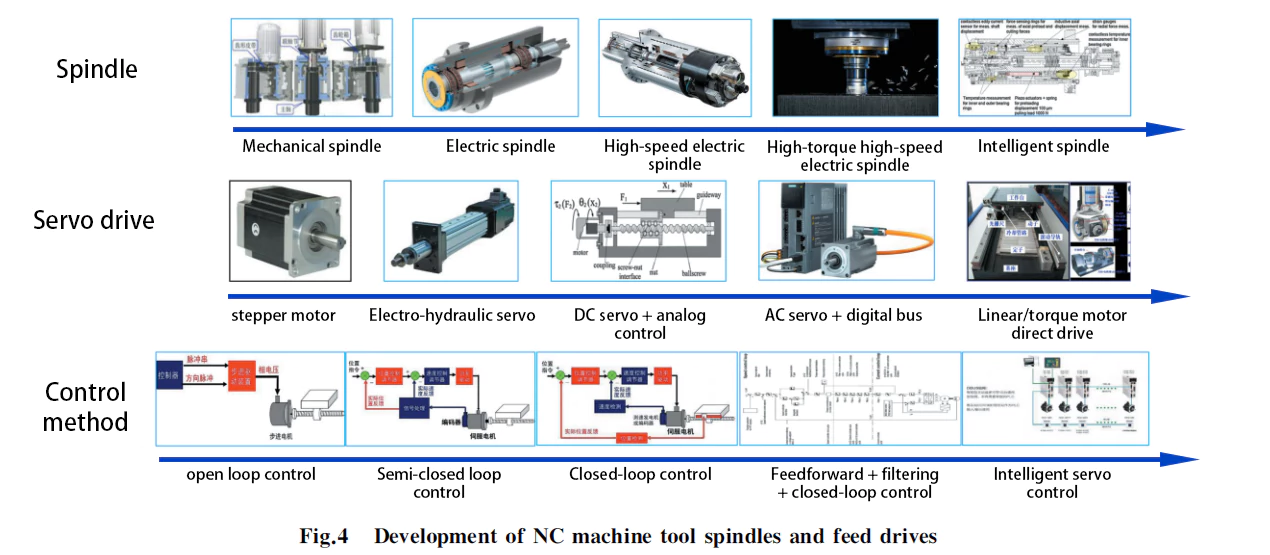
The development process of the CNC machine tool spindle appears non-speed-regulated AC motor through the spindle box drive mechanical spindle, motor and spindle integration of the spindle, high-speed spindle, high rigidity and high torque high-speed spindle and intelligent spindle, and so on[5].
The machine tool feed axis servo drive has evolved through several stages. It began with stepper motors, electro-hydraulic proportional servos, thyristor current converters, and PWM-controlled DC motor servos.
Today, the mainstream has shifted to vector-controlled AC motor servos. Newer forms include dual motor center-of-gravity drives (DCG), as well as linear motors and torque motor direct drives.
Modern systems increasingly adopt full closed-loop control structures, which include the position loop, speed loop, current loop, and “feed-forward + filtering” mechanisms. These advancements enable each axis to achieve high speed, high accuracy, and high dynamic response in motion control.
In addition, the servo control mode has evolved from analog control to a hybrid “analog + digital” control mode.
It further developed into fully digital fieldbus industrial control modes, such as the serial real-time communication protocol (SERCOS) bus, real-time Ethernet control automation technology (EtherCAT) bus, and process fieldbus (PROFIBUS), among others[6].
The development of NC machine tool spindle sand feed drives is shown in Figure 4.
3. Numerical control device
CNC device is the hub of CNC machine tool control, as mentioned earlier, the CNC device follows closely the development of electronic technology, computer technology, and information technology.
Its development process can be divided into 7 generations (Figure 5), the 1st, 2nd, 3rd generations use of tube discrete components, transistors, and integrated circuits, respectively, in the early stages of development of CNC device, volume and power consumption, low reliability, poor practicality.
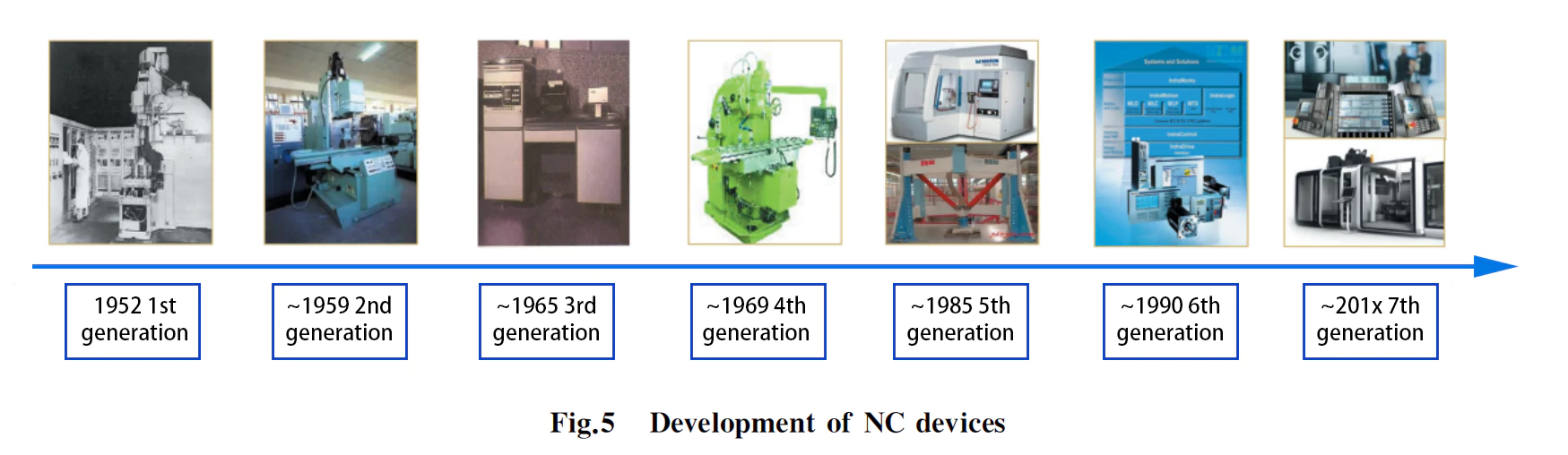
Generation 4 marked the use of small electronic digital computers in CNC devices. Compared to previous generations, its hardware platform became more compact, specialized, and significantly more reliable.
This generation signaled a shift of CNC technology into a new track—computer numerical control—bringing CNC machine tools into a truly practical stage. It also accelerated the iteration and development of CNC systems.
This period represents the first major inflection point in the development of CNC machine tools. Concepts and systems such as Direct Numerical Control (DNC) and Flexible Manufacturing Systems (FMS) also began to emerge during this time.
With the maturity of ultra-large-scale integrated circuit micro central processor technology, the 5th generation of CNC devices will be based on microprocessor hardware or single-board computers used as its hardware platform, further reducing the hardware volume and cost. Still, the compatibility and openness of its hardware structure is poor.
In the 1980s, personal microcomputers (PCs) were adopted in the 6th generation of CNCs, bringing the second inflection point in the development of CNC machines.
Taking advantage of the PC’s mature software/hardware platform, rich application resources, and common networked interfaces, the research and development of numerical control devices shifted to software algorithms to realize various functions, i.e., entering the open, networked, and software-enabled numerical control stage.
With the development of Industry 4.0[7], the 7th generation of intelligent CNC devices and intelligent machine tools is emerging. These systems integrate intelligent sensing, the Internet of Things (IoT) / Industrial Internet, Big Data, Cloud Computing, Artificial Intelligence, Digital Twin, and Cyber-Physical Systems.
This advancement will bring a new inflection point in the development of CNC technology and may even trigger a new revolution.
4. Multi-axis linkage and track interpolation technology
Multi-axis linkage control technology is one of the core technologies of CNC machine tool control. CNC machine tool feed axis (including linear coordinate feed axis and rotary coordinate feed axis) under the control of the CNC device following the program instructions at the same time movement is called multi-axis linkage control.
High-grade CNC machine tools generally have a 3-axis or more than 3-axis linkage control function, mostly 4-axis linkage or 5-axis linkage. The movement of each feed axis is generally realized by the motor under the control of the servo drive.
Therefore, high-performance axis feed servo devices constitute the physical basis for the realization of multi-axis linkage control.
Multi-axis linkage control is based on the CNC machining program to give the trajectory (i.e., tool path), through the trajectory interpolation and real-time control, in each servo control cycle to give the linkage axis of the operation of the incremental, real-time control of the linkage of all the coordinate axes.
Trajectory interpolation is also one of the core technologies of CNC machine tool control. Realization of interpolation computing device (or software module) called interpolator, modern CNC machine tools generally use digital computers through software to achieve trajectory interpolation.
The development process of trajectory interpolation technology is shown in Figure 6.
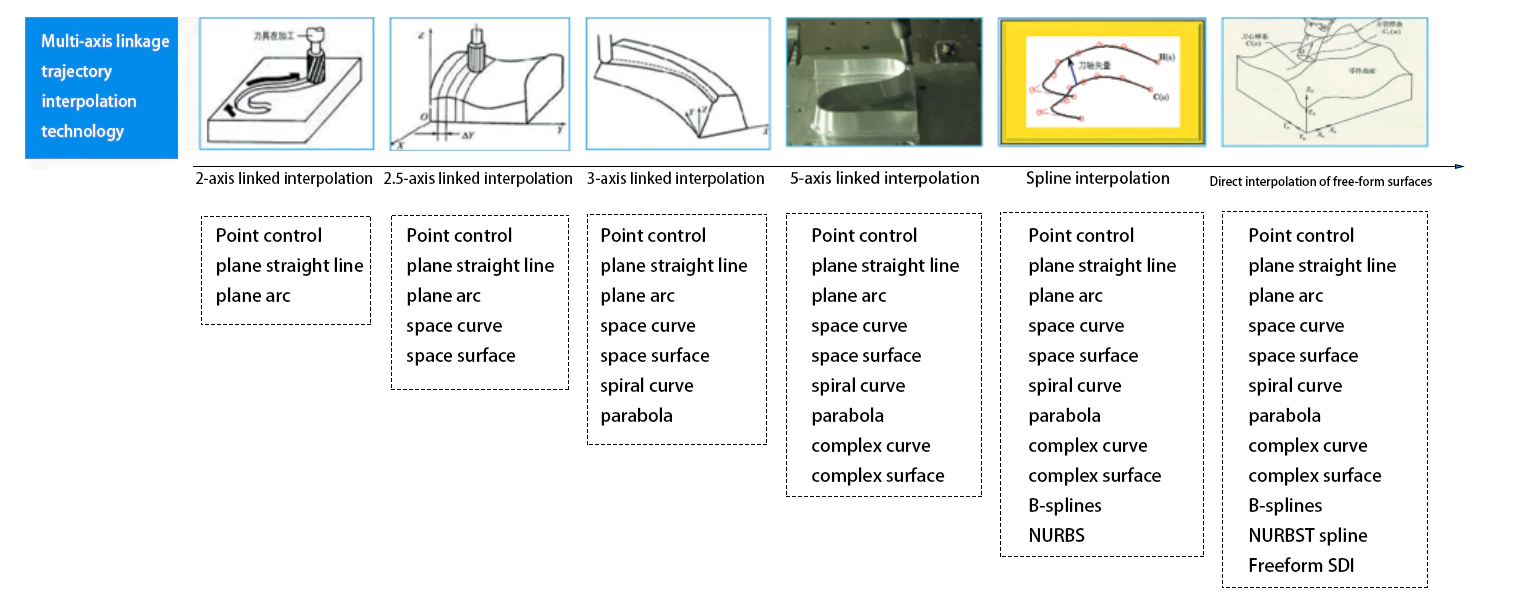
From the perspective of the realized interpolation function, the 2-axis linkage of plane point control, plane straight line, and arc interpolation is the simplest interpolation function;
2.5-axis linkage interpolation has only 2-axis linkage control, and its third axis can only realize non-linkage control with the other 2 axes, so the linkage interpolation can process 3D curves and curved surfaces, but the efficiency is low and the adaptability is poor;
3-axis linkage interpolation in addition to the realization of plane and space linear interpolation, arc interpolation function, high-grade CNC system also has a spiral interpolation, parabolic interpolation, and other functions;
Five-axis linkage interpolation enables efficient and convenient machining of various complex curves and surfaces.
Its further development includes spline interpolation and advanced control functions for speed, acceleration, and jerk (rate of change of acceleration).
These technologies form the core foundation for achieving high-speed, high-precision, and high-dynamic-response machining.
The author believes that future CNC devices will develop a free surface direct interpolation (SDI) function. This function is expected to integrate with toolpath planning technologies based on artificial intelligence and digital twin systems.
By considering the multi-axis linkage dynamics model, along with trajectory errors and speed constraints, it will be possible to achieve toolpath generation and optimal control for multi-axis direct machining—driven directly by the 3D model.
This advancement will enable optimally controlled direct interpolation for multi-axis linkage machining.
Advances in Machining Efficiency and Accuracy
The continuous advancement and application of advanced manufacturing technologies have significantly shortened machining time and improved overall efficiency.
Figure 7a, a widely cited curve diagram, illustrates the relationship between the development of advanced manufacturing technologies and the reduction of machining time (i.e., the improvement in machining efficiency)[8].
From the development trend, two key changes can be observed.
On one hand, from 1960 to 2020, the total machining time—which includes cutting time, auxiliary time, and preparation time—has been reduced to just 16% of the original machining time. This indicates a significant improvement in machining efficiency.
On the other hand, the ratio between cutting time, auxiliary time, and preparation time has gradually converged. This suggests a more balanced distribution among the different components of the machining process.
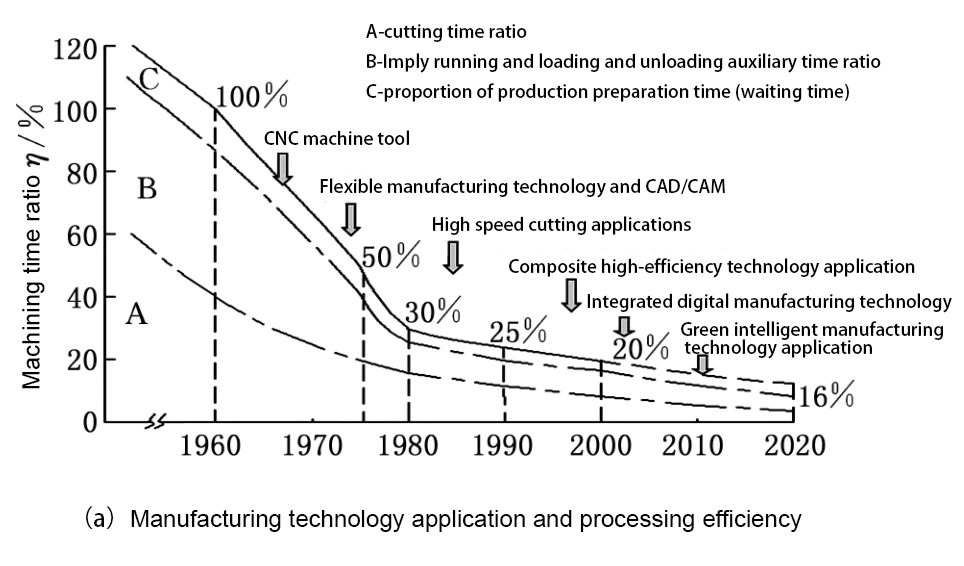
Therefore, to improve machining efficiency in the future, we should not only focus on the optimization and improvement of process methods and increase the degree of automation but also need to effectively shorten the waiting time from the perspective of digitalization, networking, and intelligence of production management.
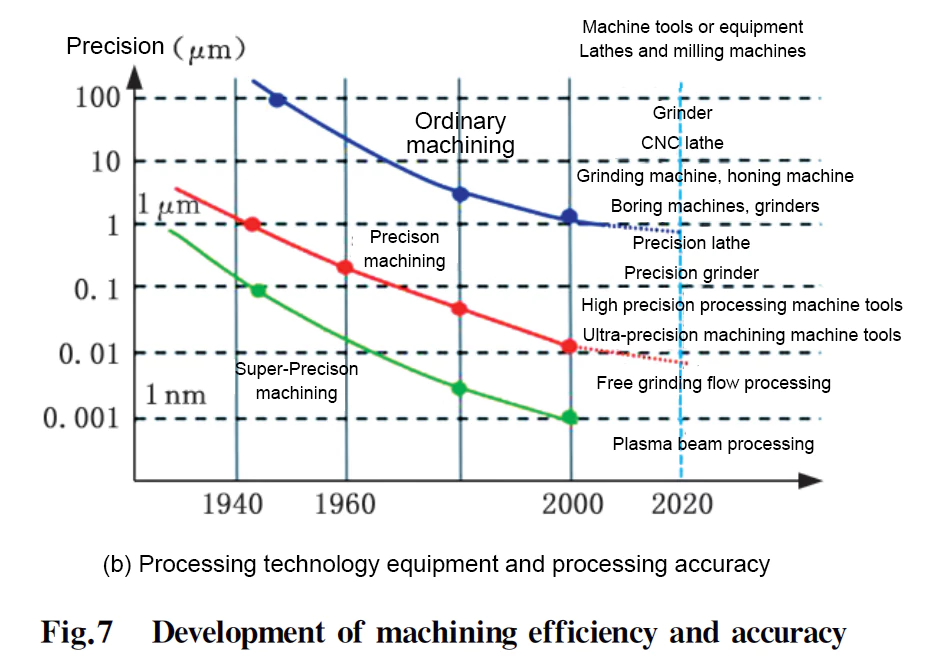
Figure 7b shows the forecast of machining accuracy improvements from the 1980s Taniguchi prediction to 2020 across different machine tools[9].
It is clear that the development of various processing methods and machine tool (or equipment) technologies has continuously improved machining accuracy.
However, the machining field is different from the integrated circuit (IC) manufacturing field. Unlike ICs, where Moore’s Law predicts that the number of transistors on a chip doubles every 18 to 24 months, machining does not follow such a rapid or short-cycle improvement pattern.
In machining, accuracy improvements rely on long-term technological accumulation and continuous iteration. For example, achieving a one-order-of-magnitude improvement in precision machining can take more than 20 years.
Current Trends and Future Outlook:
In terms of the main future development trend, the author believes that CNC machine tool technology presents the development trend of high performance, multi-functionality, customization, intelligence and green, namely:
1. High performance
The development of CNC machine tools has been striving for higher machining accuracy, cutting speed, productivity, and reliability.
Future CNC machine tools will be further optimized through improvements in machine structure, advanced control systems, and efficient mathematical algorithms.
These advancements will enable high-speed, high-precision direct interpolation of complex curved surfaces, as well as high dynamic response in servo control.
Additionally, technologies such as digital virtual simulation, optimization of static and dynamic stiffness design, thermal stability control, and online dynamic compensation will be applied.
Together, these innovations will significantly enhance the reliability and precision retention of CNC machine tools.
2. Multi-functional
From different cutting process composite (such as milling, milling, and grinding) to the combination of different molding methods (such as additive manufacturing, material reduction manufacturing, and other manufacturing methods such as a combination of molding methods or mixed), CNC machine tools and robots, “machine machine” fusion and synergistic and other direction of development;
From the “CAD-CAM-CNC” traditional serial process chain to the 3D solid model based on the “CAD + CAM + CNC integrated” one-step processing direction[10];
From the “machine-machine” interconnection network to the “human-machine-object” interconnection, edge/cloud computing support for processing large data processing direction.
3. customization
According to user needs, in the machine structure, system configuration, professional programming, cutting tools, on-machine measurement, etc. to provide customized development, in the machining process, cutting parameters, fault diagnosis, operation and maintenance, etc. to provide customized services. Modular design, reconfigurable configuration, network collaboration, software-defined manufacturing, mobile manufacturing, and other technologies will provide technical support for the realization of customization.
4. Intelligent
Through sensors and standard communication interfaces, machine tools can perceive and acquire signals and data related to their status and the machining process.
By applying transformation processing, modeling analysis, and data mining, the system learns from the machining process. It then generates information and commands to support optimal decision-making.
This enables real-time monitoring, forecasting, and control of both the machine tool and the machining process. As a result, it meets the demands of high-quality, high-efficiency, flexible, and adaptive machining.
“Perception, interconnection, learning, decision-making, adaptive” will become the main functional characteristics of intelligent CNC machine tools, processing big data, industrial Internet of Things, digital twins, edge computing/cloud computing, deep learning, and so on will be a powerful boost to the future development and progress of intelligent machine tool technology.
5. Greening
Technology for future sustainable development needs, with eco-friendly design, lightweight structure, energy-saving and environmentally friendly manufacturing, optimal energy efficiency management, clean cutting technology, human-machine interface, and product life cycle green services.
Building on Rapid Prototyping
Over the years, the perspective on rapid prototyping has undergone changes, but its roots can be traced back to the earliest punched tape numerical control systems. Prior to this innovation, all parts had to be manually machined, making the introduction of punched tape systems a revolutionary development.
In today’s world, there are numerous prototyping options available, each dependent on factors such as material selection, cost-effectiveness, and the complexity of CNC parts.
Despite the proliferation of alternative methods, CNC machines with their array of tools and rotational axes continue to possess significant appeal and utility. However, the emergence of 3D printing has revealed certain limitations in these traditional systems.
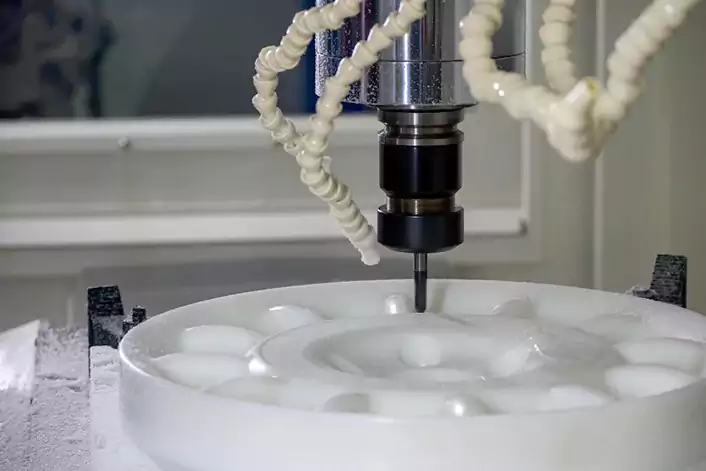
3D printers have the capability to manufacture intricate parts, including their internal components. While material options may be restricted depending on the specific application, CNC systems remain the preferred choice, particularly for the development of prototypes.
Advantages of CNC Machines
Advanced CNC machining provides numerous advantages for modern businesses. Let’s explore the various ways in which advanced CNC machines benefit industries today:
3D Imaging
The availability of CAD programs empowers individuals to create prototypes regardless of their expertise in manufacturing.
Rather than requiring extensive knowledge in the field, engineers simply need to replicate their design idea in the computer to have the CNC machine bring it to life.
By keeping the design in digital format, any modifications to the part’s shape can be swiftly implemented by repeating the computer processing for a new model.
Small and Large-Scale Production Capabilities
CNC machines enable businesses to handle orders ranging from a single piece for testing purposes to massive high-volume projects.
This versatility allows a business to initially create a single prototype using CNC machining. Once the model has undergone physical testing and any necessary final design adjustments have been made, the finalized version can swiftly transition into high-volume production.
Quality Materials
The availability of a wide range of materials for CNC machining provides another significant advantage to this process.
At American Micro Industries, we utilize various materials such as phenolics, rigid foam, plastics, and carving foam. Within each material category, there are specific types available, allowing you to select the one that best suits the desired properties for your project.
Machined parts made from these materials often include electronic device cases, insulation, and prototypes. The diverse selection of material options expands the range of parts that can be created through CNC machining.
Embrace Today’s CNC Technology
Over the decades, CNC machinery technology has undergone a remarkable evolution, transitioning from punch-driven devices to computer-controlled machines.
Despite these advancements, the core advantages have remained consistent: companies benefit from automated precision with significantly lower margins of error compared to what human metalworkers could achieve, all while achieving higher throughput.
Moreover, the history of CNC technology is far from reaching its endpoint, as further advancements are on the horizon.
In the present day, CNC machines offer greater predictability than their predecessors. Earlier models relied on rotating motors and cam-operated control levels, which posed the risk of errors and yielded unpredictable outcomes if the feedback cable broke.
With the current electronically controlled machines, such uncontrollable situations are highly unlikely. As a result, businesses can rely on CNC machines to consistently deliver the expected results.
Advanced software tools now enable businesses to create 3D models and generate precise drawings for each project. CNC machines utilize these digital designs to carve out prototypes using the highest-quality materials, bringing them to life with exceptional precision.
Throughout the changes in NC and CNC technology, the accuracy, precision, and speed of CNC machinery have significantly improved.
However, there is still room for further enhancements. As engineers continue to refine CNC machinery, more companies are likely to recognize and embrace the advantages of CNC machining for their projects.
- [1] Liu Qiang,DING Deyu, Road Towards Intelligent Manufacturing [M]. Beijing: China Machine Press,2018.
- [2] Wang Xiankui,Liu Qiang.ManuaL of Numerical control technoLogy of MAchine tools.Volume: TechnoLogical Fundamentals[M].Beijing:National Defense industry Press,2013.
- [3] MORIWAKI T. Multifunctional Machine Tool [J]. CIRP Annals-Manufacturing Technology, 2008,57(2):736-749.
- [4] ZHANG Shu. Innovation and Design of Machine: Tool Products[M]. Nanjing: Southeast UniversityPress,2019.
- [5] ABELE E, ALTINTAS Y, BRECHER C. Machinetool Spindle Units [J]. CIRP Annals-Manufacturing Technology,2010,59(2):781-802.
- [6] ALINTAS Y, VERL A, BRECHER C, et al. Machine Tool Feed Drives[J]. CIRP Annals-Manufacturing Technology,2011,60(2): 779-796.
- [7] Liu chao,Xu Xun.cyber-Physical Machine tool- the era of MAchine tool 4.0[J].Procedia CIRP, 2017,63:70-75.
- [8] McKeown P A. The Role of Precision Engineering in Manufacturing of the Future[J]. CIRP Annals Manufacturing Technology,1987,36(2): 495-501.
- [9] BYRNE G,DORNFELD D,DENKENA B. Advancing Cutting Technology[J]. CIRP AnnalsManufacturing Technology, 2003,52(2):483-507
- [10] REINTIJES JF, Numerical Control-Making a New Technology [M]. New York: Oxford UniversityPress,1991.