
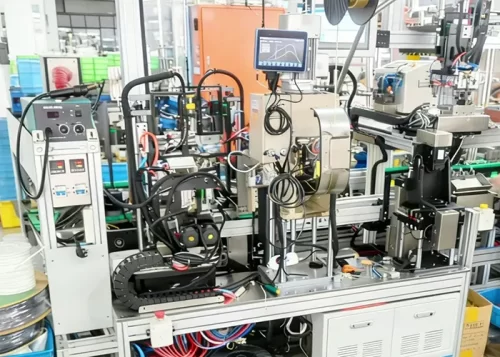


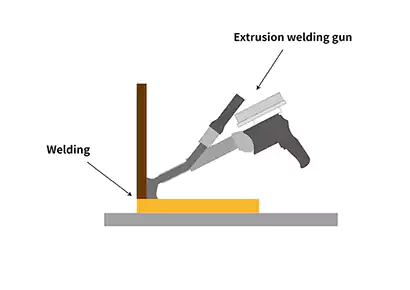

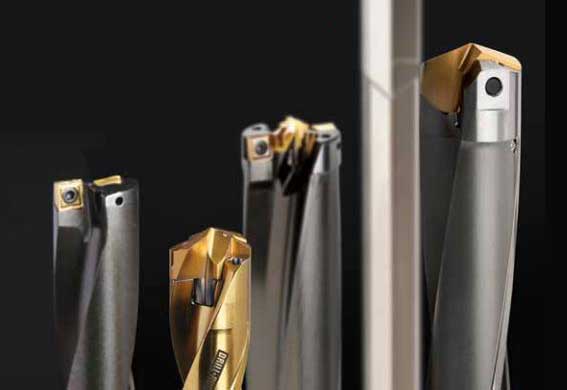
Empowered by Industry 4.0 and smart manufacturing strategies, the global manufacturing sector is undergoing a revolutionary leap from automation to intelligence.
Only by integrating technologies such as big data analytics, machine learning, and digital twins can intelligent and adaptive process parameter optimization models be built.
These models enhance the allocation efficiency of manufacturing resources.
This also lays the foundation for enterprise development in the era of smart manufacturing.
This paper explores process parameter optimization and precision control, aiming to provide insights for the application of smart manufacturing in the field of mechanical processing.
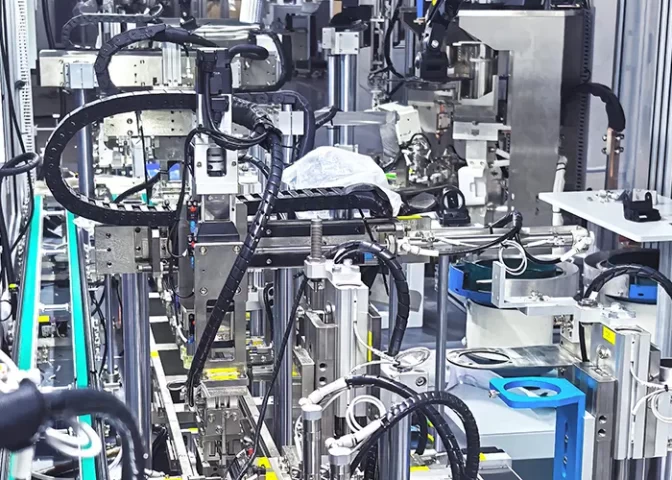
Value of Optimizing Machining Process Parameters and Precision Control in Smart Manufacturing
Ensuring Product Quality Stability
In precision manufacturing, product consistency and reliability directly determine industrial competitiveness.
Optimizing process parameters and controlling precision are the core solutions to overcoming quality fluctuation challenges.
Traditional machining relies on manual, experience-based parameter adjustments.
These adjustments are susceptible to factors such as equipment wear and environmental changes.
As a result, dimensional deviation rates remain persistently high across multiple batches of parts.
Under the smart manufacturing model, digital twin simulation pre-tests parameter adaptability.
Meanwhile, sensor systems provide real-time monitoring of machining conditions.
Together, they enable source control of quality deviations.
Practical case studies from Hunan Rente Machinery Manufacturing Co., Ltd. demonstrate the effectiveness of process optimization.
A standardized process system was established, covering blank pre-treatment and tool selection.
Advanced online inspection nodes were also designed and implemented.
As a result, batch stability for the same part increased to 98%.
A hydraulic valve block supplier adopting this model saw its product pass rate jump from 82% to 96%.
For instance, aerospace components demand micron-level dimensional tolerances, while automotive core parts must withstand millions of fault-free assemblies.
Manufacturers have established a “simulation prediction–real-time monitoring–closed-loop correction” system for parameter optimization and precision control.
This system enables a fundamental shift in manufacturing quality management.
It moves manufacturers away from reactive “post-inspection and batch rework.”
Instead, it promotes proactive quality assurance.
This approach provides a robust guarantee for high-reliability product supply, becoming the core confidence for enterprises to capture high-end markets.
Enhancing Production Efficiency and Profitability
Parameter optimization and precision control break the “quality-efficiency” dilemma, achieving value-added gains across the entire production chain.
In traditional machining, ensuring precision often requires reducing cutting speeds and increasing inspection frequency, prolonging processing cycles.
Conversely, blindly pursuing efficiency can accelerate tool wear and increase scrap rates.
Smart manufacturing technologies leverage AI algorithmic iterations to solve for optimal parameter combinations, maximizing efficiency while maintaining precision.
For instance, Hunan Rente Machinery implemented a “process-intensive” solution for aluminum alloy housing components.
Through parameter optimization, the traditional 5-day machining cycle was reduced to 18 hours.
At the same time, critical dimensional tolerances were stabilized within ±0.02 mm.
Simultaneously, enhanced precision control minimized rework and repair cycles.
A hydraulic valve block supplier achieved annual quality cost savings of 2.6 million yuan after implementation.
This virtuous cycle of “precision assurance – efficiency enhancement – cost reduction” builds differentiated competitive advantages for manufacturing enterprises.
Supporting the Green Lean Manufacturing Transformation
Driven by the dual carbon goals and industrial upgrading policies, green lean manufacturing has become an inevitable direction for the transformation of the manufacturing sector.
Parameter optimization and precision control represent the technical pathways to achieve this objective.
The Ministry of Industry and Information Technology explicitly states its requirements in the “Guiding Opinions on Accelerating the Green Development of Manufacturing.”
It emphasizes establishing an integrated green supply chain system.
This should be achieved through intensive and reduction-oriented technologies.
Parameter optimization and precision control align precisely with this requirement.
From a resource utilization perspective, integrating intelligent nesting algorithms with parameter optimization significantly enhances material utilization rates.
For instance, Rentech Machinery increased material utilization rates for aluminum alloys and stainless steel from 68% to 89% using this technology, reducing raw material costs by 1,400 yuan per ton.
Regarding energy consumption control, parameter optimization strategies that dynamically adjust equipment power based on processing loads achieve substantial energy savings.
Regarding waste reduction, precision control minimizes scrap rates, curbing raw material waste and scrap disposal costs.
This approach follows the principle of “Resource Efficiency – Energy Precision Management – Waste Minimization.”
It closely aligns with the “end-to-end green product supply” philosophy.
As a result, it provides a practical technical solution for manufacturing.
This solution enables the achievement of dual benefits in both ecological and economic value.
Measures for Optimizing Machining Process Parameters in the Context of Smart Manufacturing
Digital Twins, Simulation-Based Optimization
Manufacturing enterprises must collaborate with technical service providers to establish end-to-end digital twin systems.
By creating virtual mapping models based on physical equipment prototypes, they can achieve simulation-based optimization of process parameters.
This process begins with digital modeling of machining equipment, tooling fixtures, and material properties.
Core parameters such as spindle speed, feed rate, and cutting depth are converted into virtual variables.
Historical machining data and quality inspection results are simultaneously imported to serve as the foundation for simulation.
Multiple parameter combinations are simulated in the virtual environment, with critical metrics like tool wear, stress distribution, and dimensional deviations closely monitored.
By comparing simulation outcomes under different parameters, optimal solutions are identified.
For instance, in Ministry of Industry and Information Technology-certified excellence-level smart factories, digital twin systems can real-time simulate the entire aircraft component machining process.
Parameters optimized through algorithmic simulation in the morning can be synchronized to physical equipment for execution by afternoon.
This approach not only reduces physical trial-and-error costs by 30% but also shortens technology conversion cycles from years to months.
Enterprises must establish real-time linkage mechanisms between virtual and physical systems.
When physical equipment experiences operational fluctuations, issues are immediately replicated in the twin model for parameter adjustments.
Optimized results are then pushed back to the production line, forming a closed-loop “simulation-verification-iteration” process.
This ensures parameter optimization aligns with actual manufacturing requirements while maintaining practical feasibility.
AI Algorithms, Iterative Solution
Enterprise technical teams must collaborate with research institutions to establish AI algorithm optimization platforms.
These platforms should leverage machine learning and deep learning algorithms as core components to achieve dynamic iterative solutions for process parameters.
First, establish a database covering the entire production cycle.
Continuously collect operational data such as temperature, pressure, and vibration during processing, along with quality metrics like product dimensions and surface roughness.
Process this data through cleaning and feature extraction to generate algorithm training samples.
Select appropriate algorithms for different processing scenarios.
For example, genetic algorithms can be used for multi-objective optimization problems.
Neural network models can be applied to predict parameter–quality relationships.
Predictive accuracy can then be enhanced through training with historical data.
Taking Shaanxi Future Energy’s methanol distillation unit as an example, its AI optimization model integrates machine learning with an APC control system.
Through real-time data training and continuous algorithm iteration, it automatically generates optimal steam consumption and reflux flow parameters.
This achieved a 2% reduction in steam consumption per ton of methanol and a 0.15% decrease in methanol content in wastewater, while also achieving the goal of “zero manual operation.”
The technical team must regularly incorporate new production data to update the algorithm model.
They optimize algorithm adaptability for scenarios such as process fluctuations and material replacements, ensuring the model dynamically responds to changing processing demands.
Through algorithm iteration, they achieve continuous parameter optimization.
Big Data Modeling and Dynamic Parameter Tuning
Manufacturing enterprises’ data management departments must spearhead the construction of cross-process big data models.
These models integrate multidimensional data from different processes.
This integration enables the dynamic adjustment of process parameters.
This requires breaking down data silos between production execution systems, equipment management systems, and quality inspection systems.
It involves collecting multi-source information, such as equipment operating parameters, material characteristic data, process interface data, and environmental impact factors.
This information is then used to establish unified data governance standards.
A shared database is also created to support integrated data management.
Big data analytics technology should be used to construct parameter optimization models.
These models help identify correlations among different parameters.
They also determine the influence weight of each parameter.
Based on these insights, adjustment thresholds and interlocking rules for critical parameters can be defined.
As reported by the Gansu Provincial Department of Science and Technology, Jinchuan Group’s mineral processing plant integrated data from crushing, grinding, and flotation processes to establish a process model.
This broke away from traditional manual measurement and adjustment methods, enabling dynamic optimization of multi-process parameters and material balance.
The improvement resulted in a 10%+ increase in grindable particle size and a plant-wide system operation rate of 90.7%.
Data departments must ensure models access real-time production data.
When a process parameter deviates, the model should automatically analyze chained impacts and generate adjustment plans, simultaneously pushing them to control systems across related processes.
This enables coordinated optimization of end-to-end parameters, preventing system imbalances caused by localized adjustments.
Sensor Data, Real-Time Correction
Equipment management teams at production sites must deploy comprehensive sensor monitoring networks to enable instantaneous adjustment of process parameters based on real-time data collection.
Sensors measuring temperature, vibration, and displacement should be installed at critical locations.
These locations include spindles, tool holders, and work tables.
The installation should follow the characteristics of the machining equipment.
It should also meet the requirements of quality control.
Composition and particle size sensors should be positioned at material inlets and outlets to ensure real-time capture of data throughout the entire machining process.
Transmit sensor data to the central control system via 5G networks.
Set multi-tiered parameter alert thresholds. These thresholds trigger immediate alarms when data exceeds normal ranges.
They also activate analysis modules.
The system can then rapidly pinpoint the causes of deviations, such as tool wear or material inconsistencies.
Taking the application of high-precision sensors from Bengbu Sensor Valley as an example, enterprises deploy MEMS inertial sensors to monitor CNC machine tool operation in real time.
When vibration data becomes abnormal, the system instantly analyzes the signal.
It determines the degree of tool chatter. The system then automatically adjusts the feed rate and cutting depth parameters.
This helps maintain precision machining accuracy at the 0.002-millimeter level.
Equipment management teams must regularly calibrate sensor accuracy.
They should also optimize the stability of data transmission links.
In addition, warning thresholds and correction logic must be adjusted according to changes in machining materials and product types.
This ensures sensor data is accurately converted into parameter adjustment commands, enabling real-time process correction during machining.
Precision Control Strategies for Machining in the Context of Smart Manufacturing
Online Sensing, Error Prediction
Production technology departments must establish multi-dimensional online sensing systems.
These systems should integrate data from multiple sources. This integration enables the early prediction of machining errors.
As a result, the approach shifts from reactive correction to proactive prevention.
High-precision sensors should be deployed at critical machine tool locations.
For example, vibration sensors can be installed on spindles, and displacement sensors along guideways.
AI vision inspection modules should also be integrated.
These modules capture real-time tool status and workpiece surface conditions during machining.
A “sensing-analysis-alert” data chain must be constructed.
Edge computing nodes process collected data—including vibration frequency, temperature changes, and dimensional deviations—in real time.
Combined with pre-set error prediction models, this identifies abnormal trends.
For instance, as reported on the Shashi District Government website in Jingzhou City, a petroleum machinery enterprise introduced an AI visual online inspection system.
Industrial cameras captured thread machining details with 0.0075mm precision.
By correlating historical data to predict angular deviation risks, the system proactively triggered parameter adjustment commands, boosting the pass rate of high-end products by 20%.
Technical departments must regularly update predictive models by incorporating variables like new material properties and equipment aging patterns.
This optimizes warning threshold settings to ensure risk identification occurs 3–5 seconds before errors occur, allowing reaction time for precision control.
Simultaneously, establishing correlation analysis mechanisms between sensing data and quality outcomes continuously improves predictive accuracy.
Geometric Adaptation and Dynamic Correction
Equipment R&D and maintenance teams must develop adaptive geometric parameter control modules.
These modules dynamically correct geometric errors during machining.
This approach helps overcome the limitations of traditional static calibration methods.
Intelligent measurement units should be integrated during machine tool design, such as pre-calibrating full-travel geometric errors of X/Y/Z axes via laser interferometers to establish an “error map” database.
Simultaneously, real-time measurement probes should be installed to perform high-frequency sampling of workpiece geometric parameters during machining.
Construct adaptive algorithm models. These models automatically invoke error compensation parameters when geometric issues are detected.
Such issues may include guideway parallelism deviations or lead screw pitch errors.
The system then adjusts axis trajectories through the servo system.
Take the ultra-large gantry machining center developed by Hunan DQian Intelligent as an example.
Its integrated adaptive control technology continuously monitors dual-column balance during machining of large components like high-speed rail car bodies.
The system automatically corrects feed paths based on geometric deviation data, ensuring machining accuracy for 26-meter-long workpieces.
Maintenance teams must periodically calibrate and validate the adaptive system, optimizing algorithm parameters based on different workpiece geometries.
Specialized adaptive strategies are developed for complex scenarios like surface machining and deep-hole drilling, ensuring consistent geometric accuracy across multi-process operations.
Digital Compensation and Precision Calibration
The process technology department must establish a comprehensive digital compensation system.
Through digital modeling, it will achieve precise calibration of machining errors, replacing traditional manual calibration methods.
Error compensation models should be developed in different categories.
For thermal deformation errors, temperature sensor data should be integrated to establish a “temperature–deformation” correlation.
Compensation values for tool wear should be calculated using force sensing data and visual inspection results.
For geometric errors, utilize laser-precalibrated error maps for positional correction.
The technical department must establish an iterative compensation parameter mechanism, optimizing model coefficients based on inspection data.
Customized compensation solutions for different machining materials should ensure digital compensation accuracy surpasses manual calibration by an order of magnitude.
Full-chain Traceability and Deviation Control
The Quality Management Department must establish a full-chain traceability platform based on the MES system to enable root-cause identification and closed-loop control of processing deviations.
This system should integrate the entire data chain from raw material intake to finished product shipment.
Each batch of workpieces must be assigned a unique traceability code.
This code synchronously records information such as raw material specifications, equipment parameters, operator logs, and inspection data.
In this way, a “one item, one code” data archive is created.
When precision deviations occur, the traceability code enables instant retrieval of all process data to rapidly pinpoint the source of the deviation.
If equipment parameter anomalies are detected, trace spindle speed and feed rate variations during that process.
If raw material issues are identified, lock down processing records for the same batch of materials.
Quality management departments must establish regular deviation analysis meetings.
Weekly summaries of traceability data identify recurring issues, enabling process improvement measures for high-frequency deviations.
Simultaneously, traceability data integrates with parameter optimization systems to achieve closed-loop management: “deviation localization → parameter adjustment → effect verification.”
Conclusion
Smart manufacturing brings not only technological innovation to mechanical processing but also a profound transformation in quality management philosophy.
It shifts quality control from post-production inspection to process prevention, effectively enhancing the reliability and stability of manufacturing systems.
With the continuous advancement of intelligent technologies, the quality control system for mechanical processing will continue to evolve.
It is essential to explore application models suited to diverse production scenarios in practice, driving the overall improvement of quality standards in mechanical processing.