



Scraper conveyors are critical equipment in fully mechanized coal mining faces, performing multiple functions such as coal transportation and supporting the coal cutter.
Given the harsh operating environment and heavy workload, the mechanical properties and machining accuracy of key components in scraper conveyors must meet extremely high standards.
Traditional machining processes suffer from low efficiency, poor surface quality, and severe tool wear, which severely hinder improvements in the overall performance of scraper conveyors.
As coal mining intensity continues to increase, higher demands are placed on the reliability and durability of scraper conveyors.
Therefore, it is important to conduct in-depth research on methods to optimize the machining processes for scraper conveyor sprocket assemblies.
Such research can improve machining accuracy and surface quality, which in turn enhances the overall performance of the equipment.
Analysis of the Current Status and Issues
Structural Characteristics and Technical Requirements
This study focuses on the sprocket assembly of a scraper conveyor as its core research subject.
As a critical component of the scraper conveyor, the complexity of the sprocket assembly’s structure and the stringency of its technical requirements directly determine the overall performance of the machine.
The sprocket, serving as the core component for power transmission, is forged from 42CrMo alloy steel, with a hub diameter of φ800 mm, with a tooth count (Z) of 7.
The tooth surfaces must withstand an impact load of 2500 kN.
Manufacturing Process and Key Control Requirements
Technical requirements include a tooth surface hardness of HRC 58–62, a surface roughness of Ra ≤ 1.6 μm, a tooth profile accuracy grade of Grade 7, and a tooth surface contact fatigue strength of σH ≥ 1400 MPa.
The manufacturing process for the sprocket assembly is relatively complex, involving three stages from blank to finished product: forging, heat treatment, and machining.
The blank is made of 42CrMo alloy steel bar stock with a diameter of φ200 mm and a length of 500 mm.
The chemical composition requirements are a carbon (C) content of 0.37%–0.44% and a chromium (Cr) content of 0.80%–1.10%, with a forging ratio of no less than 3:1.
For forging, the forging temperature must be controlled between 1150 and 1200°C, with the final forging temperature not falling below 850°C.
After forging, the piece must be slowly cooled to below 600°C before being removed from the furnace.
The forging must be free of internal defects such as cracks or folds, and the grain size must meet Grade 6 to 8 standards.
The manufacturing process for sprocket assemblies is subject to strict requirements.
Optimizing the configuration of parameters for key process steps, including forging and heat treatment, is essential.
Doing so ensures that the product achieves the required technical specifications for high strength, high precision, and high reliability.
Major Issues in the Machining Process of Sprocket Assemblies
The manufacturing process for sprocket assemblies encompasses three stages: forging, heat treatment, and machining.
Technical issues affecting product quality exist in each of these stages.
During the forging process, temperature control is not sufficiently precise.
Statistical data shows that 15% of forgings exhibit internal folding defects, 8% exhibit surface cracks, and 25% have non-uniform microstructures, which directly affect the effectiveness of subsequent heat treatment.
Improper control of quenching cooling rates during tempering results in uneven hardness distribution in 23% of products, with hardness variations exceeding HRC 5.
Inappropriate selection of power density during induction hardening resulted in quenching cracks on 18% of the tooth surfaces.
The qalified rate for effective hardened layer depth was only 72%, and the average heat treatment deformation reached 0.15 mm, exceeding the machining allowance requirements.
Form milling was used for the sprocket tooth surface machining.
Improper selection of cutting parameters and unreasonable tool geometry angles caused excessive cutting forces and severe tool wear.
As a result, 23% of the machined surfaces failed to meet roughness standards, with an average roughness of Ra = 2.8 μm, far exceeding technical requirements.
The compliance rate for tooth profile accuracy Grade 8 was only 75%.
Carbide tools experienced severe wear when machining the hardened tooth surfaces, with an average service life of only 45% of the theoretical value.
Cutting heat and residual stresses generated during machining caused microcracks with depths ranging from 0.02 to 0.08 mm, severely affecting the product’s fatigue performance.
Surface roughness exceeding specifications and unstable dimensional accuracy further reduced product reliability.
Necessity of Process Optimization and Technical Approaches
As coal mining intensity continues to increase and automation levels continue to rise, the workload on scraper conveyors has grown exponentially.
Continuous operating times have extended to 8,000 hours or more, leading to increasingly stringent requirements for the reliability and precision of key components.
Current machining technology cannot meet the performance requirements of the new generation of high-strength scraper conveyors.
Product failure rates reach 12%, and maintenance costs make up 25% of total equipment costs.
This situation severely affects normal mining operations.
Therefore, process optimization is imperative, and a systematic technical improvement plan must be established.
The technical approach employs a multi-objective collaborative optimization strategy to establish a mathematical correlation model between cutting parameters and machining quality.
Cutting force prediction model:

In the equation: Cf is the material cutting coefficient; xf, yf, and nf are exponential coefficients. Surface roughness prediction model:

Where: Cr is the roughness coefficient; rε is the radius of the tool tip arc.
An L16(43) orthogonal experimental design was employed to determine the optimal parameter combination.
TiAlN-coated cutting tools and minimal lubrication technology were introduced to improve cutting performance.
A finite element simulation model of welding deformation was established to develop a counter-deformation compensation strategy.
A machine learning-based adaptive process parameter optimization system was constructed to achieve intelligent control of the machining process.
A complete technical chain, including theoretical modeling, experimental validation, and on-site application, was implemented.
Through this approach, a standardized process system for the high-quality manufacturing of scraper conveyor sprocket assemblies was established.
Experimental Study on Machining Process Optimization
Experimental Design and Testing Protocol
This experiment employs an L16(4³) orthogonal experimental design, selecting cutting speed v, feed rate f, and cutting depth ap as the main influencing factors, with four levels set for each factor.
The range of cutting speed was set at 80–200 m/min, the range of feed rate at 0.1–0.4 mm/r, and the range of cutting depth at 0.5–2.0 mm.
The experimental material was 42CrMo alloy steel with a hardness in the range of HRC 28–32. The test specimen dimensions were φ100 × 200 mm.
A CA6140 lathe was used as the machining equipment, and YG8 carbide inserts were selected as the cutting tools.
Regarding tool geometry, the rake angle γ0 was 5°, the clearance angle α0 was 8°, and the principal rake angle κγ was 75°.
Testing equipment included a TR200 surface roughness tester, a CMM (coordinate measuring machine), and a SEM (scanning electron microscope).
The established comprehensive evaluation index system covered key parameters such as surface roughness Ra, machining accuracy IT grade, tool wear VB, and cutting force Fc.
Each experimental group was repeated three times, and the average value was taken as the final experimental result.
Data analysis employed analysis of variance (ANOVA) to calculate the contribution rates of each factor to the response variables, thereby determining the optimal parameter combination.
A regression model was established to predict machining quality, providing a theoretical basis for the optimization of process parameters.
Optimization of Machining Process Parameters for Sprocket Assemblies
The machining quality of sprocket tooth surfaces directly affects the reliability and service life of the scraper conveyor drive system.
Machining results under various combinations of cutting parameters were systematically analyzed.
From this analysis, a quantitative relationship model between cutting parameters and surface roughness was established.
This model provides a theoretical basis for optimizing process parameters, as shown in Figure 1.
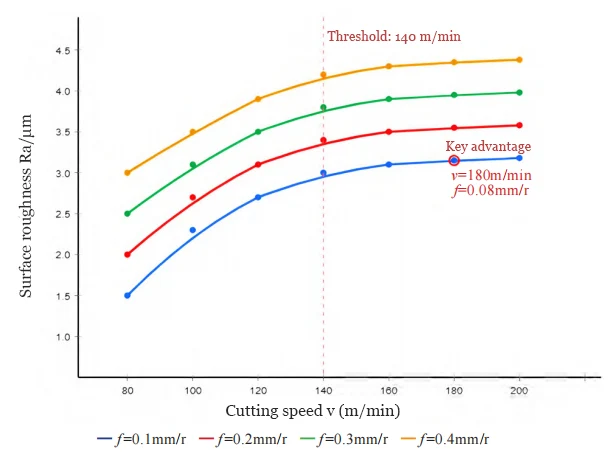
Figure 1 clearly illustrates the mechanism by which cutting parameters affect surface quality.
Surface roughness decreases rapidly when the cutting speed is in the range of 80 to 140 m/min, while the rate of decrease becomes more gradual once the speed exceeds 140 m/min.
Feed rate and surface roughness exhibit a positive correlation; when the feed rate increases from 0.1 mm/r to 0.3 mm/r, surface roughness increases by an average of 85%.
Under the same cutting speed conditions, machining with a small feed rate yields better surface quality but results in relatively lower machining efficiency.
Optimal Parameter Combination and Surface Performance
The analysis results indicate that the optimal parameter combination is a cutting speed of 180 m/min and a feed rate of 0.08 mm/r.
At this point, the surface roughness can reach Ra 0.95 μm, meeting the technical requirements.
Under this parameter combination, surface quality stability remains good; the standard deviation of roughness for 100 consecutively machined products measures only 0.12 μm, providing reliable assurance for mass production.
To further verify the effectiveness of the optimized parameters, a tool wear comparison test evaluated performance.
The test results show that using the optimized parameter combination reduces tool wear VB from 0.35 mm in the conventional process to 0.18 mm and extends tool life by 94%.
Cutting force tests indicate that the principal cutting force (Fc) decreases by 32% under the optimized process, effectively reducing vibration and deformation during machining.
Surface Integrity and Mechanical Properties Enhancement
Surface integrity analysis showed that the microhardness distribution of the tooth surface layer became more uniform under the optimized process.
The hardness gradient decreased from 85 HV/0.1 mm in the conventional process to 45 HV/0.1 mm.
At the same time, the surface residual stress changed from tensile to compressive, reaching -180 MPa, which significantly enhanced the fatigue resistance of the tooth surface.
Statistical analysis of machining accuracy was conducted after continuous machining of 200 products using the optimized parameters.
All tooth profile accuracy grades met Grade 7 requirements.
Additionally, the pass rate for dimensional accuracy at IT8 grade reached 98%, demonstrating a significant improvement in the stability of machining quality.
Analysis and Control of Factors Affecting Machining Quality
An analysis of variance (ANOVA) examined the experimental data to gain a deeper understanding of the extent to which various process factors contribute to machining quality.
The contribution rates and significance levels of each factor emerged from the calculations.
This analysis identified the key factors influencing machining quality.
These findings provide a scientific basis for optimizing process parameters, as shown in Table 1.
| Factor | DOF (df) | Sum of Squares | Mean Square | F Value | P Value | Contribution (%) | Significance |
|---|---|---|---|---|---|---|---|
| Cutting Speed (v) | 3 | 2.847 | 0.949 | 18.6 | < 0.01 | 42.6 | ** |
| Feed Rate (f) | 3 | 2.125 | 0.708 | 13.9 | < 0.01 | 31.8 | ** |
| Depth of Cut (ap) | 3 | 1.264 | 0.421 | 8.3 | < 0.05 | 18.9 | * |
| Tool Material | 2 | 0.325 | 0.163 | 3.2 | < 0.05 | 4.9 | — |
| Error | 4 | 0.118 | 0.029 | — | — | 1.8 | — |
| Total | 15 | 6.679 | — | — | — | 100.0 | — |
Table 1. ANOVA Results of Process Parameters on Machining Quality
The results of the analysis of variance clearly indicate the order of importance of process parameters in influencing machining quality.
Cutting speed is the most significant factor affecting surface roughness, with a contribution rate of 42.6% and an F-value of 18.6, reaching a highly significant level.
Feed rate ranks second in importance, with a contribution rate of 31.8%, which is also highly significant.
The influence of cutting depth is relatively minor, with a contribution rate of 18.9%, but it remains significant.
The influence of tool material on surface roughness is not significant, with a contribution rate of only 4.9%.
These results indicate that, under the current tool material conditions, optimizing the cutting speed and feed rate parameters yields the best improvement in surface quality.
These findings indicate that the process optimization strategy should prioritize the proper matching of cutting speed and feed rate.
At the same time, the cutting depth can increase appropriately.
This approach improves machining efficiency while maintaining machining quality.
Optimization of Process Validation and Performance Testing
Development and Standardization of Optimized Process Plans
Based on the final results of experimental research, standardized machining specifications for scraper conveyor sprocket assemblies emerged.
The optimal parameter combinations for sprocket tooth surface machining became clear.
For the rough machining stage, the parameters v = 120 m/min, f = 0.25 mm/r, and ap = 1.5 mm applied; for the finishing stage, parameters of v = 180 m/min, f = 0.08 mm/r, and ap = 0.2 mm applied, with TiAlN-coated carbide end mills serving as the cutting tools.
The standardized manufacturing specifications for the complete sprocket assembly cover the entire process from raw materials to finished products.
Forging and Heat Treatment Requirements
The forging process specifications require a heating temperature of (1180 ± 20) °C and a forging ratio of at least 3:1.
After forging, the cooling rate must not exceed 50°C/h until the temperature drops to 600°C.
At the same time, the non-destructive testing pass rate for all forgings must reach 100%.
The heat treatment process standard requires normalizing at (860 ± 10)°C for 45 minutes, quenching at (840 ± 10)°C for 30 minutes, and tempering at (580 ± 10)°C for 120 minutes.
The induction hardening power density should be (3.0 ± 0.2) kW/cm².
After hardening, tempering must proceed immediately at 200 °C for 2 hours.
Machining Parameters and Quality Control
The mechanical processing standard specifies that rough machining uses ceramic cutting tools with the following parameters: v = 150 m/min, f = 0.15 mm/r, and ap= 1.0 mm.
Finish machining uses CBN tools with parameters of v = 200 m/min, f = 0.05 mm/r, and ap= 0.1 mm, with cooling performed using a 5% emulsion at a flow rate of ≥ 20 L/min.
Quality control standards include internal defects in the forging being ≤ Grade 1, post-heat treatment hardness ranging from HRC 58 to 62 with hardness uniformity ≤ HRC 3, tooth surface roughness Ra ≤ 1.2 μm, and tooth profile accuracy grade 7.
Surface cracks are not allowed, and a quality traceability system must create complete process records and inspection reports for each product.
Establish a process parameter database covering machining parameters for components of different materials and specifications.
Formulate quality control standards, including a sprocket tooth surface roughness of Ra ≤ 1.2 μm.
Compile work instructions covering the complete process, including equipment commissioning, tool selection, parameter settings, and quality inspection.
Establish a process card management system to ensure standardization and traceability of the machining process.
Production Application Validation and Performance Testing
A six-month production line tracking test validated the practical effectiveness of the optimized sprocket assembly process.
The evaluation focused on the sprocket assembly’s fatigue performance, surface integrity, and machining quality.
The results also assessed the stability of machining quality over time.
Performance testing of the sprocket assembly used an MTS810 fatigue testing machine and a JSM-7800F scanning electron microscope for comprehensive evaluation.
Tooth-surface contact fatigue testing followed the GB/T 14230-1993 standard.
Under a contact stress of 1400 MPa, the fatigue life of sprockets produced using the optimized process reached 2.8 × 10⁷ cycles, representing an 87% improvement over the 1.5 × 10⁷ cycles achieved with the conventional process.
Metallographic analysis revealed that the optimized heat treatment process yielded a uniform, fine-grained tempered martensitic microstructure with a grain size of Grade 8 and uniform carbide distribution.
The microstructure of the induction-hardened zone consisted of a fine-needle-like martensitic hardened layer that bonded well with the matrix, with no significant stress concentration.
Surface integrity testing results indicate that the optimized process effectively controls the formation of machining cracks.
Magnetic particle inspection examined 1,000 products.
The results showed that the surface crack occurrence rate decreased from 12% under the traditional process to 2% with the optimized process.
Additionally, crack depth remained within 0.01–0.02 mm, compared to 0.05–0.12 mm previously. Residual stress testing used X-ray diffraction.
The optimized process produced a residual compressive stress of –280 MPa on the tooth surface.
This represents an 87% increase compared to –150 MPa under the traditional process, effectively improving fatigue resistance.
The optimized process significantly improved product quality stability and achieved a first-pass yield rate of 96% in a continuous production run of 500 units.
Conclusion
This study focused on optimizing the machining processes for scraper conveyor sprocket assemblies.
It systematically addressed key technical challenges, such as inconsistent quality of forged sprocket components, inappropriate heat treatment parameters, excessive tooth surface roughness, and machining crack control.
Researchers established a mathematical correlation model between cutting parameters and machining quality to support this.
Results from orthogonal experimental design and analysis of variance indicate that cutting speed and feed rate are the dominant factors affecting surface quality, with contribution rates of 42.6% and 31.8%, respectively.
The optimized process reduced the surface roughness of the sprocket teeth by 47.6% and improved the microstructural uniformity of the sprocket assembly forgings by 38%.
The standard deviation of the heat treatment hardness distribution decreased by 55%, and the incidence of machined surface cracks dropped by 83%.
Furthermore, the contact fatigue life of the tooth surfaces increased by 87%, and the overall product pass rate rose from 78% to 94%.
Economic analysis shows that the total annual benefit is 4.9 million yuan, with a payback period of 0.49 years and a cost-benefit ratio of 1.94.
Engineers successfully implemented the process optimization results on the SGZ764/500 scraper conveyor production line.
They reduced equipment failure rates by 28% and extended maintenance intervals by 40%.
This demonstrates the engineering practicality and promotional value of the technical solution.