

David Chuang
The Evolution of Metal-Cutting Tools: From Traditional Materials to Intelligent Manufacturing
China CNC Milling » Blog » The Evolution of Metal-Cutting Tools: From Traditional Materials to Intelligent Manufacturing
FAQ
What materials can you work with in CNC machining?
We work with a wide range of materials including aluminum, stainless steel, brass, copper, titanium, plastics (e.g., POM, ABS, PTFE), and specialty alloys. If you have specific material requirements, our team can advise the best option for your application.
What industries do you serve with your CNC machining services?
Our CNC machining services cater to a variety of industries including aerospace, automotive, medical, electronics, robotics, and industrial equipment manufacturing. We also support rapid prototyping and custom low-volume production.
What tolerances can you achieve with CNC machining?
We typically achieve tolerances of ±0.005 mm (±0.0002 inches) depending on the part geometry and material. For tighter tolerances, please provide detailed drawings or consult our engineering team.
What is your typical lead time for CNC machining projects?
Standard lead times range from 3 to 10 business days, depending on part complexity, quantity, and material availability. Expedited production is available upon request.
Can you provide custom CNC prototypes and low-volume production?
Can you provide custom CNC prototypes and low-volume production?
Hot Posts

Early metal cutting operations were constrained by materials and processes.
This resulted in poor tool durability and low machining efficiency.
These limitations severely hindered industrial production progress.
With the rise of the Industrial Revolution and the widespread use of steel materials, metal cutting tools began to advance.
The successive development of cemented carbide and high-speed steel marked their first leap forward.
These innovations significantly improved machining precision and efficiency.
However, the truly revolutionary transformation occurred in the mid-to-late 20th century.
With the introduction of superhard materials, coating technologies, and computer-aided design and manufacturing (CAD/CAM), metal-cutting tools advanced further.
Their design and application entered an entirely new era.
The Evolution of Metal-Cutting Tools
The Era of Traditional Materials
At the dawn of the Industrial Revolution, hand-forged tools crafted by blacksmiths marked the beginning of metalworking.
These early tools, primarily made of carbon steel, were simple yet sufficient for the rudimentary metalworking demands of the time.
However, as industrialization accelerated, the demand for higher precision and better surface finish in metal components increased.
This revealed the limitations of traditional carbon steel tools, which lacked adequate heat resistance and wear resistance.
Engineers then began experimenting with adding alloying elements like tungsten, molybdenum, and chromium to steel to enhance its properties.
This marked the transition of cutting tool materials toward alloy steels.
While alloy steel tools partially alleviated issues such as edge softening and rapid wear at high temperatures, they did not fully overcome these problems.
They still failed to fundamentally resolve the challenges of extreme heat and abrasion inherent in metal cutting processes.
The Era of Cemented Carbide
In the early 20th century, the invention of cemented carbide ushered in a new era for metal-cutting tools.
Cemented carbide is composed of tungsten carbide (WC) and metallic binders such as cobalt (Co).
It boasts a hardness approaching that of diamond and offers excellent wear resistance and thermal crack resistance.
This revolutionary material dramatically enhanced tool durability and machining efficiency, enabling the processing of harder materials at higher speeds.
This advancement significantly accelerated the rapid development of industries such as automotive, aerospace, and mold manufacturing.
The widespread adoption of cemented carbide tools marked the transition of metal cutting from artisanal workshops to modern mass production.
This represented a pivotal milestone in manufacturing history.
The PCD/CBN Era
In the 1970s, the advent of polycrystalline diamond (PCD) and cubic boron nitride (CBN) once again redefined the history of metal cutting.
With its extreme hardness and thermal stability approaching that of natural diamond, PCD became the ideal choice for machining non-ferrous and non-metallic materials.
It was particularly suited for high-precision, high-efficiency finishing operations.
CBN, meanwhile, demonstrated unparalleled advantages in machining high-hardness materials such as hardened steel and cast iron.
This was due to its exceptional thermal stability and high wear resistance against ferrous metals.
The widespread adoption of tools made from these two superhard materials significantly broadened the scope of machining applications.
It also enhanced both processing efficiency and product quality.
The New Technology Era
Entering the 21st century, metal cutting tool technology has undergone unprecedented transformation.
This has been driven by the rapid advancement of information technology, materials science, and automation technology.
The emergence of new processes such as high-speed cutting technology, dry cutting, and minimal lubrication technology has significantly increased machining speeds and reduced coolant usage.
These advances have also lowered environmental pollution, aligning with the trend of green manufacturing.
Simultaneously, intelligent tools have emerged as a new frontier in tool development.
By integrating sensors and data processing systems, these smart tools enable real-time monitoring of machining processes.
They also provide adaptive control, substantially enhancing precision and stability.
The exploration of novel materials is another defining feature of this era.
Innovations like nanostructured materials and graphene-reinforced tools have pushed the boundaries of tool performance.
Nano-tools, through nanoscale structural design, improve material toughness and wear resistance, achieving a combination of high strength and high toughness.
Graphene, a two-dimensional material with outstanding electrical and thermal conductivity, is used in tool coatings.
It effectively enhances thermal management capabilities and extends service life.
Furthermore, the integration of digital design and manufacturing technologies enables customized tooling.
Through computer-aided design and manufacturing (CAD/CAM), optimized tool geometries and cutting parameters can be engineered for specific workpieces and machining conditions.
This approach delivers efficient and precise machining solutions.
Factors Affecting the Use of Metal Cutting Tools in Machining
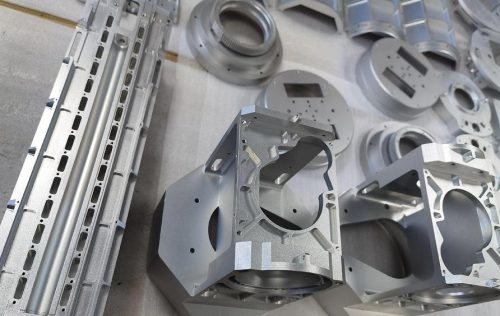
In the machining of turbine casing components and intermediate housings, the selection and optimization of metal cutting tools face specific challenges.
These challenges arise primarily due to the unique properties of these materials.
As core components subjected to extreme temperatures and pressures, turbine casings typically utilize heat-resistant steels such as 1.4826, 1.4837, 1.4848, 1.4849, and high-nickel alloys.
The high strength and hardness of these materials demand cutting tools with exceptional wear resistance and thermal stability.
Intermediate housings, primarily composed of gray iron 250, exhibit relatively lower material hardness.
Nevertheless, the cutting resistance and thermal effects generated during machining remain significant factors that cannot be overlooked.
For turbine casing components made of heat-resistant steel, tool material selection is particularly critical.
Superhard materials like polycrystalline diamond and cubic boron nitride are preferred for machining these materials.
This is due to their stability under extreme conditions.
They withstand the thermal stresses generated during high-temperature cutting.
They also maintain extremely low wear rates, ensuring machining accuracy and surface finish.
However, due to the unique properties of heat-resistant steel, carbide tools incorporating high-performance ceramics or specialized coatings are sometimes required.
These tools, enhanced through advanced surface treatment technologies, exhibit superior wear resistance and thermal crack resistance.
This makes them particularly suitable for finishing complex geometries.
When designing tool geometry parameters, it is important to consider the high strength and work-hardening tendency of heat-resistant steel.
Increasing the rake angle and adopting a large helix angle design can effectively reduce cutting forces and heat generation.
This minimizes the contact area between the tool and workpiece, thereby reducing tool wear and improving machining efficiency.
Simultaneously, a reasonable rake angle and clearance angle design helps control the chip flow direction.
It also reduces friction between the tool and chips, further enhancing machined surface quality.
For gray iron 250 material in the intermediate housing, the machining difficulty is relatively low.
However, careful tool selection is still required to prevent built-up edge formation and damage to the machined surface.
Carbide tools demonstrate excellent performance in machining gray iron due to their superior toughness and cost-effectiveness.
To enhance production efficiency, cutting strategies involving high feed rates and spindle speeds can be employed, demanding tools with robust impact resistance and wear resistance.
In such cases, selecting appropriate coating technologies, such as TiAlN coatings, enhances tool heat resistance.
It also effectively reduces the friction coefficient between the tool and workpiece, thereby extending tool life.
When selecting tool materials, it is crucial to consider the chemical inertness of the material.
This helps avoid chemical reactions with the workpiece that could compromise machining quality or cause tool corrosion.
Furthermore, heat treatment and coating technologies are critical for enhancing tool performance.
For instance, depositing wear-resistant and heat-resistant coatings on tool surfaces via physical vapor deposition (PVD) or chemical vapor deposition (CVD) significantly improves tool life.
It also enhances cutting performance.
This effect becomes particularly pronounced under high-speed and dry cutting conditions.
Key Considerations for Tool Usage in Metal Cutting During Machining
Cutting Parameters
In the field of mechanical processing, the proper selection and optimized use of metal cutting tools are crucial for enhancing machining efficiency.
They also ensure processing accuracy and help reduce costs
As one of the three fundamental cutting parameters, cutting speed has a decisive impact on tool wear and machining quality.
With technological advancements, high-speed cutting has become an effective means to boost productivity.
However, excessively high cutting speeds can lead to premature tool wear or even breakage.
Therefore, selecting an appropriate cutting speed requires consideration of both the tool material’s tolerance limits and the workpiece material’s cutting characteristics.
This ensures maximum machining efficiency without compromising tool integrity.
The setting of feed rate and depth of cut is equally critical.
While excessive feed rates increase metal removal rates, they may amplify cutting forces, compromising surface quality and tool life.
Excessive depth of cut risks tool chatter, degrading machining accuracy.
Balancing these factors requires comprehensive consideration of tool strength, machine rigidity, and machining requirements to achieve efficient cutting while maintaining quality.
Selecting the appropriate tool material is critical for different workpiece materials and cutting conditions.
Materials like cemented carbide, high-speed steel, ceramics, cubic boron nitride, and polycrystalline diamond each offer distinct advantages.
They should be chosen based on the workpiece’s hardness, toughness, and heat treatment condition.
Optimizing machine tool design—by increasing spindle speed, enhancing feed system responsiveness, and implementing advanced control systems—better accommodates high-efficiency cutting demands.
Concurrently, precision and reliability in tool clamping systems remain indispensable for ensuring machining quality.
Tool maintenance and rational inventory management are equally vital.
Regularly inspecting tool wear and promptly replacing severely worn inserts prevents quality issues caused by substandard tools.
Furthermore, establishing an efficient tool management system with well-planned inventory and procurement cycles not only minimizes unnecessary downtime but also effectively controls production costs.
Surface Coating Technology
Surface coating technology plays a pivotal role in the modern metal cutting industry.
It not only significantly enhances tool performance but also drives leaps in machining efficiency, becoming a key force propelling technological innovation in manufacturing.
The selection of coating materials and technological evolution form the core of coating technology.
Initially, single-layer TiN coatings dominated, markedly improving tool surface hardness and oxidation resistance.
Subsequently, with technological advancements, multi-layer composite coatings like TiCN and more advanced nano-composite coatings emerged.
These novel coatings not only enhance tool high-temperature performance but also maintain superior wear resistance and anti-welding properties across a broader range of cutting speeds.
This effectively addresses challenges posed by high-speed cutting and difficult-to-machine materials.
By forming a robust protective layer on the tool surface, coating technology significantly extends tool life.
It also reduces tool change frequency and, consequently, lowers production costs.
Simultaneously, coatings optimize cutting force distribution during machining and lower cutting temperatures.
They also minimize workpiece thermal deformation and enhance machining accuracy and surface finish.
This is particularly crucial for precision machining and complex part manufacturing, contributing to improved overall machining efficiency and product quality.
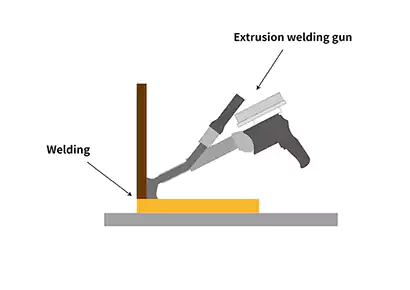
For applications involving expensive materials like cemented carbide, welding technology plays a vital role in tool manufacturing.
By bonding cemented carbide inserts to tool bodies using high-quality solders, the process simplifies tool design and manufacturing while lowering production costs.
It also enables rapid insert replacement.
This enhances tool flexibility and adaptability.
To overcome edge cracking caused by differing material expansion coefficients, designs incorporate thicker cutting edges and optimized welding processes.
This ensures tool stability and durability, further boosting production efficiency and cost-effectiveness.
With the integration of coating technology and novel materials, tool design now prioritizes structural optimization and rational material combinations.
For instance, selecting shank materials compatible with carbide properties and employing advanced tool geometry designs enables tools to maintain high strength.
It also improves heat dissipation and cutting efficiency.
Material Selection
In modern manufacturing, material selection is crucial for enhancing tool performance, optimizing machining efficiency, and controlling costs.
The core of welded cutting tools lies in tightly bonding cemented carbide inserts to low-cost shank materials (such as medium-carbon steel) through welding technology.
Carbide, with its exceptional hardness and wear resistance, is the preferred material for cutting edges.
The selection of shank materials, however, prioritizes machinability and cost-effectiveness.
This combination leverages carbide’s high performance at the cutting interface while utilizing low-cost materials for the tool’s main structure—a classic cost-effective design solution.
To overcome edge cracking caused by differing thermal expansion coefficients between materials, the design increases insert thickness, ensuring strength and stability at the welded joint.
While this approach increases initial material consumption, it effectively lowers unit processing costs by extending tool life.
It also reduces production interruptions from frequent tool changes, enhancing overall manufacturing efficiency.
Applying wear-resistant and heat-resistant coatings to the surface of carbide inserts significantly extends cutting life while optimizing tribological properties during machining.
This reduces cutting forces and temperatures, positively impacting machining accuracy and surface finish quality.
The easy-to-replace nature of coated tools also facilitates quicker tool changes on production lines, minimizing downtime and boosting overall production efficiency.
Analysis of Metal Cutting Development in Machining
Advancements in Modern Metal Cutting Technology
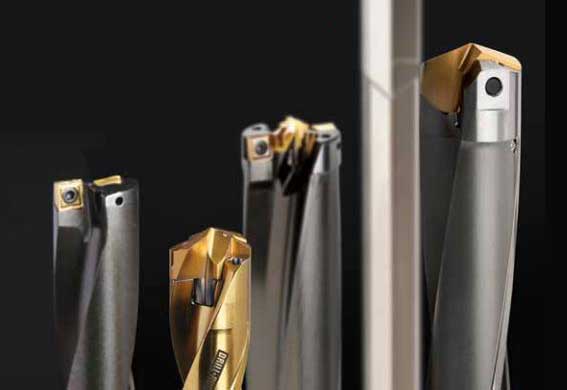
Modern cutting tools utilize high-performance materials such as cemented carbide, ceramics, cubic boron nitride (CBN), and diamond.
These materials possess exceptional hardness and wear resistance, enabling them to withstand the high temperatures and stresses generated during high-speed cutting.
This significantly extends tool life and enhances machining efficiency.
Simultaneously, advanced coating technologies—such as multilayer composite coatings and nanocoatings—further enhance surface resistance to wear and adhesion.
This facilitates smoother cutting processes and reduces manufacturing costs.
The widespread adoption of computer numerical control (CNC) technology has enabled full digital control of metal cutting processes from design to manufacturing, greatly enhancing flexibility and precision.
In recent years, the integration of technologies like the Internet of Things (IoT), big data, and artificial intelligence (AI) has empowered intelligent manufacturing systems to monitor machining conditions in real time.
These systems can optimize cutting parameters and achieve intelligent process management, further boosting production efficiency and product quality.
The advancement of high-tech fields like microelectronics and aerospace has imposed stricter demands on dimensional accuracy and surface quality of components.
Micro-machining and ultra-precision machining technologies—such as ultrasonic-assisted machining, electrochemical machining, and laser machining—enable precise control over material removal.
This control occurs at the microscopic level.
These techniques achieve nanometer-level machining precision, meeting the requirements of high-end, high-precision products.
Challenges and Future Outlook
Despite significant advancements in metal cutting technology, numerous challenges remain.
First, the application of new materials such as high-temperature alloys and composites poses challenges to traditional cutting techniques due to their unique physical properties.
This necessitates the development of machining methods and tools adapted to these new materials.
Second, environmental protection and sustainable development demand that the metalworking industry reduce energy consumption and emissions.
This drives the research and development of green cutting technologies such as dry cutting and minimal lubrication techniques.
Additionally, further improving machining efficiency, reducing costs, and simultaneously ensuring machining quality remain pressing issues requiring resolution.
In the future, metal cutting technology will increasingly emphasize intelligence, networking, and sustainability.
Through deep learning and artificial intelligence, adaptive control and fault prediction during machining processes can be achieved.
This enhances the autonomous decision-making capabilities of machining systems.
Concurrently, integrating additive manufacturing (3D printing) will establish a hybrid “subtractive-additive” manufacturing model.
This offers new pathways for efficient, low-cost production of complex structural components.
Furthermore, advancements in materials science will continually expand the boundaries for applying new materials and technologies in metal cutting.
These advancements drive technological innovation across the entire industry.
Conclusion
The development trend of metal cutting tools undoubtedly moves toward greater efficiency, environmental sustainability, and intelligence.
With the continuous integration of nanomaterials, biomimetic technology, and artificial intelligence, tool performance will be further optimized.
Tools will adapt to a broader range of material processing needs.
They will also significantly enhance machining precision and production efficiency while reducing energy consumption and environmental impact.
For instance, adaptive tools equipped with integrated sensors and algorithms can dynamically adjust machining parameters in real time, extending tool life and optimizing the manufacturing process.
Simultaneously, the adoption of green cutting technologies—such as dry machining and minimal lubrication techniques—is progressively reducing reliance on traditional coolants.
This shift is propelling mechanical processing toward more sustainable models.
Each innovation in metal-cutting tools represents a leap beyond existing processes, embodying an unwavering pursuit of dual enhancements in manufacturing efficiency and quality.
Against the backdrop of Industry 4.0, the intelligent and customized evolution of tooling technology will become pivotal to elevating the competitiveness of the industrial supply chain.