

China CNC Milling » Blog » Exploring Methods to Enhance Tooling Precision in CNC Machining
FAQ
What materials can you work with in CNC machining?
We work with a wide range of materials including aluminum, stainless steel, brass, copper, titanium, plastics (e.g., POM, ABS, PTFE), and specialty alloys. If you have specific material requirements, our team can advise the best option for your application.
What industries do you serve with your CNC machining services?
Our CNC machining services cater to a variety of industries including aerospace, automotive, medical, electronics, robotics, and industrial equipment manufacturing. We also support rapid prototyping and custom low-volume production.
What tolerances can you achieve with CNC machining?
We typically achieve tolerances of ±0.005 mm (±0.0002 inches) depending on the part geometry and material. For tighter tolerances, please provide detailed drawings or consult our engineering team.
What is your typical lead time for CNC machining projects?
Standard lead times range from 3 to 10 business days, depending on part complexity, quantity, and material availability. Expedited production is available upon request.
Can you provide custom CNC prototypes and low-volume production?
Can you provide custom CNC prototypes and low-volume production?
Hot Posts

As modern manufacturing evolves toward intelligent and high-end development, precision machining demands significantly higher tool accuracy.
Traditional tooling methods still face limitations in stability, durability, and machining consistency, with precision shortcomings becoming particularly pronounced during complex surface machining, high-speed cutting, and multi-material cutting operations.
Coupled with the widespread adoption of new materials and complex components, the demand for high-precision tools continues to grow.
Enhancing tooling accuracy is crucial for improving product quality, reducing production costs, and strengthening a company’s market competitiveness.
Tool Selection and Matching for CNC Machining
Tool Selection and Matching
In CNC machining, selecting and matching tools is fundamental to ensuring machining accuracy.
Appropriate tool materials—such as high-speed steel, cemented carbide, or ceramic tools—should be chosen based on the physical properties of the workpiece material, including hardness, strength, and thermal conductivity.
Different materials suit different machining requirements.
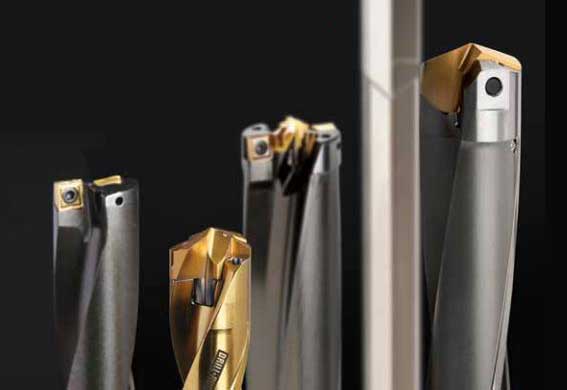
Additionally, tool geometric parameters—including diameter, cutting edge angle, and cutting depth—must be selected based on the machining type (e.g., turning, milling, drilling) and surface finish requirements.
Particularly for complex machining tasks, prioritize composite tools or specialized tools.
Composite tools reduce tool changes, avoiding positioning errors caused by tool changes.
Specialized tools feature customized geometric parameters that adapt to complex surfaces, deep cavities, and other special conditions, thereby effectively improving machining accuracy.
During tool selection, verify compatibility between the tool and the CNC machine tool spindle to ensure tool stability at high rotational speeds.
Fully leverage cutting parameter tables provided by tool suppliers to optimize tool selection strategies.
Standardized tool selection enhances machining efficiency, effectively reduces tool wear, extends tool life, and ensures the surface quality and dimensional accuracy of machined parts.
Tool Installation Specifications
Before installing tools, clean the interface between the tool and the machine tool spindle to ensure no oil, metal shavings, or other foreign matter is present.
This prevents eccentricity or insufficient clamping force during installation.
During installation, select appropriate clamping tools such as chucks, collets, or tool holders based on the tool type, ensuring compatibility with the machine tool’s tool magazine specifications.
When securing tools, use torque wrenches to prevent tool holder deformation from excessive clamping force or loosening due to insufficient clamping.
Verify tool concentricity and radial runout, ensuring deviations remain within permissible limits.
This minimizes cutting vibration errors, enhances machining accuracy, effectively reduces tool and machine wear risks, and improves machining stability.
Toolpath Optimization
When planning toolpaths, prioritize rational approach and retract methods to prevent surface roughness or tool chipping caused by sudden load changes.
For complex workpieces, generate optimized toolpaths using CAD/CAM technology to ensure uniform load distribution during cutting and minimize thermal deformation.
When setting cutting parameters, comprehensively consider cutting speed, feed rate, and depth of cut to balance machining efficiency with tool life.
Plan the machining sequence based on the workpiece’s specific geometry, performing roughing operations before finishing to guarantee dimensional accuracy.
During toolpath optimization, avoid path intersections or redundant cutting to minimize unnecessary tool wear.
Standardized path optimization significantly enhances machining efficiency, reduces production costs, and improves the consistency of part surface dimensions.
Regular Maintenance
After machining, promptly clean chips and oil residue from tool surfaces.
Use ultrasonic cleaning for carbide or high-precision tools to ensure no residue remains on cutting edges.
Unused tools should undergo rust prevention treatment and be stored in dedicated tool cabinets.
Regularly inspect edge wear, geometric accuracy, and the condition of the clamping area.
Regrind or replace tools as needed. Track the service life of tools used multiple times and schedule their reuse appropriately.
Standardized maintenance reduces tool wear rates and minimizes unplanned downtime.
Challenges in Tool Usage During CNC Machining
Difficulties in Controlling Tool Wear Lead to Significant Accuracy Decline
Tool wear is unavoidable in CNC machining.
Difficulties in controlling wear directly result in reduced machining accuracy, manifested as dulled cutting edges, increased cutting forces, and enlarged dimensional deviations.
Excessively hard materials, mismatched tool materials and operating conditions, thermal effects from cutting, and insufficient coolant supply accelerate oxidation wear.
Cumulative wear is difficult to monitor in real time, often triggering sudden precision failures.
Challenges in Machining Complex Workpieces: Insufficient Tool Adaptability
Machining complex workpieces imposes extremely high demands on tool adaptability, yet insufficient tool adaptability remains a widespread issue in actual production.
This manifests as tool edge chipping or unstable cutting during machining of multi-curved surfaces, deep cavities, and irregular structures, resulting in low machining efficiency.
The machining paths for complex workpieces exceed the design scope of standard tools, making it difficult for tool geometry, materials, and coatings to meet the multifaceted demands of complex cutting environments.
Complex machining often involves multi-axis interpolation, resulting in frequent tool orientation changes and increasingly complex force conditions, further complicating tool adaptability.
Unstable Machining Environments Limit Tool Performance
Environmental instability in CNC machining significantly restricts tool performance.
During cutting operations, factors such as vibration, thermal deformation, and insufficient machine rigidity lead to reduced machining accuracy.
Insufficient dynamic rigidity of machine tools, particularly during high-speed and heavy-load cutting, causes minor structural deformation that compromises tool stability.
Unstable coolant spray patterns, pressure, and flow rates lead to heat accumulation, increasing thermal load on tools.
Diverse vibration sources—such as inherent machine component vibrations, unstable workpiece clamping, and abrupt changes in machining paths—all negatively impact tool performance.
Parameter Optimization is Challenging, Leading to Inefficient Utilization.
In CNC machining, parameter optimization difficulties manifest as unreasonable cutting parameters, resulting in prolonged processing times, accelerated tool wear, and increased energy consumption.
Complex nonlinear relationships exist between parameters such as cutting speed, feed rate, and depth of cut, with varying sensitivities to different machining conditions.
Due to the diversity of workpiece materials, empirical parameters cannot fully adapt to novel machining scenarios.
The trial-and-error approach to parameter adjustment is time-consuming and labor-intensive, increasing experimental tool consumption.
The absence of intelligent algorithm-based parameter optimization methods results in inefficient tool utilization.
Methods for Improving Tooling Precision in CNC Machining
Enhancing Wear Monitoring to Extend Tool Life
1. Implementing Online Monitoring Systems for Real-Time Tool Condition Tracking
To effectively control tool wear, modern CNC machining requires advanced online monitoring systems that utilize real-time data collection to track tool usage status.
These monitoring systems employ high-sensitivity sensors to continuously capture data such as vibration signals, cutting temperatures, acoustic signals, and spindle power variations during the cutting process.
Frequency domain analysis of this data determines whether tools exhibit dullness, chipping, or other abnormal wear conditions.
Combined with big data analytics algorithms, the system predicts tool remaining life to optimize replacement timing, avoiding unnecessary costs from premature replacement or processing failures due to delayed replacement.
The monitoring system integrates with machine tool CNC systems to display tool status in real time and can even trigger automatic shutdown during anomalies, minimizing production risks.
When deploying this system, data transmission latency must be thoroughly considered to ensure the reliability of tool condition monitoring results.
2. Optimizing Tool Material Properties to Enhance Wear Resistance
First, select appropriate tool materials based on machining requirements.
For high-hardness alloy materials, cubic boron nitride tools are recommended, while ceramic tools are suitable for high-temperature alloys.
Second, improve tool coating technology to boost wear resistance by applying multi-layer nanocoatings.
Depositing hard layers and lubricating layers on tool surfaces effectively reduces wear under high-temperature, high-pressure conditions.
Strengthening the tool substrate is also crucial.
Fine-grain technology can be employed to enhance material toughness, while surface hardening processes like carburizing and nitriding increase substrate hardness.
To adapt to diverse machining scenarios, develop intelligent coatings with adaptive functionality.
These coatings automatically adjust their friction coefficient under varying machining conditions, significantly improving overall tool performance.
3. Establishing Wear Compensation Mechanisms to Ensure Machining Accuracy
Wear compensation primarily combines software algorithms with hardware detection devices.
High-precision measurement of tool wear parameters is essential, achievable through laser measurement equipment, probe-based instruments, or non-contact optical scanners.
These measured parameters are then input into the CNC system, which automatically adjusts tool positioning or cutting paths.
During milling operations, if tool diameter decreases due to wear, the system automatically shifts the cutting trajectory outward to ensure final dimensions meet specifications.
Wear compensation mechanisms must integrate closely with online monitoring systems to enable real-time dynamic compensation.
Particularly in batch production, the precision of wear compensation directly determines product consistency.
Enhancing Tool Adaptability for Complex Machining
1. Multifunctional Tool Design for Increased Machining Flexibility
Integrating multiple machining functions into a single tool reduces tool change frequency and boosts machining efficiency.
Based on modular design, multifunctional tools enable rapid switching between roughing and finishing operations.
Their cutting edge shapes and angles can be adjusted to meet diverse machining requirements.
For complex workpieces, composite tools with varied cutting edge distributions are designed to perform multiple operations like drilling, slot milling, and chamfering.
Manufacturing such tools typically requires high-precision techniques like 5-axis simultaneous grinding to ensure geometric accuracy.
These tools integrate coating technology and intelligent sensor modules for adaptive machining condition adjustments, further enhancing stability.
2. Customized Tooling for Specialized Needs
For unique machining demands, such as deep-cavity thin-walled components, tools with extended shank-to-cutting-edge ratios can be engineered to optimize rigidity and minimize vibration during processing.
When machining high-temperature or composite materials, thermally stable substrates like ceramics or PCBN are selected, with diamond coatings applied for superior oxidation resistance.
Tool customization also requires optimizing chip evacuation structures based on specific machining tasks, such as designing specialized helical flutes to enhance chip removal efficiency during drilling.
Custom tools must undergo predictive analysis using simulation technology to ensure design accuracy under actual operating conditions.
3. Enhancing Multi-Axis Interpolation Control to Improve Precision in Complex Processes
The core of multi-axis interpolation control lies in precisely managing the relative position between the tool and workpiece.
This requires optimizing the kinematic model of the CNC system to minimize cumulative errors during tool orientation adjustments.
When machining complex surfaces, dynamic compensation algorithms should be employed to adjust tool positions in real-time, ensuring continuity of the machining trajectory.
High-precision toolholding systems such as hydraulic chucks and thermal expansion chucks should be employed in multi-axis machining to minimize radial tool runout.
Efficient toolpath optimization software is essential for multi-axis operations, with path generation requiring careful consideration of load distribution to reduce thermal buildup.
Optimizing Machining Environments to Enhance Tool Performance
1. Implementing Vibration Reduction Devices to Stabilize Tool Operation
In CNC machining, vibration is a primary factor affecting tool performance, leading to reduced tool life.
Introducing vibration reduction devices effectively controls vibration through the use of high-performance damping tool holders, vibration-reducing chucks, and vibration-isolation tables.
These devices absorb or suppress mechanical vibrations generated during machining, reducing the proportion of vibration energy transmitted to the tool. This ensures cutting process stability.
Installing high-damping material base pads on the machine tool bed minimizes the impact of external environments and internal moving components on tool vibration.
For dynamic machining conditions, real-time monitoring systems can automatically adjust cutting parameters based on vibration signals, keeping tools in optimal operating states to enhance machining quality.
2. Strengthen Thermal Management to Mitigate Heat Effects on Tools
Cutting heat generated during machining significantly impacts tool performance.
Ensure adequate coolant supply and optimize spray angles for direct coverage of the cutting zone to rapidly dissipate heat.
Select high-thermal-conductivity coolants, such as those containing micro- and nano-particles, to further enhance heat dissipation.
For high-temperature cutting conditions, implement internal cooling tool technology.
This directs coolant through internal channels to the cutting edge, significantly reducing tool temperature rise.
Concurrently, utilize thermal imaging monitoring to track real-time temperature distribution in the cutting zone.
Dynamically adjust cooling strategies based on temperature fluctuations to ensure tool stability under high-temperature conditions.
3. Improve workshop conditions to enhance environmental stability
Workshop conditions directly impact tool performance.
Maintain temperature and humidity within equipment specifications to prevent thermal deformation from temperature differentials.
Enhance ventilation and install air filtration systems to reduce dust and oil mist contamination.
Optimize workshop layout by separating vibration sources from precision CNC equipment and using soundproofing materials for noise reduction.
Regularly clear waste materials and maintain equipment cleanliness to ensure stable tool operation.
Optimize Cutting Parameters to Enhance Operational Efficiency
1. Precisely Set Cutting Speed to Balance Tool Load
Reasonably setting cutting speed is crucial.
Excessively high speeds accelerate tool wear, while excessively low speeds reduce production efficiency.
For different material machining requirements, precisely adjust cutting speed based on the range provided by tool suppliers and actual operating conditions.
Given the nonlinear relationship of cutting parameters, obtain baseline data through small-batch trial cuts and adjust cutting speed based on tool wear monitoring results.
For high-hardness materials, reduce cutting speed to minimize heat accumulation; for low-hardness materials like aluminum alloys, increase cutting speed to enhance machining efficiency.
Analyze trends in cutting forces and spindle power to adjust cutting speed, maintaining tool load within optimal ranges.
Modern CNC systems can leverage real-time collaboration between servo drives and sensors to achieve automatic cutting speed optimization, thereby enhancing overall tool performance.
2. Adjust Feed Rate to Match Workpiece Requirements
Excessively high feed rates increase cutting forces, accelerating tool wear, while excessively low feed rates compromise surface quality.
In practice, set reasonable feed rates based on workpiece geometry, material properties, and tool type.
For complex curved surfaces, reduce feed rates to maintain machining accuracy; conversely, moderately increase feed rates during straight-line cutting to shorten processing time.
When machining new materials, avoid directly applying empirical parameters.
Instead, determine the feed rate range through material cutting performance tests.
Adjust feed rates based on workpiece rigidity—reduce rates for thin-walled parts to minimize deformation.
Employ dynamic feed control systems to adjust feed rates according to real-time machining conditions, maintaining stable tool-workpiece contact and further enhancing efficiency.
3. Applying Intelligent Optimization Algorithms for Dynamic Parameter Adjustment
Intelligent optimization algorithms offer a novel approach for real-time cutting parameter adjustment, significantly enhancing tool utilization efficiency.
AI-based parameter optimization systems, trained on historical data, predict optimal parameter combinations under varying machining conditions and automatically adjust cutting speed, feed rate, and depth of cut during actual processing.
Combined with real-time sensor data, the intelligent system rapidly responds to machining state changes—reducing cutting speed during increased vibration and adjusting feed rate during thermal buildup.
The algorithm also employs multi-objective optimization to balance efficiency and tool life, ensuring maximum processing quality and cost-effectiveness.
This approach enhances overall efficiency while reducing reliance on manual parameter intervention.
Conclusion
Enhancing tooling precision in CNC machining requires comprehensive consideration of multiple factors, including operational protocols, environmental conditions, and technical methodologies.
Moving forward, advancements in tooling precision will progress toward intelligent, automated, and eco-friendly solutions.
Tool monitoring systems will enable real-time optimization throughout the entire process, while the application of novel materials and coating technologies will further elevate tool performance, achieving a win-win outcome for both economic and environmental benefits.