


CNC milling tool technology in mold manufacturing is one of the key elements driving the high-quality development of the mold industry.
With the transformation and upgrading of the manufacturing industry, CNC milling tool technology is evolving rapidly.
The continuous advancement of smart manufacturing technology is driving this evolution toward greater efficiency, higher precision, and improved environmental friendliness.
With the rapid development of manufacturing, the mold manufacturing industry is experiencing significant growth.
At the same time, the rise of smart manufacturing presents it with unprecedented opportunities and challenges.
On one hand, the market demands higher standards for mold precision, complexity, and service life.
Conversely, the transformation and upgrading of manufacturing require the mold industry to continuously improve production efficiency and reduce manufacturing costs.
In this context, the innovation and development of CNC milling tool technology have become particularly important.
This paper aims to provide both theoretical support and practical guidance for the sustainable development of the mold manufacturing industry.
It does so through an in-depth exploration of CNC milling tool technology in mold manufacturing.
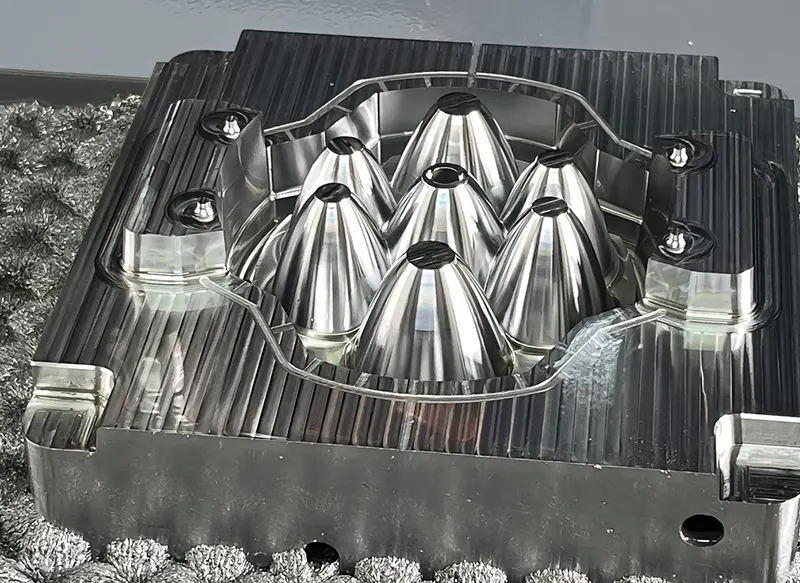
Features of CNC Milling
The reason why CNC milling has become the leading technology in mold manufacturing lies in the deep development and practical application of its tooling technology.
Specifically, manufacturers select tool materials such as high-speed steel, cemented carbide, and even ceramics.
These materials ensure stable operation under high-strength and high-hardness conditions.
Additionally, through advanced quenching, tempering, and heat treatment processes, the microstructure of these tools is precisely controlled.
This treatment endows the tools with exceptional wear resistance and longevity.
Optimizing both materials and processes serves as the cornerstone for enhancing mold processing precision and efficiency.
The core advantage of CNC milling lies in its high flexibility and precise control.
Compared to traditional milling methods, CNC technology allows flexible adjustment of tool paths based on pre-set programs.
This capability enables comprehensive and precise processing of complex-shaped workpieces.
Adopting a “customized” processing strategy meets the mold manufacturing industry’s demands for diverse parts and high precision.
Additionally, it significantly improves production efficiency and processing quality.
In tool design, there is a particular emphasis on the dual matching of shape and precision.
Based on the specific form and processing requirements of the workpiece, engineers employ precision calculation and simulation technology.
This ensures that every cutting edge of the tool precisely aligns with the workpiece contour, achieving cutting results with minimal error.
Additionally, CNC milling processing demonstrates strong adaptability.
It enables swift responses to market changes and customer demands while flexibly adjusting production plans.
By continuously optimizing tool libraries and processing strategies, it can efficiently complete machining tasks for molds of varying complexity.
This approach achieves higher efficiency while reducing costs.
The combination of flexibility and efficiency is exactly why CNC milling processing holds a significant position in mold manufacturing and broader industrial fields.
Mold Structure Analysis
As the “mother machine” of industrial production, the quality of mold design and manufacturing directly affects the precision, efficiency, and even market competitiveness of the final product.
CNC milling technology, with its advantages of high precision, high efficiency, and high flexibility, has become one of the key technologies indispensable to mold manufacturing.
The analysis of mold structure is the cornerstone of the mold design phase.
This process requires designers to deeply understand the product’s functional requirements.
It also demands that they comprehensively consider material properties, manufacturing processes, service life, and cost-effectiveness.
The rationality of mold structure design directly determines the ease of processing, manufacturing costs, and service life of the mold.
For example, when designing complex molds, designers must conduct detailed analyses of both the overall structure and specific components using 3D modeling software.
This ensures the precision of component fit and gap control, thereby preventing interference or assembly issues during subsequent processing.
Additionally, designers can optimize mold structure by implementing reasonable parting line designs and arranging cooling channels efficiently.
This approach enhances mold forming efficiency and product quality, reduces scrap rates, and generates significant economic benefits for enterprises.
In this context, CNC milling technology provides strong support for mold manufacturing with its outstanding processing capabilities.
During the mold manufacturing process, selecting and applying CNC milling tools is critically important.
Based on the physical properties and processing requirements of various mold materials, manufacturers select suitable tool materials—such as high-speed steel, cemented carbide, or ceramics—and optimize their geometric shapes.
This approach significantly improves processing efficiency, reduces tool wear, and ensures both machining accuracy and surface quality.
For example, when machining high-strength, high-hardness mold materials, manufacturers can use carbide tools with excellent wear resistance for rough machining.
They then employ ceramic tools with high precision for finishing.
This combination achieves mirror-like surface finishes on the mold while maintaining high machining efficiency, effectively meeting the requirements for high-precision mold manufacturing.
Additionally, programming and path planning in CNC milling processes are equally important.
Using advanced CAM (Computer-Aided Manufacturing) software, designers convert complex mold structures into precise machining paths.
This ensures that CNC milling machines can efficiently and accurately execute machining tasks according to the programmed instructions.
During programming, operators must fully consider factors such as tool cutting parameters, machining speed, and feed rate.
This prevents issues like tool overload, vibration, or overheating, ensuring both stability and safety throughout the machining process.
Mold manufacturing is not an isolated technical process but a systematic engineering endeavor involving multiple disciplines and fields.
During the analysis of mold structures and the implementation of CNC milling technology, operators must coordinate with other process stages, including heat treatment, surface treatment, and assembly debugging.
This ensures seamless integration across all manufacturing steps.
For example, after completing mold processing, operators can apply reasonable heat treatment processes to improve mold material performance, enhancing wear resistance and fatigue strength.
They can also use surface treatment technologies, such as sandblasting and polishing, to significantly improve surface finish and corrosion resistance, thereby extending the mold’s service life.
CNC Milling Tool Technology in Mold Manufacturing
Process Design
In the precision realm of mold manufacturing, CNC milling tool technology undoubtedly plays a pivotal role.
It is not only the soul of process design but also the driving force behind the simultaneous improvement of mold quality and efficiency.
As a core piece of equipment in industrial production, the precision, durability, and production efficiency of molds directly impact the market competitiveness of the final product.
CNC milling, with its intelligent, automated, and high-precision characteristics, is increasingly becoming the mainstream process in mold manufacturing.
Process design, as the core of mold manufacturing, involves seamlessly integrating complex mold structures, material properties, and advanced processing technologies.
It enables the formulation of the most optimal processing solutions. In CNC milling, process design goes beyond simply setting parameters.
It requires deep professional knowledge, extensive practical experience, and a thorough understanding of mold performance.
Designers must thoroughly evaluate the overall mold layout, the fit accuracy between components, the machinability of the materials, and the trade-off between production efficiency and cost.
Through precise calculations and simulations, they determine the optimal tool paths, cutting parameters, and machining strategies.
In the field of mold manufacturing, the selection and application of cutting tools directly impact the outcome of the process.
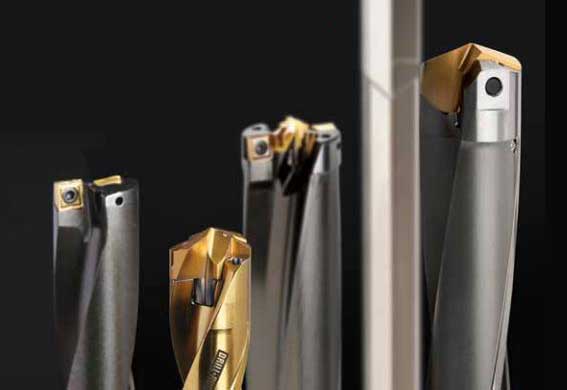
Different types of cutting tools, such as milling cutters, drills, and reamers, each have unique characteristics and are suited for specific machining scenarios and materials.
For example, when machining high-strength mold steel, operators prefer carbide milling cutters for their excellent wear resistance and cutting efficiency.
In contrast, when achieving a high-precision surface finish is the priority, ceramic tools are the preferred choice.
Therefore, tool selection must be precisely matched to the specific requirements of the mold, material properties, and machining environment to ensure stable and efficient processing.
The close integration of process design and tooling technology is key to enhancing mold manufacturing capabilities.
In practice, designers flexibly adapt process plans according to the mold’s structural characteristics, production requirements, and available tooling resources.
They also optimize cutting parameters to simultaneously improve processing efficiency and quality.
For example, when machining complex mold core components, multi-axis CNC milling technology can be employed.
By programming the tool to move freely in three-dimensional space, precise machining of complex surfaces can be achieved.
Additionally, by continuously monitoring tool wear in real time, operators can promptly adjust cutting parameters or replace tools.
This effectively prevents tool failure during machining and ensures the continuity and stability of the process.
Furthermore, mold structure analysis is an indispensable component of mold manufacturing.
By conducting in-depth analyses of the mold’s geometric shape, material properties, stress conditions, and motion patterns, engineers can identify intrinsic issues in mold design.
They can also uncover potential problems that may affect performance.
This provides robust support for process design and tooling technology optimization.
For example, engineers can use CAD modeling and finite element analysis technology to simulate the stress conditions and deformation trends of the mold during actual operation.
This provides a scientific basis for structural optimization.
Additionally, engineers can combine simulation experiments with on-site test data to further verify the feasibility and reliability of the design.
This ensures that the mold operates stably and efficiently in actual applications.
With the growing emphasis on environmental protection, the mold manufacturing industry is placing greater focus on energy conservation.
It is also prioritizing emissions reduction and green manufacturing.
In tool technology selection, more companies are opting for tools made from environmentally friendly materials to reduce environmental pollution during production.
Additionally, optimizing cutting parameters, improving processing efficiency, and adopting advanced energy-saving technologies can further reduce energy consumption and carbon emissions.
These measures help achieve sustainable development in mold manufacturing.
Selection and Application of CNC Milling Cutters
In the precision realm of mold manufacturing, the selection and application of CNC milling cutters are undoubtedly key to enhancing processing quality and efficiency.
This process tests the professional competence of engineers.
It also represents a profound practical application of technological innovation and process optimization.
With the rapid development of the manufacturing industry, the complexity and precision requirements of molds are becoming increasingly stringent.
As the core driving force behind CNC milling processing technology, the selection and application strategies for cutting tools have become particularly critical.
Serving as the core tool of CNC milling processing, CNC milling cutters come in a wide variety of types and functions.
The correct selection and application directly impact processing outcomes and cost-effectiveness.
When selecting CNC milling cutters, it is essential to thoroughly analyze the specific requirements of the machining task.
This includes considering the shape, dimensions, material properties, and the precision and surface roughness requirements of the part.
For example, for mold parts with complex curved surfaces, ball-nose milling cutters are the preferred choice due to their excellent curved surface machining capabilities.
They can flexibly adapt to various curvature changes, achieving high-precision, low-roughness surface machining.
For applications requiring deep hole machining, flat-end milling cutters demonstrate unique advantages.
Their strong cutting force and stability ensure efficient and stable machining processes.
Additionally, the machining characteristics of different materials impose higher requirements on the selection of CNC milling cutters.
Mold materials are diverse, ranging from common aluminum alloys and steels to difficult-to-machine materials such as titanium alloys and cemented carbides.
Each material has unique physical and chemical properties.
Therefore, when selecting tools, factors such as material hardness, toughness, and thermal conductivity must be fully considered.
This ensures the most suitable tool material and geometry are chosen.
For example, when machining high-strength, high-hardness mold materials, cemented carbide tools are an ideal choice because of their excellent wear resistance and cutting performance.
When working with materials that have high thermal sensitivity, tools with superior heat dissipation must be selected.
This prevents tool damage or workpiece deformation caused by overheating during machining.
In CNC milling operations, the proper installation of cutting tools is critical.
Correct installation ensures stable tool operation and enhances both processing accuracy and efficiency.
When installing CNC milling cutters, strict adherence to operating procedures is essential.
The fixture must be parallel and aligned with the machine tool spindle centerline, and perpendicular to it.
In addition, the workpiece clamping position must be precise.
These seemingly minor details actually have a profound impact on the machining results.
For example, if the fixture is not securely installed or the workpiece clamping position is offset, the cutting forces will be unevenly distributed.
This can cause tool vibration, increase cutting forces, and reduce machining accuracy.
With the advancement of technology and the transformation and upgrading of manufacturing, CNC milling tool technology is continuously evolving.
It is also undergoing ongoing innovation and development.
In the future, this field will place greater emphasis on balancing precision, efficiency, and sustainability.
Firstly, optimizing tool materials, geometric shapes, and coating technologies will further enhance the cutting performance and service life of tools.
On the other hand, the deep integration of smart manufacturing and digital technologies will enable CNC milling to achieve more intelligent and automated production modes.
This ensures stable and efficient processing through real-time monitoring and adjustment of cutting parameters.
Additionally, environmental protection and energy conservation will become important directions for the development of CNC milling tool technology.
In mold manufacturing, using tools made from environmentally friendly materials is important.
Optimizing cutting parameters to reduce energy consumption and waste emissions is also essential.
These measures will effectively promote the green transformation and sustainable development of the manufacturing industry.
Selection and Optimization of Processing Parameters
In the precision-driven world of mold manufacturing, CNC milling technology has become indispensable.
Its efficiency and precision make it essential for producing high-quality molds.
In CNC milling for molds, cutting tools are not merely tools for material removal; they are the culmination of innovation and technology.
Faced with diverse mold materials and complex, ever-changing processing requirements, the selection of cutting tools must be precise and meticulous.
For example, when dealing with high-hardness materials, tools with exceptional wear resistance and high strength must be selected.
These tools, like sharp blades, can effortlessly penetrate the material’s hard outer shell.
This ensures a dual improvement in processing efficiency and precision.
For molds with complex shapes, compact and flexible tools are the preferred choice.
They can penetrate every minute corner of the mold, precisely carving out every detail to ensure the mold’s perfect formation.
However, having the right tools alone is insufficient.
The selection and optimization of machining parameters are the key to achieving efficient machining and high-quality molds.
Machining speed, feed rate, and cutting depth—these seemingly simple numbers actually embody profound process wisdom and accumulated experience.
If the machining speed is too fast, efficiency can improve.
However, this may also accelerate tool wear and affect machining quality.
If the speed is too slow, efficiency will drop, making it difficult to meet production requirements.
Therefore, finding that balance point where machining speed and quality harmoniously coexist is the relentless pursuit of every engineer.
The selection of feed rate is equally important, as it directly affects the distribution of cutting force and tool stability.
A reasonable feed rate ensures smooth machining, preventing tool breakage or workpiece deformation caused by excessive cutting force.
Control of cutting depth is a dual test of tool durability and machining efficiency.
While deeper cutting can reduce the number of machining operations, it also accelerates tool wear and reduces machining efficiency.
Additionally, details such as tool geometric angles, number of cutting edges, edge angles, and tool tip radius must not be overlooked.
These details are like the fine-tuning mechanisms of an instrument—though inconspicuous, they can have a profound impact on performance.
A reasonable tool geometric design can reduce cutting forces, minimize tool wear, and simultaneously improve machining accuracy and surface quality.
The selection of cutting edge count and cutting edge angle must be flexibly adjusted.
Adjustments must be made according to specific machining requirements. This ensures optimal cutting performance.
In CNC milling processes, tool path planning is equally critical.
It serves as the melody line of a musical piece, guiding the tool as it moves across the workpiece to create intricate patterns.
A well-designed tool path can reduce idle travel.
It also improves machining efficiency.
At the same time, it reduces cutting forces and protects both the tool and the workpiece.
Therefore, when manufacturing molds, it is essential to carefully plan the tool path.
The plan should be based on the workpiece’s shape, dimensions, and machining requirements.
This ensures a smooth and efficient machining process.
To further optimize machining parameters, advanced simulation software and experimental methods should be utilized to simulate and analyze the machining process.
Parameters such as tool diameter, feed rate, and cutting speed can be continuously adjusted.
Their impact on machining quality, efficiency, and tool life is then observed.
Through this process, the optimal machining solution can be identified.
Conclusion
Mold manufacturing is a precision-driven field.
In this field, CNC milling tool technology stands out for its unique advantages.
It continuously drives the industry toward higher precision and efficiency.
Through in-depth research and practical application, we have witnessed continuous advancements in tool materials, design, and manufacturing processes.
These advancements enhance the quality of mold processing.
They also improve production efficiency.
In addition, they lay a solid foundation for the sustainable development of the mold manufacturing industry.
Looking ahead, smart manufacturing technology will continue to integrate and innovate deeply.
This trend will open up even broader development opportunities for CNC milling tool technology.
We anticipate continued breakthroughs in materials science, smart manufacturing, and digital design.
These advancements will further drive tool technology innovation.
They will also bring more intelligent and efficient solutions to the mold manufacturing industry.
Let us work together to explore new chapters in mold manufacturing and co-create a brighter future.