

China CNC Milling » Blog » Automotive Component Machining Precision: Process Optimization and Quality Control Strategies
FAQ
What materials can you work with in CNC machining?
We work with a wide range of materials including aluminum, stainless steel, brass, copper, titanium, plastics (e.g., POM, ABS, PTFE), and specialty alloys. If you have specific material requirements, our team can advise the best option for your application.
What industries do you serve with your CNC machining services?
Our CNC machining services cater to a variety of industries including aerospace, automotive, medical, electronics, robotics, and industrial equipment manufacturing. We also support rapid prototyping and custom low-volume production.
What tolerances can you achieve with CNC machining?
We typically achieve tolerances of ±0.005 mm (±0.0002 inches) depending on the part geometry and material. For tighter tolerances, please provide detailed drawings or consult our engineering team.
What is your typical lead time for CNC machining projects?
Standard lead times range from 3 to 10 business days, depending on part complexity, quantity, and material availability. Expedited production is available upon request.
Can you provide custom CNC prototypes and low-volume production?
Can you provide custom CNC prototypes and low-volume production?
Hot Posts


Component machining is a critical process in manufacturing and related fields, and the precision of components has a direct impact on product quality.
The automotive industry plays a significant role within the broader manufacturing sector.
Automobiles are composed of various types of components, and to ensure the overall quality of a vehicle, the quality of all components must be guaranteed.
However, during the actual machining process, numerous external factors often lead to quality issues in some components, resulting in varying degrees of deviation in the parameters of automotive parts and affecting corporate production efficiency.
Therefore, exploring the impact of machining processes on the precision of automotive components and conducting optimization analyses plays a crucial role in enhancing automotive product quality and ensuring the sustainable development of enterprises.
Machining Processes
Machining primarily involves the standardized assembly of components using advanced production techniques.
It typically refers to the use of specific machining methods to adjust the material, dimensions, shape, and functionality of components based on requirements related to their appearance and function, thereby ensuring that all performance specifications meet design requirements.
Any company engaged in component machining must be equipped with compliant machinery, adhere to strict machining procedures, and implement standardized inspection protocols to ensure machining accuracy and minimize the risk of component damage during the machining process.
Machining Precision of Components
With the continuous advancement of science and technology, the machining precision of components has also been steadily improving, which has significantly enhanced the quality of these components.
Machining precision primarily concerns the shape, dimensions, positioning, and performance of components.
After the initial machining process is completed, professionals perform fine-tuning on the components in accordance with design requirements to ensure that their precision meets the necessary standards for use.
It is important to emphasize that to better ensure component precision, a quality inspection must be conducted after a series of standardized machining operations are completed.
If any deviation exceeds the threshold—that is, if the inspection reveals that the precision does not meet the standard—the component must be classified as scrap and cannot be used in further production.
The Impact of Machining Processes on the Precision of Automotive Components
Machining processes are closely related to component precision.
Only by strictly adhering to all standards during the machining process can component precision be improved, and this improvement in precision directly reflects the quality of the machining process.
The Impact of Deformation on Component Precision
Deformation is a common issue that affects component precision.
In actual machining and production processes, geometric deformation is a frequent occurrence.
For example, machine tools are critical equipment for component machining; the spindle is prone to errors in workpiece surface roundness and concentricity, while the guideways are susceptible to straightness errors.
These issues can cause misalignment in the relative motion between the workpiece and the cutting tool, thereby affecting the geometric tolerances of the components.
At the same time, thermal energy changes generated during machining tend to stabilize once a certain threshold is exceeded; this is known as the thermal equilibrium stage.
Deviations caused by thermal deformation can reach up to approximately 33%.
If effective measures are not taken, this will severely affect the forming and quality of components.
Machine tools with poor rigidity are prone to thermal deformation; measures such as adding lubricants or lowering the temperature of the machining environment can be considered to reduce the negative impact of thermal deformation.
Furthermore, during machining, equipment must withstand not only the internal stresses of individual components but also the forces resulting from interactions between components.
Additionally, relative displacement and deformation between components caused by equipment aging can directly affect the quality and precision of parts.
The system’s resistance to external forces can be enhanced by optimizing the machining system and reducing system loads, thereby ensuring component quality.
The Impact of Machining Operations on Component Precision
Clamping and adjustment are indispensable steps in the machining process of automotive components.
These steps must be carried out in a strict sequence and require multiple operations by skilled technicians.
If technicians perform these operations manually, it is difficult to ensure component precision, as the adjustment of the relative positions of cutting tools and workpieces cannot meet precision requirements through manual operation alone; even the slightest error can have a significant impact on the quality of automotive components.
This is particularly true for high-volume automotive components, where skilled technicians must use specialized tools to perform precise operations in order to minimize deviations that may occur during adjustment and clamping.
Measurement is one of the fundamental steps in the machining process of automotive components; measurement accuracy directly affects component precision, especially the measurement of the machine tool spindle.
Deviations may occur between the machine tool spindle axis and the centerline.
Furthermore, as some machine tools are older, the spindles may suffer from wear and have relatively low concentricity, making rotational errors more likely to occur during machining.
To avoid these issues, technicians must prioritize spindle maintenance and care, select high-quality lubricants, and minimize rotational errors, thereby ensuring component precision.
The Impact of the Manufacturing Environment on Component Precision
Component precision is also susceptible to the influence of the external manufacturing environment; factors such as temperature, humidity, and vibration have a significant impact on automotive components.
(1) Temperature.
Some temperature-sensitive components undergo different dimensional changes under varying temperatures, which directly affects their precision.
Companies should maintain a constant temperature in the workshop by using air conditioning and temperature control equipment to regulate the environment and ensure environmental stability.
For the machining of components with extremely sensitive temperature requirements, localized temperature control methods can be employed.
(2) Humidity.
Humidity is closely related to temperature and is one of the two key indicators of the workshop environment.
Companies should ensure that workshop humidity remains within a reasonable range, as excessively high or low humidity can lead to equipment corrosion, static electricity, and electrical malfunctions.
(3) Vibration.
Excessive vibration can increase the force load on products and may even cause equipment damage.
Therefore, effectively suppressing vibration is also a key measure for ensuring machining accuracy.
By installing vibration isolation and damping devices, the impact of external vibrations can be reduced, thereby improving the quality of machining.
Recommendations for Improving the Precision of Automotive Parts
Continuously optimize machining processes and standardize machining procedures; machining processes must adhere to a series of standardized procedures.
① Equipment procurement is crucial for ensuring the standardization of machining processes.
Procurement personnel must comprehensively consider factors such as equipment performance, price, and after-sales service to select equipment that offers good value for money and better meets the precision requirements for parts machining.
For equipment already in use, technicians should regularly inspect and verify the position of machine tool guideways to prevent misalignment, which is also a critical step in standardizing the machining process.
② Component design drawings must use a unified coordinate system to ensure that the reference point and the programming origin are completely consistent.
Parameters such as component contour shapes and arc radii must be strictly determined according to the drawings;
Select appropriate cutting tools based on the specific requirements of the automotive components to minimize tool changes during operation.
Additionally, tool installation must ensure precise alignment with the coordinate system.
③ During the machining of automotive components, technicians must optimize control processes by comprehensively considering potential issues such as shape processing and heat treatment.
Taking the machining of box-type components as an example, reaming should be prioritized, supplemented by digital control methods.
Emphasizing Training for Production Personnel and Strengthening Inspection Efforts
The machining and production of automotive parts must be handled by specialized production personnel who possess a meticulous work ethic, advanced technical skills, and extensive machining experience.
These individuals must not only be able to promptly identify potential issues that may arise during the machining process but also be thoroughly familiar with the operation of modern production equipment.
Clearly, it is essential for automotive companies to prioritize the professional development of their production staff.
First, companies must strengthen technical training for their current staff and establish specialized, high-caliber technical teams.
This is the only way to ensure the precision of automotive components and elevate the company’s production standards.
Second, inspection efforts must be further intensified to minimize errors that may occur during the machining process.
Staff should conduct thorough inspections and adjustments of systems and equipment based on specific machining tasks, appropriately reduce equipment operating loads, and optimize internal structures.
By adjusting structural configurations, they should strive to shorten machine tool transmission chains and minimize CNC deviations as much as possible, thereby ensuring that the precision of automotive components meets machining requirements.
Optimizing the Selection of Machining Tools to Improve Machine Tool Accuracy
The selection of machining tools has a significant impact on the quality and precision of automotive components.
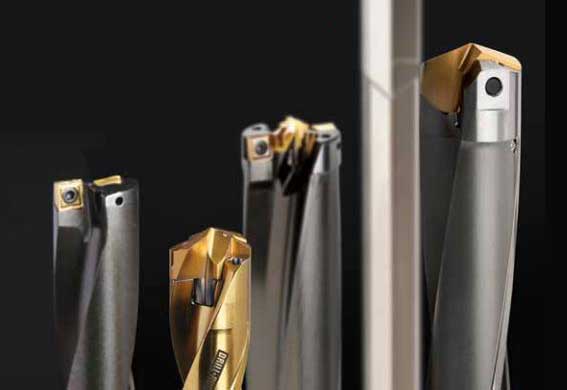
Currently, the market offers several common tool geometries, including pointed and curved tips, as well as materials such as coated tools and Tic carbide.
Considering that some tools generate excessive heat during the machining process, which can compromise machining accuracy, tools should be selected based on specific machining requirements.
It is essential to choose tools that match the hardness and other specifications of the automotive components to ensure that the force distribution remains within normal operating parameters.
Furthermore, as the core of the machining process, the machine tool determines the cutting speed of the tool, the quality of the machined surface, and the overall dimensions and precision of the part.
Therefore, it is essential to maximize machine tool precision by properly managing design, installation, and production processes to ensure the accuracy of automotive components.
① Adopting a double-center-point clamping structure minimizes spindle runout errors.
When grinding the outer diameter of a part, this structure ensures better alignment of the center hole, thereby improving machining accuracy.
② Improving spindle support accuracy can largely eliminate clearance in rolling bearings and gas/fluid hydrostatic bearings, thereby reducing installation error rates.
③ Selecting high-precision spindle assemblies is recommended; where economically feasible, state-of-the-art spindle components should be adopted.
For example, using C- or D-grade front bearings can effectively reduce radial runout errors that may occur during machining.
Conclusion
Machining processes for automotive components have evolved by integrating theories and practices related to machine tool fixtures, machining accuracy, and quality control with traditional manufacturing methods.
The production and machining of automotive components is a cyclical process that involves a series of stages, including preliminary design, intermediate machining, post-processing optimization, and final quality inspection.
This process demands higher standards for product quality and more meticulous technical requirements.
Therefore, automotive component machining enterprises should fully recognize the impact of machining processes on component precision, strictly control the process flow, and keep errors strictly within reasonable limits.
This will ensure the precision of automotive components, enhance the overall quality of the automotive manufacturing industry, and drive the development of the automotive manufacturing sector.