
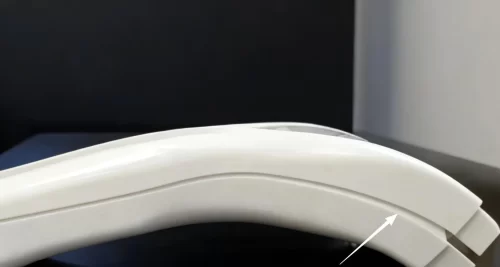

China CNC Milling » Blog » Approaches to Resolving Injection Mark Defects in Plastic Parts
FAQ
What materials can you work with in CNC machining?
We work with a wide range of materials including aluminum, stainless steel, brass, copper, titanium, plastics (e.g., POM, ABS, PTFE), and specialty alloys. If you have specific material requirements, our team can advise the best option for your application.
What industries do you serve with your CNC machining services?
Our CNC machining services cater to a variety of industries including aerospace, automotive, medical, electronics, robotics, and industrial equipment manufacturing. We also support rapid prototyping and custom low-volume production.
What tolerances can you achieve with CNC machining?
We typically achieve tolerances of ±0.005 mm (±0.0002 inches) depending on the part geometry and material. For tighter tolerances, please provide detailed drawings or consult our engineering team.
What is your typical lead time for CNC machining projects?
Standard lead times range from 3 to 10 business days, depending on part complexity, quantity, and material availability. Expedited production is available upon request.
Can you provide custom CNC prototypes and low-volume production?
Can you provide custom CNC prototypes and low-volume production?
Hot Posts

Plastic injection molding is a manufacturing process widely used across industries to produce plastic components.
This process involves injecting molten plastic into a mold cavity, allowing it to cool and solidify, and then ejecting the finished part.
However, like any manufacturing process, plastic injection molding is not without its challenges.
One common issue manufacturers frequently encounter is the occurrence of flash defects in molded plastic parts.
Warpage defects in plastic components can manifest in various forms, such as warping, distortion, and sink marks.
These defects not only compromise the aesthetic appeal of the final product but may also jeopardize its functionality and structural integrity.
Therefore, addressing and preventing warpage defects is crucial for ensuring the quality of injection-molded plastic parts.
This article delves into the warpage defects encountered during the plastic injection molding process.
By analyzing the root causes of these defects, it aims to provide practical solutions and insights to mitigate these issues.
Types of Injection Marks in Plastic Parts
Injection marks refer to imperfections or defects that appear on plastic parts during the injection molding process, typically manifesting as rough surfaces, visible traces, or distorted shapes.
These marks may compromise the appearance and performance of plastic parts, reducing their quality and usability. Common causes are as follows.
Warpage Deformation
Warpage deformation is a common type of surface defect typically occurring during injection molding.
This defect is characterized by abnormal bending or curvature in a portion or the entire plastic part, deviating from the straight lines or flat surfaces specified in the design.
Warpage deformation may prevent the plastic part from being installed correctly or functioning properly.
In automotive component manufacturing, a plastic dashboard assembly required injection molding production.
However, warping issues arose during manufacturing. Analysis revealed this was caused by uneven temperature control within the mold.
Certain mold areas experienced excessively high temperatures while others remained too cool, causing premature hardening of plastic in specific regions after injection.
This premature hardening triggered the warping deformation.
Injection-Molded Parts are Prone to Sink Marks
Sink marks are a common injection molding defect that typically manifest as depressions or pits on the surface or within the plastic part.
This issue can stem from multiple factors, including improper injection parameters, unsuitable material selection, and poor mold design.
A common scenario occurs when insufficient injection pressure or excessively high injection speed prevents the plastic from adequately filling intricate mold cavities or complex features, resulting in sink marks.
This is particularly prevalent in parts featuring fine textured patterns.
Additionally, sink marks frequently arise when the selected plastic material lacks sufficient flowability during injection molding.
Surface Replication Defects Exist
Surface replication defects refer to abnormal patterns, flaws, or fine textures appearing on the exterior surface of injection-molded products, typically caused by an uneven or damaged mold surface.
Such defects significantly impact product appearance and quality, particularly in applications requiring high precision and smooth surfaces.
This issue is often influenced by multiple factors, including mold quality, material selection, injection molding processes, and environmental conditions.
A common cause is subpar mold surface quality, such as roughness, scratches, or wear.
This prevents the mold from accurately replicating details and textures onto the injection-molded part, resulting in surface replication defects.
Additionally, mold lifespan and maintenance significantly impact surface replication; damaged or worn mold surfaces lead to diminished quality.
Another factor is improper material selection.
Certain plastics may not bond fully with the mold surface during injection molding, resulting in poor surface quality.
Furthermore, injection molding process parameters can also affect surface quality.
For instance, excessively high injection speed, temperature, or pressure can all lead to poor surface replication.
Tiger Stripe Quality Defect
Tiger stripes represent a common injection molding quality defect, typically manifesting as tiger-like stripes or textures on the product surface.
This phenomenon may compromise the product’s aesthetic quality, causing it to lose its smooth and uniform appearance.
During injection molding, uneven mold temperature distribution can cause certain surface areas to cool too rapidly while others cool more slowly.
This temperature disparity results in tiger-stripe-like patterns on the product surface.
Additionally, mold design and structure may contribute to tiger stripes.
Poor mold design, such as improper cooling system layout on the mold surface, can lead to insufficient cooling in specific areas, triggering this defect.
Suppose an injection-molded product requires a smooth appearance, but uneven mold temperature distribution causes tiger stripes to appear on the surface.
This occurs because certain areas cool too rapidly while others cool more slowly, resulting in surface texturing.
This significantly impacts the product’s appearance and quality.
Weld Line Defects
Weld lines are a common quality issue in injection-molded products, typically formed when molten plastic flows in two separate leading edges.
As these edges converge, the leading edge cools before full fusion occurs, preventing complete integration.
Multiple factors contribute to weld line formation, primarily including:
First, poor plastic flowability leading to excessively slow injection speeds, preventing adequate fusion between different sections of plastic.
Second, product structure affecting resin flow—excessive cavities, complex geometries, and similar features increase weld line occurrence probability.
Third, improper mold design, including unscientific gate design or excessively low mold temperatures, can compromise weld line quality.
Finally, contaminants like release agents or volatile substances entrained in the plastic flow can also disrupt flow convergence and weld formation.
Weld line defects not only compromise the aesthetic appearance of injection-molded products but also reduce their impact resistance.
Therefore, effective measures must be implemented to minimize weld line defects.
Burrs
Burrs are a common defect in plastic injection molding, appearing as small, sharp protrusions on the surface of molded parts.
They typically adversely affect product appearance and quality. Burrs arise from various causes, often involving the following factors.
First, improper mold design is a primary cause of burrs. Issues such as poorly designed gate locations, defects in the runner system, or high mold surface roughness can all lead to burr formation.
Second, improper injection parameters can also cause burrs.
Excessively high injection speed or pressure accelerates plastic flow, increasing the risk of burr formation.
Additionally, the selection and processing of plastic raw materials influence burr occurrence.
Materials with low melt index or excessive impurities are more prone to burring. Mold aging and wear also contribute to burrs.
Surface irregularities or scratches on the mold can compromise product quality and heighten the likelihood of burr formation.
Cracking
Flash is a common defect in plastic injection molding, manifesting as small, sharp protrusions on the surface of molded parts.
It typically adversely affects product appearance and quality.
The causes of flash are diverse, often involving the following factors.
First, improper mold design is a primary cause of flash issues.
Defects in the mold’s gate design, flaws in the ejection system, or high surface roughness of the mold can all lead to flash.
Second, improper injection parameters can also cause flash.
Excessively high injection speed or pressure accelerates plastic flow, increasing the risk of flash formation.
Additionally, the selection and processing of plastic raw materials influence flash occurrence.
Materials with low melt index or excessive impurities are more prone to flash issues.
Mold aging and wear contribute to flash formation.
Surface irregularities or scratches on the mold surface compromise product quality and heighten the likelihood of flash.
Approaches to Resolving Injection Molding Defects in Plastic Parts
Eliminating Warpage Defects
To eliminate autoplastic buckling deformation—a common defect—it is essential to effectively enhance the strength of injection-molded parts through structural design.
Optimizing the mold structure is a critical step.
During the mold design phase, reinforcing elements can be incorporated to increase the overall strength of the molded part.
This involves adding appropriately positioned and sized reinforcing structures within the mold to mitigate autoplastic buckling deformation.
Through rational mold structure design, uniform material distribution can be ensured, reducing stress concentration and effectively minimizing warpage risks.
Additionally, selecting plastics with higher strength and rigidity can significantly mitigate self-plastic buckling deformation.
These materials maintain dimensional stability more readily after injection molding, thereby lowering deformation susceptibility.
Furthermore, controlling wall thickness uniformity is a critical factor in preventing warpage deformation.
By precisely managing injection molding parameters such as temperature, pressure, and cooling time, uniform cooling of the plastic during injection can be ensured, thereby reducing deformation risks.
Maintaining uniform mold temperature prevents autoplastic buckling deformation caused by thermal stress.
This is achieved through the use of temperature control systems and appropriate cooling systems to ensure stable mold temperature.
Preventing Sink Mark Issues
Preventing sink mark issues is a critical challenge, particularly in the design of automotive plastic components.
In certain cases, such as automotive plastic screw studs, root sink marks can adversely affect product performance and reliability.
To address this issue, measures must be implemented during the design phase to minimize sink mark occurrence.
A common approach involves incorporating recessed structures at the root of the screw stud.
The core principle behind this design decision is to reduce the equivalent thickness at the stud’s base.
Typically, smaller equivalent thicknesses make plastic parts more susceptible to sink marks.
Adding recesses effectively lowers this equivalent thickness, thereby decreasing the likelihood of sink marks.
Additionally, the performance and strength characteristics of the plastic material must be considered during the design phase.
Different plastics exhibit varying elastic moduli, with low-modulus plastics being more susceptible to sink marks.
Therefore, selecting an appropriate plastic material with sufficient strength can mitigate the risk of sink mark issues.
Avoiding Surface Quality Defects
To prevent surface defects in plastic parts, especially recurring issues, critical measures must be implemented during the specific design and production processes of injection-molded components.
One such measure is avoiding the use of fine skin grain structures.
Delicate skin textures readily cause surface quality issues during plastic injection molding.
These problems are typically related to pressure distribution within the mold cavity.
Uneven pressure distribution may result in surface defects or inconsistent textures.
Therefore, in the specific design of automotive plastic injection molded parts, overly intricate or complex skin textures should be avoided to minimize potential issues.
Additionally, during production, it is crucial to ensure the melt possesses sufficient pressure to replicate the mold surface.
This can be achieved through methods such as high pressure, high speed, and high temperature, ensuring the melt effectively fills the cavity and accurately replicates the mold surface.
These conditions help minimize melt pressure loss, thereby enhancing the consistency of surface quality.
Reducing Tiger Stripe Patterns
Mold design can positively influence the reduction of tiger stripe patterns.
Smooth mold surfaces and appropriate cooling systems both minimize the occurrence of tiger stripes.
The surface quality and smoothness of the mold play a critical role in the final product’s appearance, necessitating assurance of the mold surface’s polish and flatness.
Additionally, controlling injection speed, temperature, and pressure improves melt flowability, reducing the appearance of surface textures.
Optimizing injection parameters requires a combination of experience and experimentation to achieve optimal results.
For certain specific products, post-processing techniques such as painting or surface finishing can be employed to reduce the visibility of tiger stripes.
While this can improve product appearance to some extent, the aforementioned control measures during manufacturing remain essential to minimize tiger stripe occurrence.
Reducing Weld Line Defects
To minimize weld line defects, manufacturers must holistically consider material selection, mold design, and injection parameters.
Weld lines commonly appear in plastic products as temporary linear depressions that compromise aesthetic quality.
Selecting plastics with higher flowability and lower shrinkage rates can reduce weld line occurrence.
For instance, materials like polypropylene (PP) offer good flow properties, aiding in weld line reduction. Secondly, mold design must address weld line formation.
Designers should minimize sharp corners and excessive venting locations to decrease weld line visibility.
Manufacturers of automotive interior components, for example, typically avoid excessive sharp-angle structures in mold design to reduce weld line visibility on product surfaces.
Furthermore, controlling injection parameters is crucial for minimizing weld lines.
Regulating injection speed and temperature improves melt flow, thereby reducing weld line formation.
For instance, in manufacturing electronic product housings, precise control of injection speed and temperature can minimize weld lines and enhance the aesthetic quality of the housing.
Eliminating Burr Defects
Eliminating burr defects involves addressing undesirable phenomena arising during injection molding, specifically the formation of small or minute sharp protrusions on product surfaces.
These burrs negatively impact both product appearance and performance, necessitating appropriate corrective measures.
One effective approach is to reduce burr generation through improved mold design.
This includes avoiding sharp edges and minimizing mold cavities to decrease plastic flow convergence points during filling.
For instance, in automotive component manufacturing, some injection molds incorporate rounded corners or chamfers during the design phase to prevent burr formation, thereby enhancing product appearance quality.
Another critical factor is controlling injection parameters, including temperature, pressure, and speed.
Optimizing these parameters improves melt flow and reduces burr formation.
In medical device manufacturing, for example, precise control of injection parameters effectively minimizes surface burrs, ensuring product safety and hygiene standards.
Additionally, material selection is crucial for addressing flash defects.
Choosing plastics with higher flowability and lower viscosity can minimize flash occurrence.
For instance, electronics housing manufacturers typically select high-performance plastics like polycarbonate (PC) to ensure smooth product surfaces without noticeable flash.
Eliminating Cracking Defects
Cracking defects are a common and troublesome issue in injection molding.
Cracking not only affects product appearance but may also reduce performance and lifespan.
To minimize or eliminate cracking defects, the following measures can be implemented.
(1) Material Selection:
Choosing appropriate plastic materials is crucial for reducing cracking.
Different plastics possess varying physical properties, melting points, and heat deflection temperatures, which impact a product’s heat resistance and cold resistance.
Opting for materials with superior cold resistance, such as ABS or PC, can mitigate cracking risks.
(2) Mold Design:
Rational mold design can also reduce cracking likelihood.
Avoid sharp internal corners, excessive wall thickness variations, and excessive surface textures, as these factors cause stress concentration and increase cracking risks.
Additionally, an appropriate cooling system prevents localized overheating, reducing cracking.
(3) Injection Molding Parameter Control:
Parameters during injection molding—such as injection speed, injection pressure, and mold temperature—require precise control.
Both excessively high or low injection speeds and pressures may cause cracking. Proper adjustment of mold temperature can also reduce thermal stress and minimize cracking.
(4) Recycling of Scrap Material:
Proper recycling of scrap material reduces waste, but ensures the recycled plastic is thoroughly mixed.
Otherwise, uneven shrinkage may occur, increasing the risk of cracking.
(5) Nozzle and Mold Maintenance:
Regular inspection and maintenance of the injection machine’s nozzle and mold are crucial.
Damaged or worn nozzles may cause uneven injection, while compromised molds are also prone to cracking issues.
Conclusion
During the injection molding process of plastic parts, flash defects are a common issue that can compromise product appearance and performance, thereby reducing quality.
This article examines various types of flash defects, including warping, poor surface replication at sink marks, tiger stripes, weld lines, flash, and cracking.
By analyzing the causes and solutions for each defect, we gain a better understanding of how to minimize or eliminate them.
Optimizing mold design, selecting appropriate materials, controlling injection parameters, and maintaining equipment and molds are all critical factors in reducing flash defects.
Additionally, avoiding excessive structural complexity and coarse surface textures helps minimize defect occurrence.
In practice, manufacturers must collaborate closely throughout design and production to ensure optimal results.
Only by comprehensively considering all factors can high-quality injection-molded products be produced.